
Alibaba introduces the Zhenwu M890 as a strong competitor to NVIDIA in China's market.
T-Head's new GPU is subject to US export controls, coinciding with a summit between Trump and Xi focused on AI chips. The company claims that the Chinese domestic accelerator market is already in large-scale production. On Wednesday, Alibaba’s T-Head chip division released detailed specifications for the Zhenwu M890, its latest AI chip meant to serve as a domestic alternative to NVIDIA’s accelerators. An Alibaba executive stated that T-Head's proprietary GPU chips have entered large-scale production. This announcement comes during a particularly eventful period for the Chinese AI chip landscape.
The South China Morning Post provides an in-depth look at the Zhenwu M890’s specifications, highlighting that it is the highest-spec product T-Head has released so far and aims to compete with NVIDIA's H100 generation instead of the newer Blackwell series. Although there is still a significant performance gap compared to NVIDIA's flagship chips, the difference between the Zhenwu M890 and the H100—which Chinese customers cannot legally purchase due to US export controls—is narrower. The announcement from Alibaba is thus calibrated to address the combination of the inability to acquire H100 and the introduction of a credible domestic alternative.
The mention of "scaled mass production" is a noteworthy operational detail. Coverage from EE Times indicates that this level of production ramp is exactly what Western analysts have been seeking from Chinese chip-design firms for the past two years. The fact that an Alibaba executive made this claim on the record suggests confidence in the company's supply-chain redundancies, inviting the technical scrutiny that follows. Reportedly, the chip is manufactured using process nodes that Chinese foundries can produce without the use of US-controlled lithography equipment, which has been a significant constraint in the Chinese domestic chip industry.
The corporate-finance context is also important. T-Head, previously known as Pingtouge (Chinese for "honey badger"), was established in 2018 and launched its first AI chip, the Hanguang 800, in 2019. Since then, it has operated as an internal supply unit within Alibaba Cloud. T-Head is preparing for an IPO to support a more robust infrastructure investment strategy, which places it in direct competition with Cambricon and Huawei's Ascend series in the domestic accelerator market. Thus, the announcement of the Zhenwu M890 also plays a critical role in the competitive narrative likely to be presented in T-Head’s forthcoming prospectus.
However, wire coverage tends to underemphasize the competitive dynamics at play. Chinese hyperscalers, foundational model labs, and AI deployment customers have been increasing their purchases of homegrown AI chips throughout the first and second quarters of 2026, even as NVIDIA's H200 has been approved for a select group of Chinese buyers under new export licensing rules. These two trends are not conflicting; Chinese customers are seeking options from both sides. Alibaba's move with the Zhenwu M890 positions T-Head as the default domestic alternative, similar to how Huawei promotes Ascend and Cambricon markets its Siyuan line. The market appears sufficiently large to support all three companies at a significant scale.
The geopolitical context shifted earlier this month with the Trump-Xi summit in Beijing. Negotiations over US-China AI policy are now happening at the highest level, encompassing H200 export licensing and AI regulations. No H200 chips authorized for the ten Chinese buyers have shipped yet. In this procurement gap, Chinese customers are hastening their pursuit of domestic alternatives. The announcement of the Zhenwu M890 represents a strategic commercial response to this void.
The broader context of seeking alternatives to NVIDIA impacts beyond just China. Discussions around Tenstorrent's acquisition by Intel and Qualcomm in the US, as well as Google's $25 billion TPU-cloud joint venture with Blackstone announced this week, are both variations of this trend. Current capacity cannot satisfy hyperscalers' demand solely with NVIDIA silicon, making Alibaba's positioning of T-Head a Chinese response to this allocation issue.
There are operational specifics that have not yet been disclosed, including chip pricing, total shipment volumes for the Zhenwu M890, named clients outside Alibaba's cloud business, as well as the breakdown of internal versus third-party shipments and the timeline for the T-Head IPO. These details remain undisclosed. What is currently evident, however, is the technical disclosure and the production status claim. The next announcement regarding named customers, especially those beyond Alibaba Cloud, will serve as a crucial indicator of whether T-Head can extend the chip’s use beyond captive applications.
Other articles
 Gen Z isn't criticizing AI; they're expressing discontent with their own job market.
Eric Schmidt faced boos at the University of Arizona, while Gloria Caulfield was met with hostility at UCF. This framing referred to it as generational confusion, but the data suggests it was actually generational accuracy.
Gen Z isn't criticizing AI; they're expressing discontent with their own job market.
Eric Schmidt faced boos at the University of Arizona, while Gloria Caulfield was met with hostility at UCF. This framing referred to it as generational confusion, but the data suggests it was actually generational accuracy.
 Meta initiates the 10% reduction, with the Singapore office receiving the notification at 4 am first.
On Wednesday, Meta began informing thousands of employees about layoffs, starting with staff in Singapore at 4 am local time. This job reduction follows a commitment made in April to decrease the workforce by approximately 8,000 positions.
Meta initiates the 10% reduction, with the Singapore office receiving the notification at 4 am first.
On Wednesday, Meta began informing thousands of employees about layoffs, starting with staff in Singapore at 4 am local time. This job reduction follows a commitment made in April to decrease the workforce by approximately 8,000 positions.
 Google has unveiled Pics, an AI image generator integrated within Workspace, aiming to compete with Canva in terms of precise editing.
Google has unveiled Pics, an AI image generator native to Workspace, which utilizes Nano Banana 2 and features precision editing controls along with integration for Slides and Drive.
Google has unveiled Pics, an AI image generator integrated within Workspace, aiming to compete with Canva in terms of precise editing.
Google has unveiled Pics, an AI image generator native to Workspace, which utilizes Nano Banana 2 and features precision editing controls along with integration for Slides and Drive.
 Google introduces Gemini Omni Flash, a video generation model designed for conversation, although the avatar mode has been postponed.
Google has introduced Gemini Omni Flash, a novel multimodal video-generation model developed by DeepMind. This model allows users to create and edit videos interactively using inputs from images, audio, video, and text, with SynthID watermarking enabled by default.
Google introduces Gemini Omni Flash, a video generation model designed for conversation, although the avatar mode has been postponed.
Google has introduced Gemini Omni Flash, a novel multimodal video-generation model developed by DeepMind. This model allows users to create and edit videos interactively using inputs from images, audio, video, and text, with SynthID watermarking enabled by default.
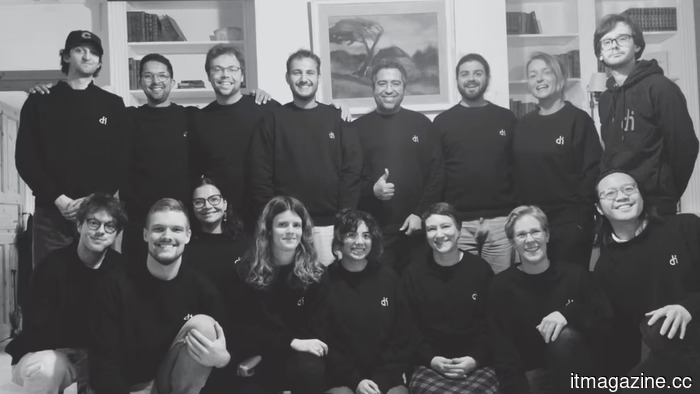 Dunia Innovations in Berlin invests €280 million in a GigaLab focused on autonomous AI materials.
Berlin's Dunia Innovations has announced plans for a €280 million, 6,000-square-meter GigaLab aimed at validating AI-created materials on an industrial level.
Dunia Innovations in Berlin invests €280 million in a GigaLab focused on autonomous AI materials.
Berlin's Dunia Innovations has announced plans for a €280 million, 6,000-square-meter GigaLab aimed at validating AI-created materials on an industrial level.
 Google reveals Pics, an AI image generator integrated into Workspace, aimed at competing with Canva in precise editing.
Google has introduced Pics, an AI image generator integrated into Workspace, powered by Nano Banana 2. It features precision-editing controls and integrates with Slides and Drive.
Google reveals Pics, an AI image generator integrated into Workspace, aimed at competing with Canva in precise editing.
Google has introduced Pics, an AI image generator integrated into Workspace, powered by Nano Banana 2. It features precision-editing controls and integrates with Slides and Drive.
Alibaba introduces the Zhenwu M890 as a strong competitor to NVIDIA in China's market.
Alibaba's T-Head chip division has introduced the Zhenwu M890, its most advanced AI accelerator to date, and announced that the chip has entered 'scaled mass production' as China intensifies its efforts to develop a domestic alternative to NVIDIA.