
CircuitHub secures $28 million from Plural to manufacture PCBs in a manner similar to how clouds generate computing power.
The automated electronics factory, based in Massachusetts and rooted in Cambridge, has produced over two million boards for 20,000 engineers. Plural is betting on the significant reshoring trend fueling this growth.
CircuitHub, an automated electronics manufacturing firm established by Andrew Seddon, has secured $28 million in funding, led by Plural. This funding round is the largest CircuitHub has announced in its 15-year history and will support the expansion of its automated PCB factories in Europe and the U.S., as well as the growth of its engineering team and its transition to full-service electronics manufacturing.
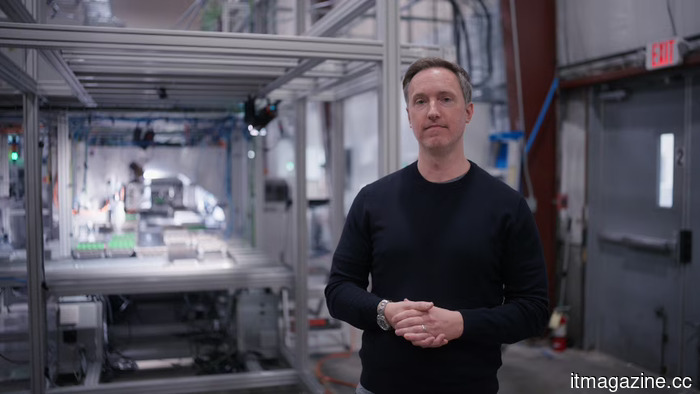
CircuitHub's offering revolves around applying cloud economics to circuit boards. The company’s initial 5,000-square-foot ‘Grid’ facility in Massachusetts processes uploaded design files through robotic assembly lines managed by computer vision and AI quality control, enabling the shipment of finished PCBs to clients within days, compared to the months typically required by traditional contract manufacturers.
A single Grid facility can produce either a single prototype or batches of 10,000 units across various designs at the same time, making high-mix manufacturing economically feasible for the first time, according to the company's own framing.
Andrew Seddon summarized the operational pitch: ‘Hardware companies must either develop their own vertically integrated manufacturing from scratch or depend on an aging Western supply chain. CircuitHub offers an alternative: access to a state-of-the-art factory through a browser or an AI agent. Just as software firms utilize cloud computing, hardware firms can now utilize our Grid.’ This analogy is what hardware investors have been seeking in a tangible product for a decade.
CircuitHub's achievements lend credibility to this analogy. The firm has supplied over two million boards and installed more than 133 million components, serving around 20,000 engineers working in sectors such as robotics, satellite, automotive autonomy, defense, and energy.
The industry term ‘Physical AI’ refers to embodied-AI hardware, which is fundamentally constrained at the PCB-and-assembly level in a way that the model-and-software level is not.
The market dynamics that Plural is endorsing are worth noting. Approximately 95% of electronics projects involve fewer than 10,000 units, according to broader industry data cited by CircuitHub, yet the global electronics manufacturing services sector is primarily optimized for mass production of much larger order volumes. The U.S. has lost over 85% of its share in the global PCB market to lower-cost foreign manufacturers, mainly in China. This category is projected to surpass $1 trillion, with the long-tail of small-batch custom production being an underserved segment for the past decade.
Plural’s investment thesis hinges on reshoring. Partner Sten Tamkivi emphasized that what CircuitHub is achieving is transformative. He stated, ‘Andrew and the exceptional CircuitHub team are altering the unit economics of the entire industry.’ His viewpoint on resilience and sovereignty, alongside the unit-economics argument, sets Plural’s pitch apart from conventional hardware-platform strategies—viewing European and U.S.-controlled hardware manufacturing as a strategic asset rather than just a commodity supply.
The broader trend of reshoring in Europe is accelerating. Earlier this year, PaperShell received a €40.3 million grant from the EU Innovation Fund for a copper-clad laminate-and-PCB facility, while the EU’s €700 million NanoIC pilot line addresses a different layer of the supply chain. Analog Devices' $1.5 billion acquisition of Empower Semiconductor pertains to power management.
CircuitHub’s funding round focuses on the assembly and fulfillment layer, targeted at the small-batch market not addressed by the other companies.
Founded in 2011 by Seddon, Rehno Lindeque, and Jon Friedman, CircuitHub maintains its R&D in Cambridge, UK, and operational activities in Massachusetts to be close to its initial customers. The company participated in Y Combinator in 2012. A proposed European Grid would position CircuitHub as the first dual-Atlantic automated PCB platform at this scale. Information regarding post-money valuation, run-rate revenue, and the timeline for the European Grid was not disclosed.
Other articles
 Meta provides competing AI chatbots a restricted complimentary access to WhatsApp, based on the conditions set by Brussels.
Meta has submitted a new proposal to the European Commission, providing competing AI chatbots with free access to WhatsApp in Europe up to a certain usage limit, after which a fee per message will be charged. The Commission is currently evaluating this proposal in accordance with the Digital Markets Act.
Meta provides competing AI chatbots a restricted complimentary access to WhatsApp, based on the conditions set by Brussels.
Meta has submitted a new proposal to the European Commission, providing competing AI chatbots with free access to WhatsApp in Europe up to a certain usage limit, after which a fee per message will be charged. The Commission is currently evaluating this proposal in accordance with the Digital Markets Act.
 Google introduces Gemini Omni Flash, a video generation model designed for conversation, although the avatar mode has been postponed.
Google has introduced Gemini Omni Flash, a novel multimodal video-generation model developed by DeepMind. This model allows users to create and edit videos interactively using inputs from images, audio, video, and text, with SynthID watermarking enabled by default.
Google introduces Gemini Omni Flash, a video generation model designed for conversation, although the avatar mode has been postponed.
Google has introduced Gemini Omni Flash, a novel multimodal video-generation model developed by DeepMind. This model allows users to create and edit videos interactively using inputs from images, audio, video, and text, with SynthID watermarking enabled by default.
 Alibaba introduces the Zhenwu M890, marking a strong push in China to create an alternative to NVIDIA.
Alibaba's T-Head chip division has introduced the Zhenwu M890, its most advanced AI accelerator to date, and announced that the chip is currently in 'scaled mass production' as China intensifies its efforts to develop a domestic alternative to NVIDIA.
Alibaba introduces the Zhenwu M890, marking a strong push in China to create an alternative to NVIDIA.
Alibaba's T-Head chip division has introduced the Zhenwu M890, its most advanced AI accelerator to date, and announced that the chip is currently in 'scaled mass production' as China intensifies its efforts to develop a domestic alternative to NVIDIA.
 Google has introduced Pics, an AI image generator integrated within Workspace, aimed at competing with Canva in the realm of precise editing.
Google has unveiled Pics, an AI image generator native to Workspace that utilizes Nano Banana 2, featuring precise editing controls and integration with Slides and Drive.
Google has introduced Pics, an AI image generator integrated within Workspace, aimed at competing with Canva in the realm of precise editing.
Google has unveiled Pics, an AI image generator native to Workspace that utilizes Nano Banana 2, featuring precise editing controls and integration with Slides and Drive.
 Google has revealed Pics, an AI image creator integrated into Workspace, aimed at competing with Canva in the realm of precise editing.
Google has unveiled Pics, an AI image generator native to Workspace, which is powered by Nano Banana 2 and features precise editing controls along with integration for Slides and Drive.
Google has revealed Pics, an AI image creator integrated into Workspace, aimed at competing with Canva in the realm of precise editing.
Google has unveiled Pics, an AI image generator native to Workspace, which is powered by Nano Banana 2 and features precise editing controls along with integration for Slides and Drive.
 Meta implements the 10% reduction, beginning with the Singapore office, which receives the notification at 4 am.
On Wednesday, Meta started informing thousands of employees about layoffs, beginning with staff in Singapore at 4 a.m. local time. These reductions honor a commitment made in April to decrease the workforce by approximately 8,000 positions.
Meta implements the 10% reduction, beginning with the Singapore office, which receives the notification at 4 am.
On Wednesday, Meta started informing thousands of employees about layoffs, beginning with staff in Singapore at 4 a.m. local time. These reductions honor a commitment made in April to decrease the workforce by approximately 8,000 positions.
CircuitHub secures $28 million from Plural to manufacture PCBs in a manner similar to how clouds generate computing power.
CircuitHub has secured $28 million in funding, led by Plural, to enhance its automated PCB manufacturing 'Grid' factories throughout Europe and the United States.