
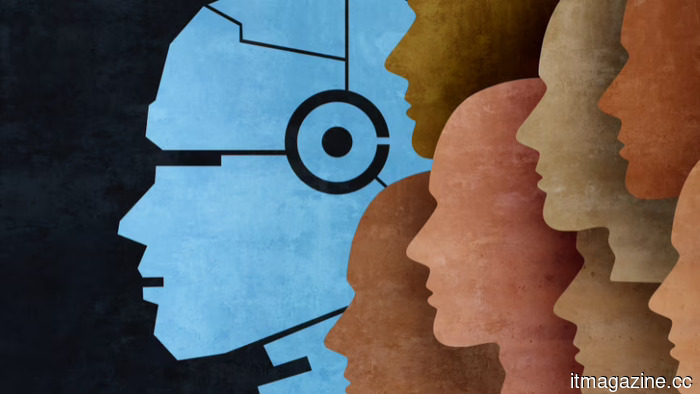
Gen Z isn't criticizing AI; they're expressing discontent with their own job market.
Eric Schmidt took to the lectern during the spring commencement at the University of Arizona and informed the assembled graduates that the influence of artificial intelligence would be ‘larger, faster, and more consequential’ than anything they had previously experienced. The former Google CEO aimed to provide reassurance, highlighting humanity's great capacity for adaptation. However, the crowd began to boo, and the discontent continued even after Schmidt concluded his remarks.
Twelve days prior, at the University of Central Florida, real-estate executive Gloria Caulfield had referred to ‘the next industrial revolution’ in her own commencement speech, which also garnered boos from the students.
Reporters interpreting the reactions suggested a disconnect between generations, claiming young people were misinterpreting a technological cycle experienced by older generations. This framing missed the mark.
The graduating class of 2026 was responding not to the technology itself, but to the speech that signaled their impending redundancy within the labor market they were about to enter. The students were showing disapproval to the reality being presented to them.
Data regarding this cohort paints a concerning picture. Bill McDermott, CEO of ServiceNow, noted at a conference in March that new college graduate unemployment could soar to 30% within two years as AI took over entry-level white-collar tasks. At the time, this figure seemed inflammatory.
However, Goldman Sachs' research from April indicated that about 16,000 U.S. jobs were being lost to AI each month, with Gen Z disproportionately affected by this job displacement. A working paper from the Dallas Federal Reserve earlier in 2026 found that the unemployment gap between entry-level and experienced workers had widened sharply after the pandemic, particularly in fields vulnerable to AI replacement.
Dario Amodei, the CEO of Anthropic, which produces a widely-used enterprise AI product, has consistently predicted that AI could eliminate up to half of all entry-level white-collar jobs. Each of these statistics is publicly available and easily searchable.
What's distinctive about this cohort is not their skepticism towards new technology, as every generation tends to be wary of innovations that emerge as they enter the workforce. The notable aspect of the class of 2026 is that they are the first to embark on their careers while witnessing named executives publicly quantify the resulting displacement in monetary terms, with specific commitments tied to particular industries.
On Tuesday, Standard Chartered's CEO Bill Winters informed investors in Hong Kong that the bank would reduce over 15% of its back-office roles by 2030, specifically in HR, risk, and compliance, indicating these positions would be replaced by AI. These are the exact roles that new graduates typically fill in their first few years.
Similarly, Meta announced 8,000 job cuts during a restructuring focused on AI, with CEO Mark Zuckerberg framing the layoffs as a shift from payroll expenses to capital expenditures on AI. To date in 2026, around 110,000 jobs have been cut across 137 companies in the tech sector.
The class of 2026 has been actively monitoring these developments throughout their time in university.
The boos echoed a deeper understanding: the displacement caused by AI is not evenly distributed among age groups. Previous generations faced technology shifts where the workers most affected also had the best opportunities to acquire new skills. Conversely, Gen Z’s exposure pattern is starkly different.
The Dallas Fed's research highlights that the unemployment gap exists solely between entry-level and experienced workers, rather than between technological and non-technological roles. The crucial skill that offers protection against this wave of automation is not familiarity with technology but rather the contextual judgment developed over years of experience—something younger workers lack.
Older workers possess this judgment, leaving the younger cohort the most vulnerable to displacement, as they have the least leverage in the labor market to resist it.
In response, corporate leaders have maintained that the new balance will yield more engaging work for those who make it through the transition. For instance, the Multiverse proposition suggests companies will enhance their workforce by training current employees to manage AI agents instead of replacing them.
This is a plausible theory but relies significantly on companies committing to substantial training programs rather than merely reducing headcount. The same announcement from Standard Chartered that outlined a 15% reduction in back-office roles did not accompany a similarly scaled training initiative.
Meta's reallocation of 7,000 employees to AI-focused roles, announced just before the 8,000 layoffs, affected only the employees retained rather than those being let go. The class of 2026 has taken note of this imbalance, while corporate narratives surrounding the transition have overlooked it.
There's another layer to consider: previous generations learned about labor-market displacement either retrospectively through their parents' experiences or prospectively through union-organized education.
Conversely, Gen Z is experiencing it in real-time, via TikTok, LinkedIn, product launches from employers, and monthly CEO updates, with the data arriving faster than ever before. The result of this awareness, as evidenced by the booing,
Other articles
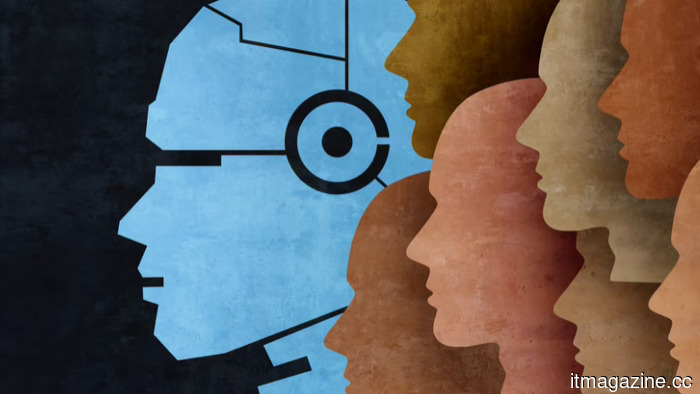 Gen Z is not rejecting AI; rather, it is expressing dissatisfaction with the job market for themselves.
Eric Schmidt faced boos at the University of Arizona, while Gloria Caulfield was also met with boos at UCF. The narrative framed it as generational confusion, but the statistics indicate it was actually generational accuracy.
Gen Z is not rejecting AI; rather, it is expressing dissatisfaction with the job market for themselves.
Eric Schmidt faced boos at the University of Arizona, while Gloria Caulfield was also met with boos at UCF. The narrative framed it as generational confusion, but the statistics indicate it was actually generational accuracy.
 OpenAI establishes its inaugural international applied-AI lab in Singapore, backed by a $235 million investment.
OpenAI is establishing its inaugural applied-AI lab beyond the United States in Singapore, backed by a commitment of S$300 million ($235 million) and plans to increase its staff to approximately 200 individuals in the coming years.
OpenAI establishes its inaugural international applied-AI lab in Singapore, backed by a $235 million investment.
OpenAI is establishing its inaugural applied-AI lab beyond the United States in Singapore, backed by a commitment of S$300 million ($235 million) and plans to increase its staff to approximately 200 individuals in the coming years.
 Alibaba introduces the Zhenwu M890 as China intensifies its efforts to create an alternative to NVIDIA.
Alibaba's T-Head chip division has introduced the Zhenwu M890, its most advanced AI accelerator to date, and announced that the chip is currently in 'scaled mass production' as China speeds up its efforts to create a domestic alternative to NVIDIA.
Alibaba introduces the Zhenwu M890 as China intensifies its efforts to create an alternative to NVIDIA.
Alibaba's T-Head chip division has introduced the Zhenwu M890, its most advanced AI accelerator to date, and announced that the chip is currently in 'scaled mass production' as China speeds up its efforts to create a domestic alternative to NVIDIA.
 Meta initiates the 10% reduction, with the Singapore office receiving the notification at 4 am first.
On Wednesday, Meta started informing numerous employees about layoffs, beginning with its Singapore staff at 4 am local time. These reductions fulfill a commitment made in April to decrease the workforce by approximately 8,000 positions.
Meta initiates the 10% reduction, with the Singapore office receiving the notification at 4 am first.
On Wednesday, Meta started informing numerous employees about layoffs, beginning with its Singapore staff at 4 am local time. These reductions fulfill a commitment made in April to decrease the workforce by approximately 8,000 positions.
 OpenAI establishes its inaugural international applied-AI laboratory in Singapore, with a commitment of $235 million.
OpenAI is set to establish its first applied-AI lab outside the United States in Singapore, backed by a commitment of S$300 million ($235 million) and plans to increase its workforce to approximately 200 individuals in the coming years.
OpenAI establishes its inaugural international applied-AI laboratory in Singapore, with a commitment of $235 million.
OpenAI is set to establish its first applied-AI lab outside the United States in Singapore, backed by a commitment of S$300 million ($235 million) and plans to increase its workforce to approximately 200 individuals in the coming years.
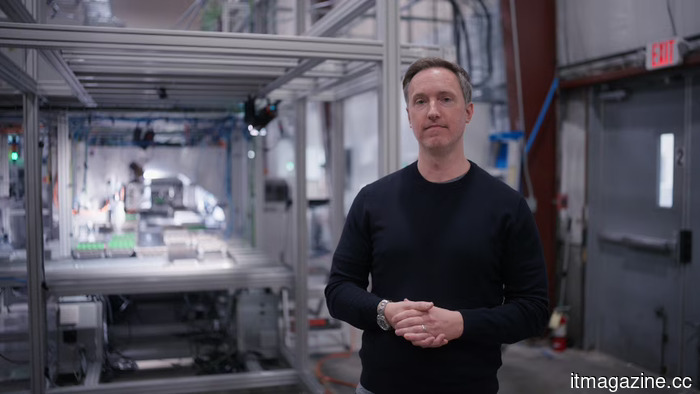 CircuitHub secures $28 million from Plural to produce PCBs in the same way that clouds deliver computing resources.
CircuitHub has secured $28 million in funding, led by Plural, to enhance its automated PCB-manufacturing 'Grid' factories in Europe and the United States.
CircuitHub secures $28 million from Plural to produce PCBs in the same way that clouds deliver computing resources.
CircuitHub has secured $28 million in funding, led by Plural, to enhance its automated PCB-manufacturing 'Grid' factories in Europe and the United States.
Gen Z isn't criticizing AI; they're expressing discontent with their own job market.
Eric Schmidt faced boos at the University of Arizona, while Gloria Caulfield was met with hostility at UCF. This framing referred to it as generational confusion, but the data suggests it was actually generational accuracy.