
Apple is selling you faulty chips, and you’re willingly purchasing them.
Apple has a clever strategy regarding its silicon. The company markets chips that didn’t entirely meet their performance threshold, but interestingly, you probably haven’t even noticed.
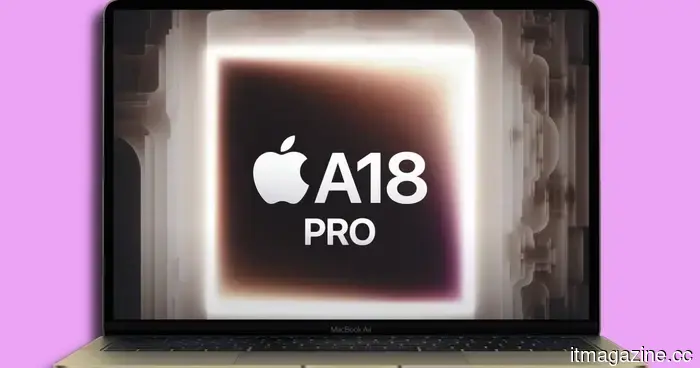
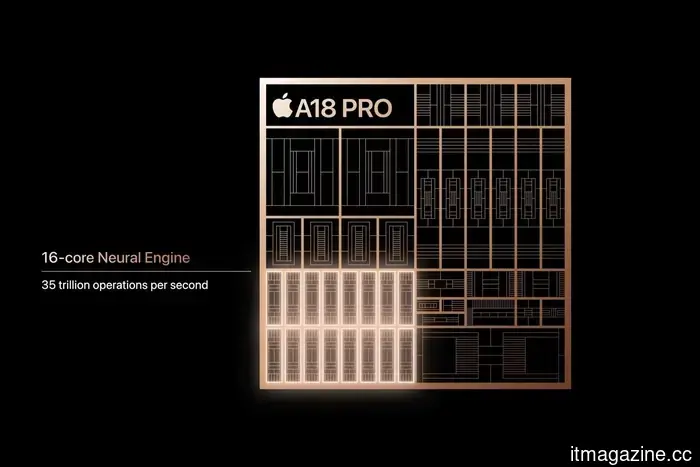
A recent report from the Wall Street Journal disclosed that Apple has developed a successful business model using processors that have minor defects or lower performance for its less expensive products. A prime example is the recently released $599 MacBook Neo, which features Apple’s A18 Pro chip but is equipped with a 5-core graphics processor, as opposed to the version with an additional GPU core found in the iPhone 16 Pro series.
At first glance, this may seem unappealing. No one wants to think that a new Apple product is powered by a diminished or defective core. While this may sound alarming, it's actually quite an astute move by Apple. These chips aren’t defective in the conventional sense. The underperforming component can be deactivated, resulting in a processor that still functions adequately for a different category of devices.
This process is known as chip binning and has been a staple in the semiconductor industry for many years. Apple is simply applying this technique with a level of scale and precision that few companies can replicate.
Apple’s method of transforming waste into a product strategy
Manufacturing chips is a complex endeavor. A silicon wafer consists of hundreds of chips, and they do not all emerge the same. Some meet the highest performance standards, while others may have weaker cores. Additionally, there are chips that consume more power than anticipated, as well as those that are defective enough to be discarded. The best-performing chips are allocated to high-end products, while the slightly flawed ones can be categorized into lower “bins” for alternative usage, allowing for performance-based grouping and recycling if they fail testing.
Apple's strength lies in its ability to sell a vast number of devices across various price ranges. According to the WSJ report, Apple sells over 200 million iPhones annually, meaning that even a small fraction of chips lacking optimal specifications can be redeployed into millions of processors.
A chip that isn’t suitable for a flagship iPhone can still function perfectly in an entry-level MacBook, iPad, Apple TV, or even the HomePod. This flexibility is how Apple maximizes its silicon across products, including older A-series and S-series chips.
The focus on more affordable Apple products
The example of the MacBook Neo is particularly noteworthy because it illustrates how Apple can produce a lower-cost device while retaining its silicon advantage. The Neo is said to utilize an A18 Pro chip that would otherwise be less viable due to the disabled GPU core, which also contributes to its $599 price. This strategy is not just about efficiency; it’s also sound business practice.
Another notable example is the iPhone 17e, which uses chips that do not meet the specifications of the iPhone 17, alongside the iPhone Air, which employs a chip that falls short of the premium iPhone 17 Pro standards. Since 2021, Apple has been offering six A-series chips with one fewer GPU core in its budget devices after the full versions launched in the higher-end models.
Apple’s larger scale is one of its significant advantages, as smaller competitors may lack the volume necessary to implement a complete lineup strategy using these imperfect chips. For many consumers, the technically flawed chips represent a satisfactory product as long as they perform well for their price. Moreover, amid the ongoing memory shortage, this approach helps Apple sustain its profit margins.


Other articles
 The RAM crisis is poised to worsen, and your new devices may bear the cost.
A recent prediction indicates that Nvidia’s Rubin AI platform may use more than 6 billion GB of LPDDR memory by 2027, straining supply chains for gadgets.
The RAM crisis is poised to worsen, and your new devices may bear the cost.
A recent prediction indicates that Nvidia’s Rubin AI platform may use more than 6 billion GB of LPDDR memory by 2027, straining supply chains for gadgets.
 ICE is planning GPU compute futures in collaboration with its partner Ornn Index.
Intercontinental Exchange collaborates with Ornn to introduce cash-settled futures that monitor GPU computing expenses, shortly after CME Group revealed competing compute contracts.
ICE is planning GPU compute futures in collaboration with its partner Ornn Index.
Intercontinental Exchange collaborates with Ornn to introduce cash-settled futures that monitor GPU computing expenses, shortly after CME Group revealed competing compute contracts.
 I’m not sure that Googlebook will be Google's next major success, or if it even warrants that title.
Google aims for Googlebook to be the MacBook alternative for Android users, but untested AI, diverse silicon options, and the absence of confirmed pricing present significant challenges.
I’m not sure that Googlebook will be Google's next major success, or if it even warrants that title.
Google aims for Googlebook to be the MacBook alternative for Android users, but untested AI, diverse silicon options, and the absence of confirmed pricing present significant challenges.
 Cropin expands its global AgTech analytics capabilities with Sisense | TNW
Cropin, based in India, has incorporated Sisense's embedded analytics into its agriculture cloud platform, providing stakeholders in over 100 countries with quicker insights into crops and supply chains.
Cropin expands its global AgTech analytics capabilities with Sisense | TNW
Cropin, based in India, has incorporated Sisense's embedded analytics into its agriculture cloud platform, providing stakeholders in over 100 countries with quicker insights into crops and supply chains.
 I’m not sure that Googlebook will become the next big venture for Google, or if it even merits that status.
Google aims for Googlebook to become the MacBook equivalent for Android consumers; however, the lack of reliable AI, fragmented hardware options, and uncertainty around pricing render that a significant challenge.
I’m not sure that Googlebook will become the next big venture for Google, or if it even merits that status.
Google aims for Googlebook to become the MacBook equivalent for Android consumers; however, the lack of reliable AI, fragmented hardware options, and uncertainty around pricing render that a significant challenge.
 LG has just revealed a 1000Hz gaming monitor that may provide a significant advantage in FPS games.
LG has introduced the UltraGear 25G590B, the first Full HD gaming monitor in the world to support a native 1000Hz refresh rate. Designed for competitive FPS gaming, this 24.5-inch display achieves a native refresh rate of 1000Hz at FHD resolution.
LG has just revealed a 1000Hz gaming monitor that may provide a significant advantage in FPS games.
LG has introduced the UltraGear 25G590B, the first Full HD gaming monitor in the world to support a native 1000Hz refresh rate. Designed for competitive FPS gaming, this 24.5-inch display achieves a native refresh rate of 1000Hz at FHD resolution.
Apple is selling you faulty chips, and you’re willingly purchasing them.
Apple's more affordable devices might utilize chips that fell short of the top performance benchmarks, but this approach is less underhanded than it appears and significantly more intelligent than many consumers understand.