
The RAM crisis is poised to worsen, and your new devices may bear the cost.
Nvidia’s upcoming AI powerhouse may further strain the RAM market
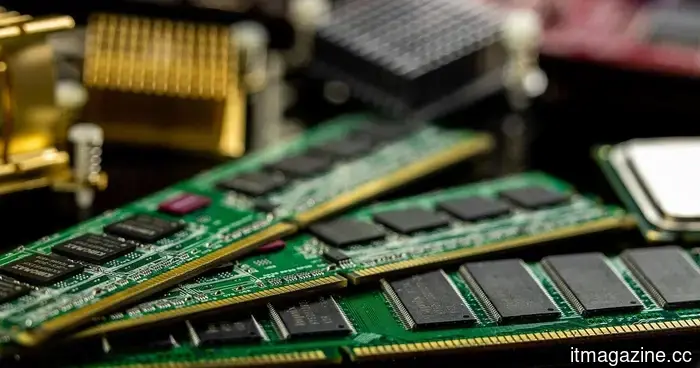
The memory market is already in a dire situation, and Nvidia's new Rubin could intensify the issues. A report from Fast Company, referencing forecasts from Citrini Research, suggests that Nvidia’s next generation AI platform might need over 6 billion GB of LPDDR memory by 2027. Given that LPDDR (low-power dynamic RAM) is primarily utilized in smartphones, tablets, and other portable devices, this could exacerbate price increases.
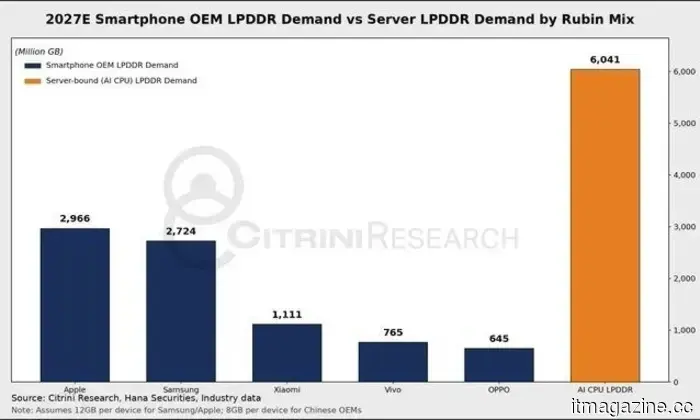
If this report holds true, Nvidia alone might consume more memory than both Apple and Samsung combined.
Citrini Research
Impact of Rubin on consumer memory supply
Nvidia’s Rubin platform represents the company's significant advancement in AI hardware following Blackwell. Designed to meet the surging demand for generative AI and real-time processing, this next-gen platform is anticipated to be twice as fast as Blackwell. However, this growth leads to scalability challenges.
Citrini anticipates Nvidia’s LPDDR demand will reach 6.041 billion GB in 2027, compared to Apple’s 2.966 billion GB and Samsung’s 2.724 billion GB. Nvidia is expected to surpass both companies' usage individually this year and then exceed their combined demand next year. This tremendous demand could place even more strain on the already tight memory supply, particularly as Google, AMD, and other AI competitors also increase their LPDDR requirements.
Your next phone or laptop may be affected
The ongoing memory shortage is already leading to significant price increases across consumer electronics, impacting new devices. As many gadgets from the pandemic era, such as TVs and PCs, enter their refresh cycles, replacing items from smartphones to smart TVs has become considerably more costly.
Memory prices have reportedly surged by 150% to over 200% in the past year, with storage costs rising similarly. The RAM situation has become so challenging that even expandable storage might make a comeback in smartphones. Although Rubin could be a significant advancement for Nvidia, consumers may face much higher prices for their next technology purchases.




Other articles
 ICE is working on GPU compute futures in collaboration with its partner, Ornn index.
Intercontinental Exchange partners with Ornn to introduce cash-settled futures that monitor GPU computing expenses, shortly after CME Group revealed competing compute contracts.
ICE is working on GPU compute futures in collaboration with its partner, Ornn index.
Intercontinental Exchange partners with Ornn to introduce cash-settled futures that monitor GPU computing expenses, shortly after CME Group revealed competing compute contracts.
 An open-source GIMP redesign offers a look similar to Photoshop without the expensive price tag.
PhotoGIMP provides GIMP 3.0 with a layout reminiscent of Photoshop, incorporates familiar keyboard shortcuts, and offers a more streamlined workspace for those transitioning from Adobe's editor.
An open-source GIMP redesign offers a look similar to Photoshop without the expensive price tag.
PhotoGIMP provides GIMP 3.0 with a layout reminiscent of Photoshop, incorporates familiar keyboard shortcuts, and offers a more streamlined workspace for those transitioning from Adobe's editor.
 The RAM crisis is set to worsen, and your new devices might bear the cost.
A recent forecast indicates that Nvidia’s Rubin AI platform might use more than 6 billion GB of LPDDR memory by 2027, which could strain supply chains for gadgets.
The RAM crisis is set to worsen, and your new devices might bear the cost.
A recent forecast indicates that Nvidia’s Rubin AI platform might use more than 6 billion GB of LPDDR memory by 2027, which could strain supply chains for gadgets.
 I’m not sure that Googlebook will become the next big venture for Google, or if it even merits that status.
Google aims for Googlebook to become the MacBook equivalent for Android consumers; however, the lack of reliable AI, fragmented hardware options, and uncertainty around pricing render that a significant challenge.
I’m not sure that Googlebook will become the next big venture for Google, or if it even merits that status.
Google aims for Googlebook to become the MacBook equivalent for Android consumers; however, the lack of reliable AI, fragmented hardware options, and uncertainty around pricing render that a significant challenge.
 Alexa+ can now generate AI podcasts on any subject, if you prefer not to listen to human-hosted podcasts.
Alexa+ can now generate personalized podcast-style episodes in just a few minutes, utilizing AI host voices and content from news publishers and various other sources.
Alexa+ can now generate AI podcasts on any subject, if you prefer not to listen to human-hosted podcasts.
Alexa+ can now generate personalized podcast-style episodes in just a few minutes, utilizing AI host voices and content from news publishers and various other sources.
 Cropin expands its global AgTech analytics capabilities with Sisense | TNW
Cropin, based in India, incorporates Sisense embedded analytics into its agriculture cloud platform, providing stakeholders in over 100 countries with quicker insights into crop and supply-chain data.
Cropin expands its global AgTech analytics capabilities with Sisense | TNW
Cropin, based in India, incorporates Sisense embedded analytics into its agriculture cloud platform, providing stakeholders in over 100 countries with quicker insights into crop and supply-chain data.
The RAM crisis is poised to worsen, and your new devices may bear the cost.
A recent prediction indicates that Nvidia’s Rubin AI platform may use more than 6 billion GB of LPDDR memory by 2027, straining supply chains for gadgets.