
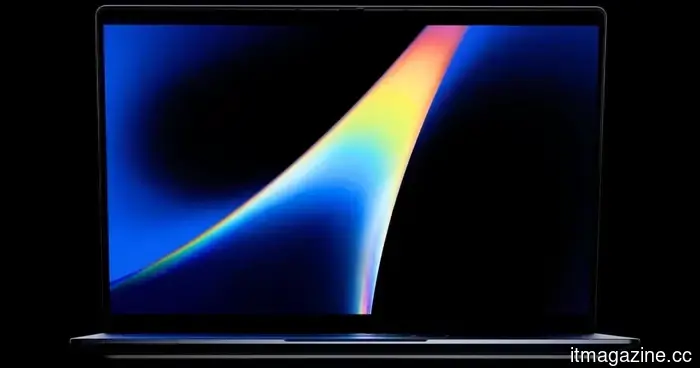
I’m not sure that Googlebook will become the next big venture for Google, or if it even merits that status.
Fifteen years ago, Google made a bold move with its browser, betting that it could manage most everyday tasks without a conventional desktop operating system. The idea was straightforward: condense a laptop's operating system into a browser, rely on the cloud for everything else, and set a competitive price to avoid complaints.
A few years later, when original equipment manufacturers (OEMs) began launching Chromebooks running on ChromeOS, and people became more familiar with them, these devices found popularity in workplaces and educational institutions. The success of the Chromebook platform stemmed not from ambition or luxury branding, but from its affordability and practicality.
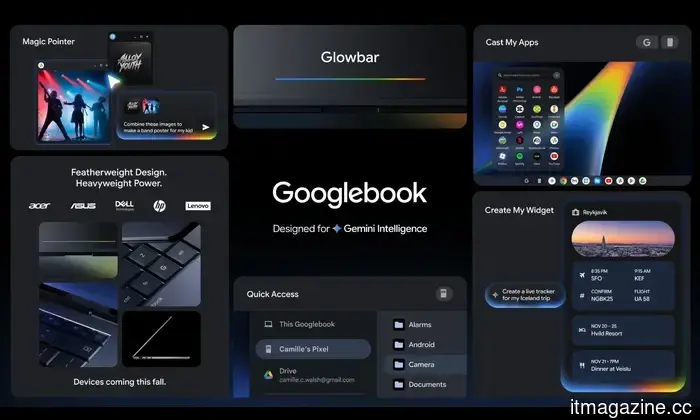
Now, Google is taking another significant risk with a new AI-driven laptop platform called Googlebook. This was unveiled during the Android Show on May 12, 2026, revealing Gemini Intelligence, which serves as the foundation for the entire user experience.
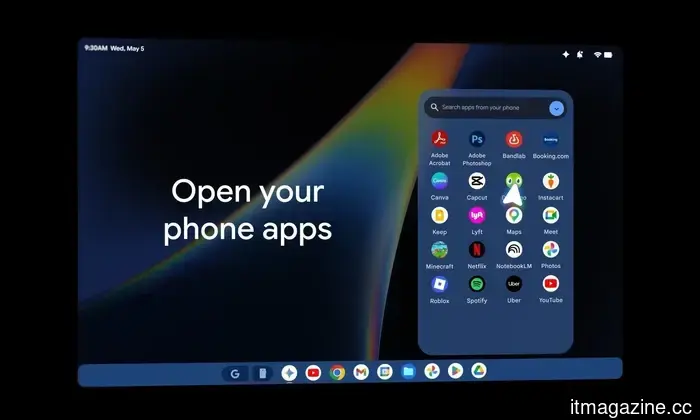
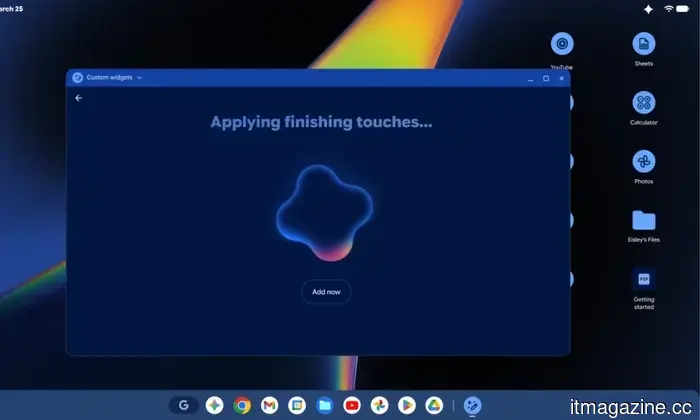
Users can expect AI suggestions as they move the cursor, widgets generated around typed sentences, and access to Android phone apps and files directly on the laptop without needing third-party applications. This all occurs on a platform designed specifically for seamless, Gemini-enhanced experiences.
Is Google poised to repeat its Chromebook missteps?
This seems like an intriguing concept, yet I have reservations about whether Googlebook will become the company's next major success. A significant part of the concept hinges on creating a laptop that integrates closely with Android phones and the broader Android ecosystem, including seamless handoffs, native app accessibility, and files that transition smoothly between devices.
While this is a captivating idea, especially for Android users, Apple has already successfully implemented and refined such an ecosystem, creating the most functional cross-device consumer electronics system to date.
The reason Apple devices excel at device-to-device communication is due to their shared ARM technology.
With the same silicon family and instruction set, there is no translation lag, forming the basis of the handoff features utilized daily by iPhone and Mac users. Personally, I enjoy copying something on my iPhone and pasting it directly onto my MacBook with consistent success.
However, the challenge for Googlebook lies in its reliance on chipsets from various manufacturers, including Intel (which uses x86 architecture) and Qualcomm and MediaTek (both utilizing ARM architecture).
This results in two distinct silicon architectures from three chipmakers, along with one Gemini Intelligence layer needing to function coherently across all of them. This discrepancy complicates matters.
Apple possesses a fully functional cross-device ecosystem.
Apple controls its hardware from start to finish, while Google is distributing these decisions across different chip vendors and OEM partners, hoping for a consistent experience no matter which chipset and supporting hardware are used. It's important to note that Gemini Intelligence requires a high-end chipset, a minimum of 12GB of RAM, and support for AI Core and Gemini Nano v3 on smartphones.
Google is again gambling on a multi-architecture approach, but the stakes are much higher due to the increased demands of the AI layer.
This aspiration highlights the fragmentation issue that has already appeared with Chromebooks. When ChromeOS was introduced with Android apps on Intel-based Chromebooks, users experienced significant performance issues, faster battery depletion, and, at times, apps that simply wouldn’t install. Google managed to address some of these issues eventually, but the fundamental problem persisted, merely becoming less noticeable.
The reliance on multiple chipsets could potentially enhance or detract from the Googlebook experience.
Intel’s entry-level Wildcat Lake chips can provide up to 40 TOPS of local AI processing (combining NPU, CPU, and GPU), sufficient to support features like Magic Pointer while running them smoothly and entirely on-device. The Snapdragon X Plus takes it a step further, providing 45 TOPS solely from its NPU.
RAW TOPS from a unified NPU manage localized tasks more efficiently compared to those spread out over CPU, GPU, and NPU.
However, I am concerned about MediaTek’s lower-cost ARM chips, which have powered Chromebooks for years and lack comparable NPU capabilities or use different architectural extensions not suited for the same tasks. The result is clear: the on-device AI experiences may vary significantly across different models.
Thus, the envisioned “unified Googlebook experience” that the company spent the entire Android Show keynote outlining could be compromised. Whether Google intends to reserve the more demanding Gemini Intelligence features for higher-end models while delegating AI tasks to the cloud on more affordable versions, leading to latency, remains to be clarified.
Google has stated it is controlling hardware requirements, but managing a multi-architecture framework among different vendors and OEMs is likely to be much trickier.
What challenges does Googlebook face in the market?
To attract budget-conscious consumers, Google may need to offer significantly lower prices than established notebooks like the MacBook Air and $1,000 Microsoft Copilot+ PCs. A starting price between $500 and $700 could be the ideal range, even with rising component costs. However, this pricing would place the so-called “Googlebook” in direct competition



Other articles
 LG has recently unveiled a 1000Hz gaming monitor that might provide you with a significant advantage in FPS games.
LG has introduced the UltraGear 25G590B, which is the first Full HD gaming monitor in the world featuring a native refresh rate of 1000Hz. Designed for competitive FPS gaming, this 24.5-inch display provides a native 1000Hz refresh rate at Full HD resolution.
LG has recently unveiled a 1000Hz gaming monitor that might provide you with a significant advantage in FPS games.
LG has introduced the UltraGear 25G590B, which is the first Full HD gaming monitor in the world featuring a native refresh rate of 1000Hz. Designed for competitive FPS gaming, this 24.5-inch display provides a native 1000Hz refresh rate at Full HD resolution.
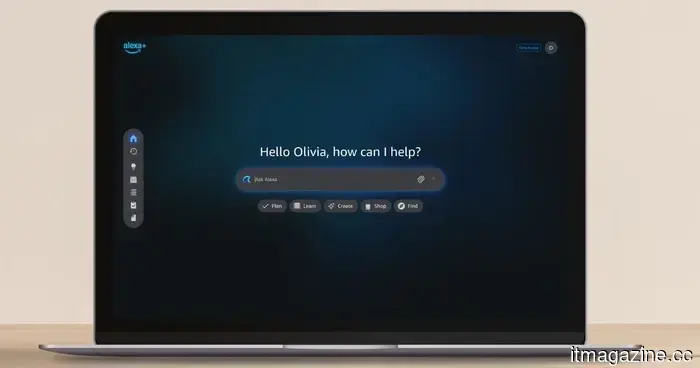 Alexa+ can now create AI podcasts on any subject, in case you prefer not to listen to human-hosted ones.
Alexa+ can now generate personalized podcast-style episodes in just minutes, utilizing AI host voices and content from news publishers and various other sources.
Alexa+ can now create AI podcasts on any subject, in case you prefer not to listen to human-hosted ones.
Alexa+ can now generate personalized podcast-style episodes in just minutes, utilizing AI host voices and content from news publishers and various other sources.
 LG has just revealed a 1000Hz gaming monitor that may provide a significant advantage in FPS games.
LG has introduced the UltraGear 25G590B, the first Full HD gaming monitor in the world to support a native 1000Hz refresh rate. Designed for competitive FPS gaming, this 24.5-inch display achieves a native refresh rate of 1000Hz at FHD resolution.
LG has just revealed a 1000Hz gaming monitor that may provide a significant advantage in FPS games.
LG has introduced the UltraGear 25G590B, the first Full HD gaming monitor in the world to support a native 1000Hz refresh rate. Designed for competitive FPS gaming, this 24.5-inch display achieves a native refresh rate of 1000Hz at FHD resolution.
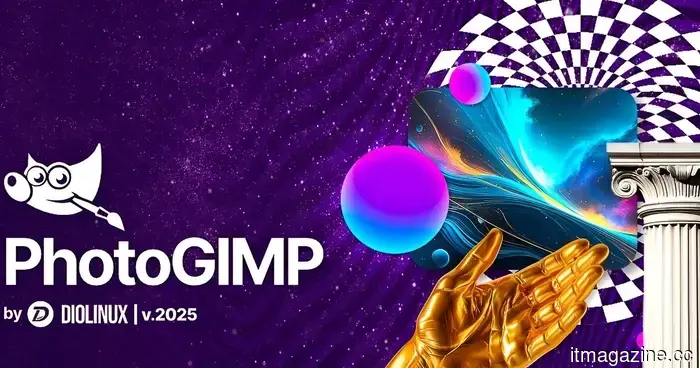 An open-source GIMP redesign offers a look similar to Photoshop without the expensive price tag.
PhotoGIMP provides GIMP 3.0 with a layout reminiscent of Photoshop, incorporates familiar keyboard shortcuts, and offers a more streamlined workspace for those transitioning from Adobe's editor.
An open-source GIMP redesign offers a look similar to Photoshop without the expensive price tag.
PhotoGIMP provides GIMP 3.0 with a layout reminiscent of Photoshop, incorporates familiar keyboard shortcuts, and offers a more streamlined workspace for those transitioning from Adobe's editor.
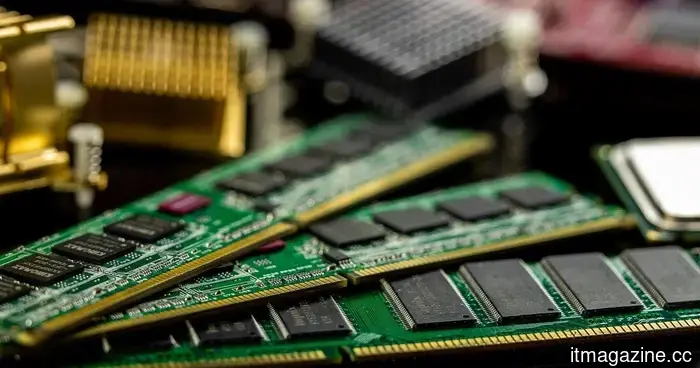 The RAM crisis is poised to worsen, and your new devices may bear the cost.
A recent prediction indicates that Nvidia’s Rubin AI platform may use more than 6 billion GB of LPDDR memory by 2027, straining supply chains for gadgets.
The RAM crisis is poised to worsen, and your new devices may bear the cost.
A recent prediction indicates that Nvidia’s Rubin AI platform may use more than 6 billion GB of LPDDR memory by 2027, straining supply chains for gadgets.
 ICE is planning GPU compute futures in collaboration with its partner Ornn Index.
Intercontinental Exchange collaborates with Ornn to introduce cash-settled futures that monitor GPU computing expenses, shortly after CME Group revealed competing compute contracts.
ICE is planning GPU compute futures in collaboration with its partner Ornn Index.
Intercontinental Exchange collaborates with Ornn to introduce cash-settled futures that monitor GPU computing expenses, shortly after CME Group revealed competing compute contracts.
I’m not sure that Googlebook will become the next big venture for Google, or if it even merits that status.
Google aims for Googlebook to become the MacBook equivalent for Android consumers; however, the lack of reliable AI, fragmented hardware options, and uncertainty around pricing render that a significant challenge.