

I’m not sure that Googlebook will be Google's next major success, or if it even warrants that title.
Fifteen years ago, Google made a strategic decision regarding its browser, betting that it could manage most of the typical daily tasks without relying on a conventional desktop operating system. The idea was straightforward: condense a laptop’s operating system into a browser, utilize cloud services for the rest, and set an aggressive price to eliminate complaints.
A few years later, when original equipment manufacturers (OEMs) began producing Chromebooks running on ChromeOS and public awareness grew, they became popular in workplaces and educational institutions. The Chromebook platform succeeded not due to ambition or luxury branding, but because of its affordability and practicality.
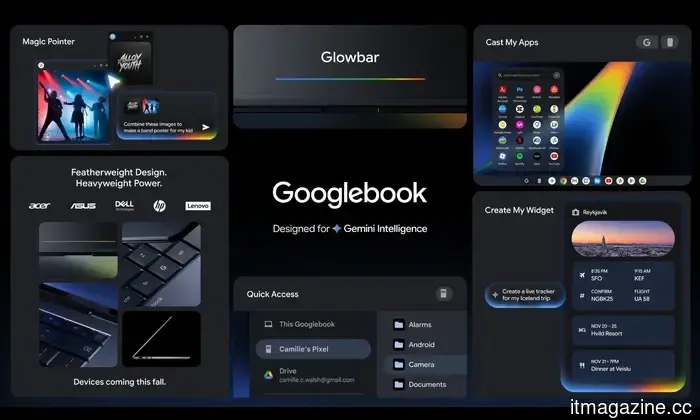
Now, Google is making another significant bet, this time on a more costly venture centered around an AI-driven laptop platform called Googlebook. On May 12, 2026, during the Android Show, Google unveiled Googlebook, alongside Gemini Intelligence, which forms the foundation of the entire platform.
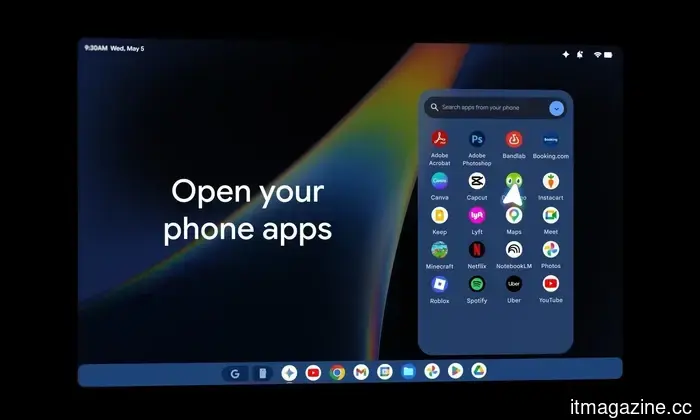
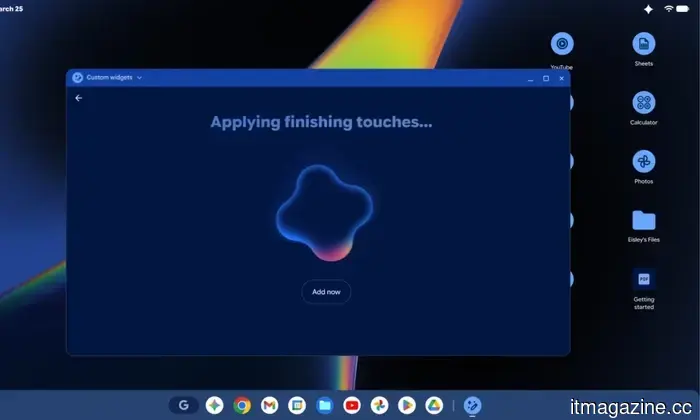
With Googlebook, moving the cursor reveals AI with contextual suggestions, composing a sentence enables AI to generate a widget, and accessing apps and files from your Android phone without using a third-party app is seamless—all designed for a cohesive, Gemini-enhanced experience.
Is Google set to repeat its Chromebook error?
While the concept seems intriguing, I have my reservations regarding Googlebook’s potential to become Google’s next major success. A significant portion of the appeal relies on creating a laptop that is closely integrated with Android phones and the wider Android ecosystem, including handoffs, native app accessibility, and seamless movement of files across devices.
This is an appealing proposition, particularly for Android users, but it’s one that Apple has already implemented, refined, and turned into a highly functional cross-device electronics ecosystem.
Apple’s devices excel at device-to-device communication because they share the same underlying ARM technology.
Having the same silicon family and instruction set eliminates translation issues, which is the basis for the handoff features that iPhone and Mac users enjoy every day. Personally, I find it very convenient to copy something on my iPhone and paste it directly onto my MacBook without any hassle.
The challenge, however, is that, unlike Apple, Googlebook will utilize chipsets from various manufacturers, including Intel (which operates on x86 architecture), Qualcomm, and MediaTek (both utilizing ARM architecture).
This results in a blend of different silicon architectures from three chip producers, combined with one Gemini Intelligence layer that must cohesively operate across all platforms. This disparity complicates matters.
Apple has already established a working cross-device ecosystem
Apple maintains complete control over its silicon. In contrast, Google is relying on different chip vendors and OEM partners, hoping for a consistent user experience regardless of the chip and supporting hardware used in the devices. It’s also important to note that Gemini Intelligence requires a flagship-quality chipset, with at least 12GB of RAM and support for AI Core and Gemini Nano v3, on smartphones.
Google is again betting on a multi-architecture approach, but the risk is much higher this time since the AI layer demands more from the silicon.
This hope is where the fragmentation issue arises, which has previously affected Chromebooks. When ChromeOS was launched with Android apps on Intel-based Chromebooks, it led to noticeable performance issues, quicker battery drain, and, in some instances, apps that simply wouldn’t install. While Google eventually improved the situation, the core issue persisted although it became less visible.
The multi-chip gamble could either enhance or hinder the Googlebook experience
Intel’s entry-level Wildcat Lake processors can achieve up to 40 TOPS of local AI processing (combined from the NPU, CPU, and GPU), which should support features like Magic Pointer efficiently, and, importantly, completely on-device. The Snapdragon X Plus pushes this further, providing 45 TOPS solely from its NPU.
RAW TOPS from a unified NPU manage localized tasks more effectively than those distributed across the CPU, GPU, and NPU.
However, my concern lies with MediaTek’s budget ARM chips that have powered Chromebooks for years, as they lack comparable NPU capabilities or utilize architectural extensions unsuitable for similar workloads. This leads to a straightforward consequence: on-device AI functionalities may vary significantly between models.
Consequently, the promised "unified Googlebook experience," which the company elaborated on during the Android Show keynote, might be at risk. It remains to be seen whether Google intends to reserve the heavy features of Gemini Intelligence for high-end versions or process AI tasks in the cloud for more affordable models, which would introduce latency.
Google mentioned that it will control the hardware specifications, but navigating a multi-architecture environment spread across different manufacturers and OEMs could prove to be challenging.
What challenges does Googlebook face in the market?
To attract budget-conscious buyers, Google may need to significantly underprice established laptops such as the MacBook Air and $1,000 Microsoft Copilot+ PCs. An entry-level price range of $500 to $700 could be optimal, particularly given rising component costs. However, this



Other articles
 The RAM crisis is poised to worsen, and your new devices may bear the cost.
A recent prediction indicates that Nvidia’s Rubin AI platform may use more than 6 billion GB of LPDDR memory by 2027, straining supply chains for gadgets.
The RAM crisis is poised to worsen, and your new devices may bear the cost.
A recent prediction indicates that Nvidia’s Rubin AI platform may use more than 6 billion GB of LPDDR memory by 2027, straining supply chains for gadgets.
 LG has just revealed a 1000Hz gaming monitor that may provide a significant advantage in FPS games.
LG has introduced the UltraGear 25G590B, the first Full HD gaming monitor in the world to support a native 1000Hz refresh rate. Designed for competitive FPS gaming, this 24.5-inch display achieves a native refresh rate of 1000Hz at FHD resolution.
LG has just revealed a 1000Hz gaming monitor that may provide a significant advantage in FPS games.
LG has introduced the UltraGear 25G590B, the first Full HD gaming monitor in the world to support a native 1000Hz refresh rate. Designed for competitive FPS gaming, this 24.5-inch display achieves a native refresh rate of 1000Hz at FHD resolution.
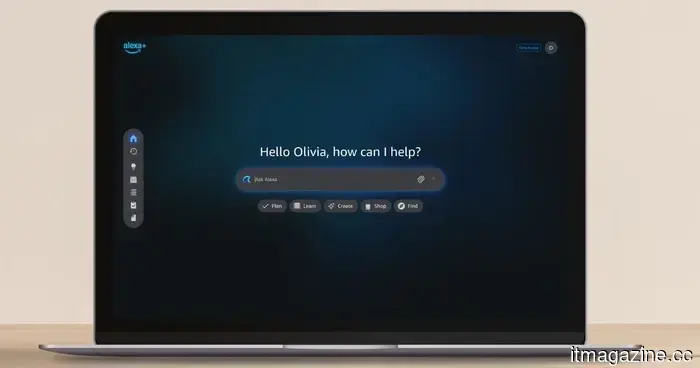 Alexa+ can now create AI podcasts on any subject, in case you prefer not to listen to human-hosted ones.
Alexa+ can now generate personalized podcast-style episodes in just minutes, utilizing AI host voices and content from news publishers and various other sources.
Alexa+ can now create AI podcasts on any subject, in case you prefer not to listen to human-hosted ones.
Alexa+ can now generate personalized podcast-style episodes in just minutes, utilizing AI host voices and content from news publishers and various other sources.
 ICE is planning GPU compute futures in collaboration with its partner Ornn Index.
Intercontinental Exchange collaborates with Ornn to introduce cash-settled futures that monitor GPU computing expenses, shortly after CME Group revealed competing compute contracts.
ICE is planning GPU compute futures in collaboration with its partner Ornn Index.
Intercontinental Exchange collaborates with Ornn to introduce cash-settled futures that monitor GPU computing expenses, shortly after CME Group revealed competing compute contracts.
 Cropin expands its global AgTech analytics capabilities with Sisense | TNW
Cropin, based in India, incorporates Sisense embedded analytics into its agriculture cloud platform, providing stakeholders in over 100 countries with quicker insights into crop and supply-chain data.
Cropin expands its global AgTech analytics capabilities with Sisense | TNW
Cropin, based in India, incorporates Sisense embedded analytics into its agriculture cloud platform, providing stakeholders in over 100 countries with quicker insights into crop and supply-chain data.
 Cropin expands its global AgTech analytics capabilities with Sisense | TNW
Cropin, based in India, has incorporated Sisense's embedded analytics into its agriculture cloud platform, providing stakeholders in over 100 countries with quicker insights into crops and supply chains.
Cropin expands its global AgTech analytics capabilities with Sisense | TNW
Cropin, based in India, has incorporated Sisense's embedded analytics into its agriculture cloud platform, providing stakeholders in over 100 countries with quicker insights into crops and supply chains.
I’m not sure that Googlebook will be Google's next major success, or if it even warrants that title.
Google aims for Googlebook to be the MacBook alternative for Android users, but untested AI, diverse silicon options, and the absence of confirmed pricing present significant challenges.