

ICE is planning GPU compute futures in collaboration with its partner Ornn Index.
TL;DRICE, the proprietor of the New York Stock Exchange, is collaborating with index provider Ornn to introduce cash-settled futures contracts linked to GPU computing expenses. This announcement follows shortly after CME Group revealed its own compute futures, indicating that Wall Street is racing to establish AI computing power as a standardized, tradable commodity.
Intercontinental Exchange, the parent organization of the New York Stock Exchange, is readying the launch of futures contracts associated with the cost of computing power, highlighting Wall Street's recognition of AI infrastructure as a promising commodity market. ICE disclosed on Monday that it would partner with Ornn, a financial-infrastructure firm that offers index products tracking GPU computing costs in real time, to create the new contracts. These futures will be denominated in US dollars, settled in cash, and referenced against Ornn’s indexes that cover various major GPU models. The plans are still pending regulatory approval.
The collaboration is a combination of one of the largest exchange operators globally with a startup that has quietly developed the framework for computing price discovery. Ornn, officially known as Ornn AI Inc, publishes the Ornn Compute Price Index, which monitors real-time spot prices for GPU computing across different hardware types, including Nvidia's H100, H200, and B200 chips. This index, now accessible via the Bloomberg Terminal, relies on actual transaction data from active GPU markets and has attracted over 400 data center operators, investors, and AI companies.
Trabue Bland, senior vice president of futures markets at ICE, described the initiative as a response to a market that has surpassed its informal pricing systems. According to him, the compute market is "desperately in need of a globally accepted pricing mechanism and risk management tool" as AI transitions from research environments to a key component of the global economy.
The contracts will be cash-settled rather than involving physical delivery, a format familiar from energy and financial futures. For AI companies planning extensive model training sessions or cloud providers wanting to secure capacity, these instruments would provide a means to hedge against the fluctuating compute costs that have accompanied Big Tech’s $650 billion capital expenditure surge in 2026.
ICE is not the only entity recognizing this potential. CME Group, the world's largest derivatives exchange, unveiled its own compute futures contracts on May 12, collaborating with Silicon Data to develop products founded on daily GPU benchmark rental rates. CME's contracts will refer to the Silicon Data H100 Rental Index, which monitors the rental costs of high-end GPUs utilized for AI training tasks.
The simultaneous movement by two of the most established futures exchanges into the compute sector signifies that institutional confidence in compute-as-commodity has reached a pivotal moment. This situation resembles the early days of energy futures in the 1980s, when competing exchanges rushed to establish benchmark contracts for crude oil and natural gas. The exchange that secures the most liquidity initially will likely set the reference price for the sector, similar to the roles played by ICE Brent and CME WTI in oil trading.
This competitive landscape also extends beyond the major players. Architect Financial Technologies partnered with Ornn earlier in January to launch exchange-traded perpetual futures on GPU and RAM prices through its AX platform, while prediction market Kalshi offers contracts allowing users to speculate on Nvidia GPU compute prices. Yet, ICE and CME possess advantages that newer entrants lack: substantial institutional liquidity, regulatory credibility, and the clearing infrastructure that large-scale GPU-as-a-service providers and their clients will expect.
Kush Bavaria, co-founder and CEO of Ornn, bluntly highlighted the scale of the issue, stating that compute has "expanded into a trillion-dollar market, yet it still lacks the pricing and risk-transfer infrastructure that every other major commodity depends upon."
This gap has significant implications. GPU rental prices have shown extreme volatility, with Ornn’s index indicating that Nvidia Blackwell’s spot rental price increased by 48% between mid-February and mid-April 2026, from $2.75 to $4.08 per GPU-hour. For AI companies whose training runs can cost tens of millions, such price fluctuations can rapidly deplete budgets without warning. Furthermore, cloud providers, data center operators, and the financiers backing billions in AI infrastructure developments face similar risks.
A functional futures market would enable these stakeholders to lock in forward prices, transfer risk to willing counterparties, and execute capital expenditure with greater assurance. It would also yield transparent price signals currently lacking in the wider market, offering investors, analysts, and policymakers a clearer understanding of future compute costs.
The rise of compute futures indicates a more profound structural transition. As AI evolves from an experimental technology to fundamental economic infrastructure, the resources that support it are being financialized similarly to how energy, metals, and agricultural products have been in past decades. The escalating demand for advanced semiconductors has already transformed chip supply chains and driven unprecedented capital investment in the technology sector.
Futures contracts introduce a new component to this ecosystem. They establish standardized benchmarks that can inform lending decisions, insurance
Other articles
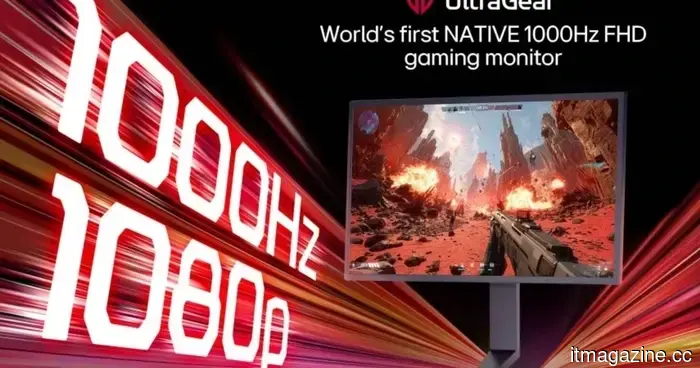 LG has recently unveiled a 1000Hz gaming monitor that might provide you with a significant advantage in FPS games.
LG has introduced the UltraGear 25G590B, which is the first Full HD gaming monitor in the world featuring a native refresh rate of 1000Hz. Designed for competitive FPS gaming, this 24.5-inch display provides a native 1000Hz refresh rate at Full HD resolution.
LG has recently unveiled a 1000Hz gaming monitor that might provide you with a significant advantage in FPS games.
LG has introduced the UltraGear 25G590B, which is the first Full HD gaming monitor in the world featuring a native refresh rate of 1000Hz. Designed for competitive FPS gaming, this 24.5-inch display provides a native 1000Hz refresh rate at Full HD resolution.
 Alexa+ can now create AI podcasts on any subject, in case you prefer not to listen to human-hosted ones.
Alexa+ can now generate personalized podcast-style episodes in just minutes, utilizing AI host voices and content from news publishers and various other sources.
Alexa+ can now create AI podcasts on any subject, in case you prefer not to listen to human-hosted ones.
Alexa+ can now generate personalized podcast-style episodes in just minutes, utilizing AI host voices and content from news publishers and various other sources.
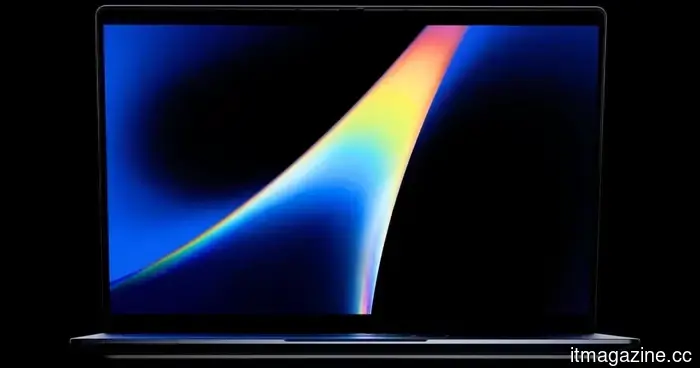 I’m not sure that Googlebook will become the next big venture for Google, or if it even merits that status.
Google aims for Googlebook to become the MacBook equivalent for Android consumers; however, the lack of reliable AI, fragmented hardware options, and uncertainty around pricing render that a significant challenge.
I’m not sure that Googlebook will become the next big venture for Google, or if it even merits that status.
Google aims for Googlebook to become the MacBook equivalent for Android consumers; however, the lack of reliable AI, fragmented hardware options, and uncertainty around pricing render that a significant challenge.
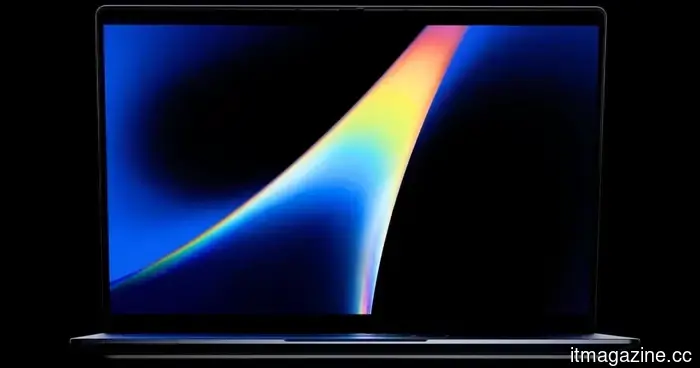 I’m not sure that Googlebook will be Google's next major success, or if it even warrants that title.
Google aims for Googlebook to be the MacBook alternative for Android users, but untested AI, diverse silicon options, and the absence of confirmed pricing present significant challenges.
I’m not sure that Googlebook will be Google's next major success, or if it even warrants that title.
Google aims for Googlebook to be the MacBook alternative for Android users, but untested AI, diverse silicon options, and the absence of confirmed pricing present significant challenges.
 An open-source GIMP redesign offers a look similar to Photoshop without the expensive price tag.
PhotoGIMP provides GIMP 3.0 with a layout reminiscent of Photoshop, incorporates familiar keyboard shortcuts, and offers a more streamlined workspace for those transitioning from Adobe's editor.
An open-source GIMP redesign offers a look similar to Photoshop without the expensive price tag.
PhotoGIMP provides GIMP 3.0 with a layout reminiscent of Photoshop, incorporates familiar keyboard shortcuts, and offers a more streamlined workspace for those transitioning from Adobe's editor.
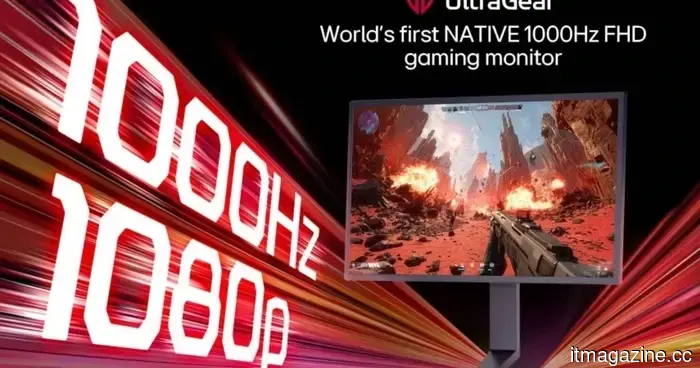 LG has just revealed a 1000Hz gaming monitor that may provide a significant advantage in FPS games.
LG has introduced the UltraGear 25G590B, the first Full HD gaming monitor in the world to support a native 1000Hz refresh rate. Designed for competitive FPS gaming, this 24.5-inch display achieves a native refresh rate of 1000Hz at FHD resolution.
LG has just revealed a 1000Hz gaming monitor that may provide a significant advantage in FPS games.
LG has introduced the UltraGear 25G590B, the first Full HD gaming monitor in the world to support a native 1000Hz refresh rate. Designed for competitive FPS gaming, this 24.5-inch display achieves a native refresh rate of 1000Hz at FHD resolution.
ICE is planning GPU compute futures in collaboration with its partner Ornn Index.
Intercontinental Exchange collaborates with Ornn to introduce cash-settled futures that monitor GPU computing expenses, shortly after CME Group revealed competing compute contracts.