

Get Ready, “Embodied AI” Is Moving from the Lab to Infrastructure
Robotics has already found applications across various sectors, including manufacturing and healthcare. This indicates that this advanced technology has been utilized and has demonstrated its potential; what follows is the socioeconomic impact. Similar to how the early internet and smartphone technology became integrated into local and global culture, we may witness a similar transformation with robotics.
The Transition from Novelty to Normalcy
It's often said that the most crucial stage for any technology occurs when it becomes a regular part of life. Society has observed this transition with the emergence of the internet, is currently witnessing it with the rise of artificial intelligence (AI), and may soon experience it with robotics, or "embodied AI." As these systems integrate into industries and homes, it signals not merely an innovation but a process of normalization. This is when a technology truly becomes disruptive.
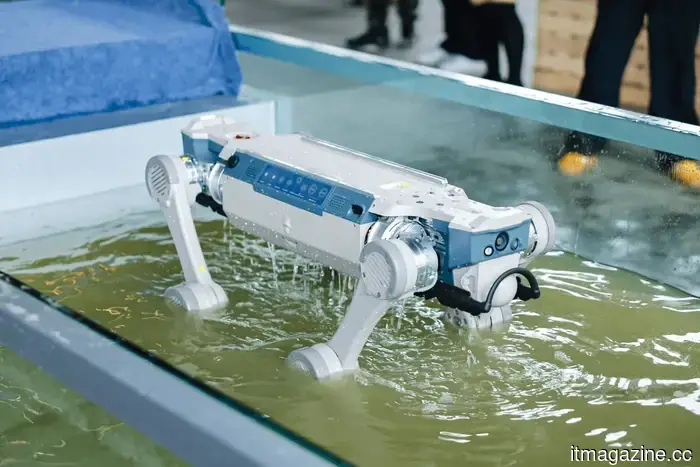
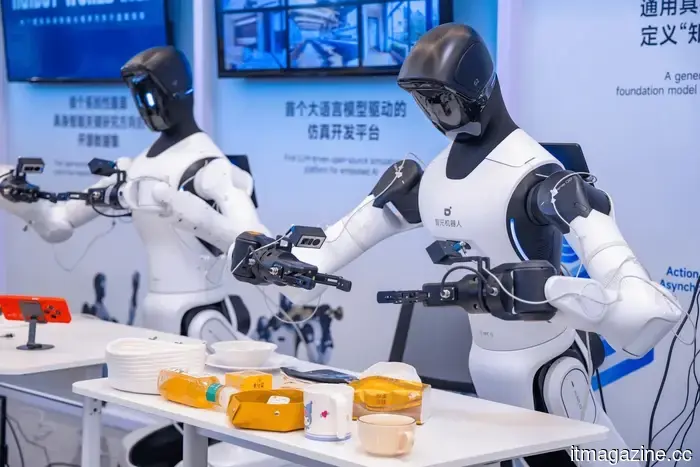
Already, companies like AGIBOT are shifting focus from development to what they describe as the “embodied AI deployment phase.” Their new approach centers on creating systems designed for reliable performance in real-world scenarios; AGIBOT's architecture, for example, is crafted for movement, interaction, and manipulation. Each robot is tailored for a specific operational setting.
Infrastructure and Restructuring
Implementing robotic solutions demands more than just a choice; it necessitates the creation of data pipelines, maintenance frameworks, and software standards. Just as cloud computing has facilitated online AI, physical infrastructure must now cater to the requirements of embodied AI.
Moreover, this developing infrastructure should counter the prevailing idea that “robots are replacing jobs.” Rather than displacing workers, these machines should automate specific tasks, allowing employees to focus on the more complex aspects of their roles. This may also pave the way for hybrid positions, such as robot supervisors or fleet managers, potentially reshaping the concept of “work.”
A Model Based on Access Rather Than Ownership
In general, the global economy has been shifting toward a subscription-based model instead of one-time purchases. While opinions on this transition vary, it is likely to result in “robot-as-a-service” models instead of outright robot ownership. This approach reduces the average barrier to accessing robots but increases reliance on platforms; unlike a new household appliance, robot access may be seen as a long-term service or utility.
Reliability as the Core Focus
Currently, the primary technical challenge for robotics is not whether they can perform tasks, but whether they can do so safely and consistently on a large scale. Demonstrations and practical applications have validated the feasibility of these types of embodied AI, yet reliability must be assessed over a significantly longer timeframe. The implications of robotics technology becoming mainstream are yet to be fully understood.
Adopting a system-level perspective on embodied AI reveals that robots do not function in isolation; the systems that support them cannot either. This understanding redefines what progress looks like in this domain: it involves a system that can be deployed, refined, and scaled reliably. Embracing this methodology could potentially lead the industry into a phase where AI becomes widely and physically accessible.
Other articles
 The Camera app on the Apple iPhone may finally stop assuming that all users are novices.
Apple is said to be revamping the iPhone Camera app, introducing customizable control widgets, enhanced photo features, grid tools, and a Siri mode for Visual Intelligence.
The Camera app on the Apple iPhone may finally stop assuming that all users are novices.
Apple is said to be revamping the iPhone Camera app, introducing customizable control widgets, enhanced photo features, grid tools, and a Siri mode for Visual Intelligence.
 The Camera app on the Apple iPhone might finally stop catering exclusively to beginners.
Apple is said to be revamping the iPhone Camera app to include customizable control widgets, enhanced photo features, grid tools, and a Siri mode for Visual Intelligence.
The Camera app on the Apple iPhone might finally stop catering exclusively to beginners.
Apple is said to be revamping the iPhone Camera app to include customizable control widgets, enhanced photo features, grid tools, and a Siri mode for Visual Intelligence.
 The Android Show 2026: Updates on Gemini Intelligence, Googlebook, Android 17, and more.
Google entered The Android Show with an unexpected laptop, an AI feature that handles your tasks, and a much-needed security upgrade.
The Android Show 2026: Updates on Gemini Intelligence, Googlebook, Android 17, and more.
Google entered The Android Show with an unexpected laptop, an AI feature that handles your tasks, and a much-needed security upgrade.
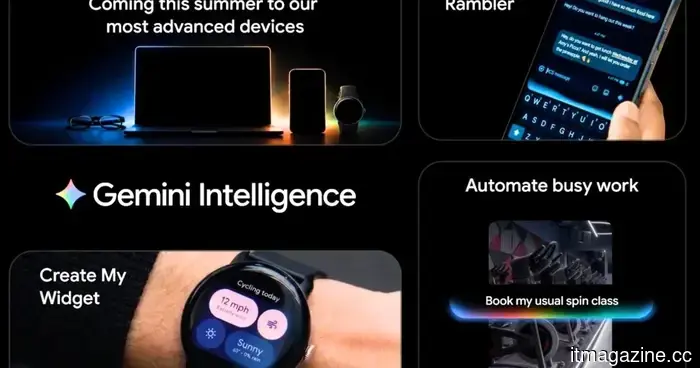 The Android Show 2026: Updates on Gemini Intelligence, Googlebook, Android 17, and more.
Google entered The Android Show with an unexpected laptop, an AI enhancement that manages your tasks, and a much-needed security update.
The Android Show 2026: Updates on Gemini Intelligence, Googlebook, Android 17, and more.
Google entered The Android Show with an unexpected laptop, an AI enhancement that manages your tasks, and a much-needed security update.
 The Xperia 1 VIII is Sony's newest phone for camera enthusiasts, but I have concerns about the extensive use of AI tuning.
Sony's latest Xperia 1 VIII features a larger telephoto sensor, camera tools inspired by Alpha, AI-driven shooting recommendations, and a high price tag that ensures it remains a niche product.
The Xperia 1 VIII is Sony's newest phone for camera enthusiasts, but I have concerns about the extensive use of AI tuning.
Sony's latest Xperia 1 VIII features a larger telephoto sensor, camera tools inspired by Alpha, AI-driven shooting recommendations, and a high price tag that ensures it remains a niche product.
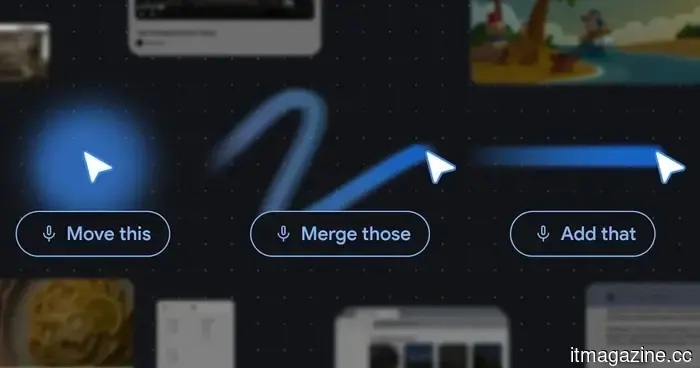 Google is reimagining the computer cursor, and its AI-driven future appears absurd.
Google is enhancing the mouse pointer on Googlebook with a Gemini-powered upgrade, enabling users to point, speak, and receive assistance on their desktop without the need for extensive prompts.
Google is reimagining the computer cursor, and its AI-driven future appears absurd.
Google is enhancing the mouse pointer on Googlebook with a Gemini-powered upgrade, enabling users to point, speak, and receive assistance on their desktop without the need for extensive prompts.
Get Ready, “Embodied AI” Is Moving from the Lab to Infrastructure
Robotics is already utilized across various sectors, including manufacturing and healthcare. This indicates that this advanced technology has been implemented and demonstrated its effectiveness; what follows is the socioeconomic reaction. Similar to how early internet and smartphone technologies became integrated into both local and global culture, such a degree of change [...]