
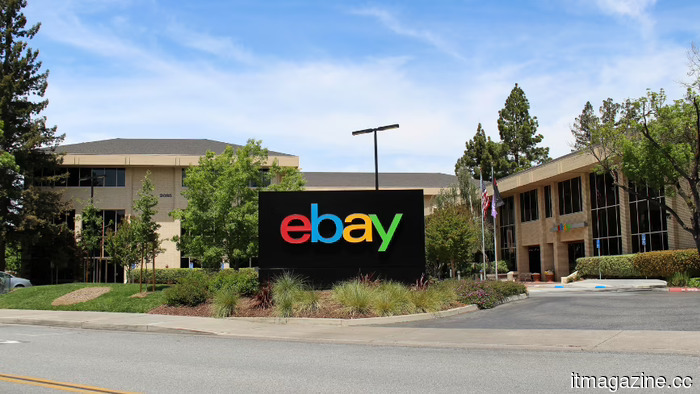
GameStop's $56 billion offer is rejected by eBay.
Ryan Cohen proposed a $125 per share offer, partially backed by a $20 billion commitment letter from TD Securities and, for a short time, by selling used store signs on eBay itself. However, the eBay board, which had to go through the process of banning and then unbanning him, has declined the offer.
On Tuesday, eBay formally turned down GameStop’s $56 billion takeover proposal, informing CEO Ryan Cohen that the offer is “neither credible nor attractive.” Paul Pressler, the chairman of eBay’s board, delivered the rejection in a letter that was notably straightforward for U.S. M&A standards. “The Board, with the backing of its independent advisors, has reviewed your proposal in detail and decided to reject it,” Pressler stated.
The board mentioned concerns regarding the uncertainty surrounding GameStop’s acquisition financing and the leverage and operational challenges posed by merging the two companies.
Cohen’s offer, revealed on May 4, was a cash-and-stock deal priced at $125 per share of eBay, representing a 20% premium on the last closing price. The cash portion was to be funded by a $20 billion commitment from TD Securities, which Cohen had made public but included a stipulation that the merged company must maintain an investment-grade credit rating post-transaction. Moody’s quickly labeled the proposed acquisition as “credit negative” for eBay due to the implied leverage. If the investment-grade rating is not achieved, the TD financing would not materialize.
Additionally, there was a unique funding aspect. On May 7, Cohen announced via X that he would sell items from his GameStop office, including store signs and old carpet, on eBay’s marketplace to help finance the bid. Initial estimates suggested that these items could raise about $138,000 against the $56 billion offer.
eBay suspended Cohen’s seller account within ten hours of his announcement, but reinstated it on May 8 after realizing the suspension was caused by automated systems. This situation briefly showcased the unusual scenario of a target of a $56 billion takeover barring the bidder from its own platform, only to reverse that decision.
Investor reactions have varied. Michael Burry of Scion Asset Management divested his GameStop shares shortly after Cohen's announcement, advising CNBC: “Never confuse debt for creativity.” Since the bid was announced, GameStop shares have declined, while eBay shares have remained above the $125 offer level at times over the past week, indicating that market participants see a low likelihood of the deal going through.
Cohen has expressed his readiness to present the offer directly to eBay shareholders in a special meeting; however, the same financing barriers that led to the board's rejection also impede a hostile bid. The prospect of a combined GameStop-eBay entity taking on an additional $20 billion in acquisition debt is generally viewed as unlikely to maintain an investment-grade rating, which would nullify the TD letter and leave about half the offer unfunded.
GameStop’s current business is significantly smaller than eBay’s, having reported approximately $4 billion in revenue in the latest fiscal year, in contrast to eBay’s $10.3 billion. The cash component of the proposed deal exceeds GameStop’s current market capitalization, highlighting the structural mismatch that has been a focal point for analysts since the bid was announced.
As of now, GameStop has not commented on the rejection. Cohen's public remarks in the past week have centered on his commitment to the deal and his willingness to engage directly with shareholders. eBay’s board has not provided any additional comments beyond Pressler’s letter.
This development adds to Cohen's series of unconventional strategies since he took the helm at GameStop. The company’s past transformations, the 2021 meme-stock phenomenon, its foray into NFTs and subsequent retreat, along with ongoing cost-cutting and treasury management initiatives, have all unfolded in the public eye. The eBay bid was poised to be his largest move yet, but it seems to have concluded sooner than Cohen might have hoped.
Other articles
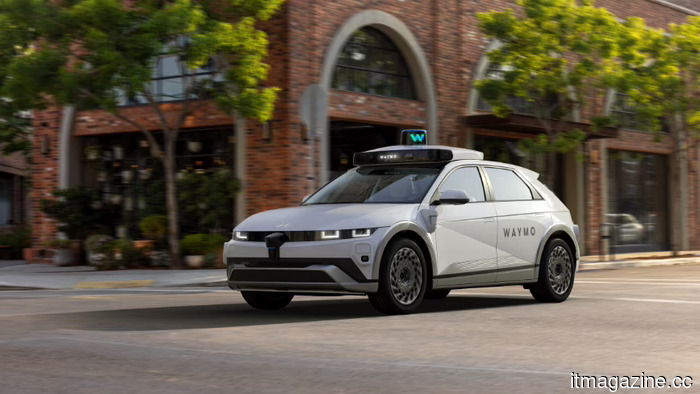 Waymo is recalling 3,791 robotaxis following an incident where a vehicle drove onto a flooded roadway.
Waymo is recalling 3,791 robotaxis due to a software issue that allowed one to enter a flooded street in San Antonio, and the report discloses the size of its US fleet.
Waymo is recalling 3,791 robotaxis following an incident where a vehicle drove onto a flooded roadway.
Waymo is recalling 3,791 robotaxis due to a software issue that allowed one to enter a flooded street in San Antonio, and the report discloses the size of its US fleet.
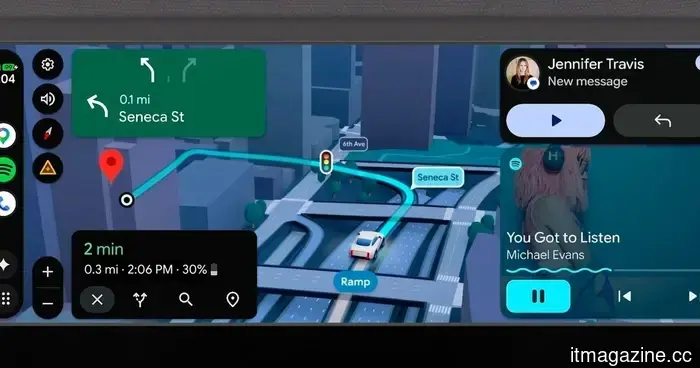 This update to Android Auto aims to alter the way you operate your vehicle and interact with it.
Android Auto is undergoing a significant enhancement that extends beyond mere design changes, offering improved navigation, enhanced entertainment options, and a more supportive driving experience.
This update to Android Auto aims to alter the way you operate your vehicle and interact with it.
Android Auto is undergoing a significant enhancement that extends beyond mere design changes, offering improved navigation, enhanced entertainment options, and a more supportive driving experience.
 AI voice chats often feel uncomfortable because the assistants struggle to determine when to speak.
Thinking Machines Lab is experimenting with full duplex AI that can both listen and reply simultaneously, but the true evaluation will be whether quicker voice conversations feel beneficial when people get the chance to use them.
AI voice chats often feel uncomfortable because the assistants struggle to determine when to speak.
Thinking Machines Lab is experimenting with full duplex AI that can both listen and reply simultaneously, but the true evaluation will be whether quicker voice conversations feel beneficial when people get the chance to use them.
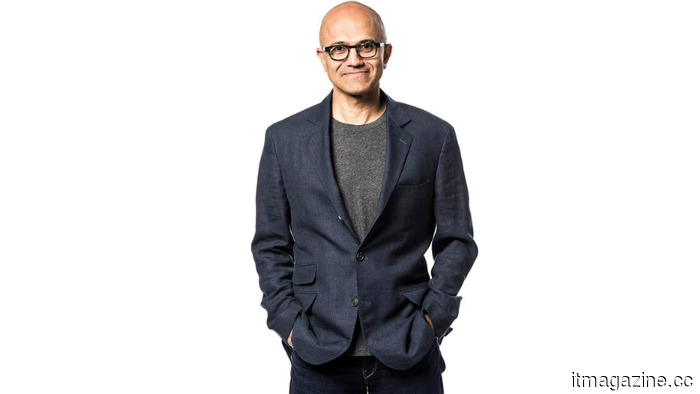 Nadella was concerned that Microsoft might end up being 'the next IBM' following the unveiling of a $92 billion return projection for OpenAI during the trial.
Microsoft CEO Satya Nadella stated during the Musk v. Altman trial that he was concerned his company might follow in IBM's footsteps. A memo from Brad Smith estimated that OpenAI's $13 billion investment could yield a $92 billion return.
Nadella was concerned that Microsoft might end up being 'the next IBM' following the unveiling of a $92 billion return projection for OpenAI during the trial.
Microsoft CEO Satya Nadella stated during the Musk v. Altman trial that he was concerned his company might follow in IBM's footsteps. A memo from Brad Smith estimated that OpenAI's $13 billion investment could yield a $92 billion return.
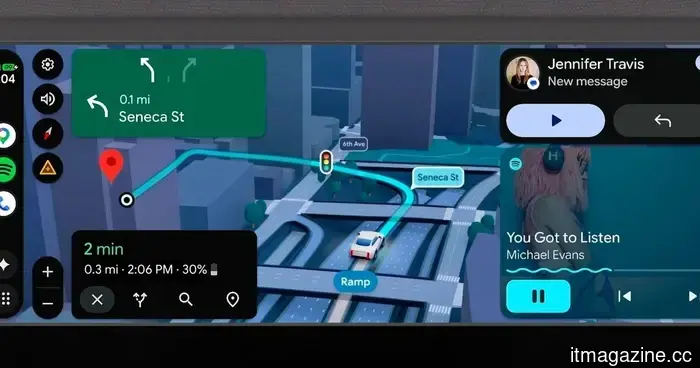 This Android Auto update aims to alter your driving habits and the way you interact with your vehicle.
Android Auto is set to receive a significant update that extends beyond mere design changes, offering improved navigation, enhanced entertainment options, and a more supportive driving experience.
This Android Auto update aims to alter your driving habits and the way you interact with your vehicle.
Android Auto is set to receive a significant update that extends beyond mere design changes, offering improved navigation, enhanced entertainment options, and a more supportive driving experience.
 OpenAI introduces Daybreak to compete with Anthropic’s Mythos in cyber defense.
OpenAI's newly launched Daybreak platform combines GPT-5.5 with Codex Security to compete against Anthropic's Mythos in AI-driven cybersecurity.
OpenAI introduces Daybreak to compete with Anthropic’s Mythos in cyber defense.
OpenAI's newly launched Daybreak platform combines GPT-5.5 with Codex Security to compete against Anthropic's Mythos in AI-driven cybersecurity.
GameStop's $56 billion offer is rejected by eBay.
eBay's board has dismissed GameStop's $56 billion acquisition proposal, stating it is neither credible nor appealing, pointing to uncertainties in financing and leverage issues.