
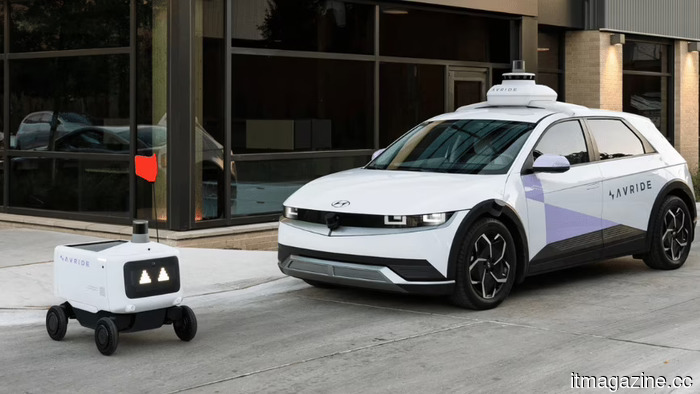
NHTSA is investigating Uber's partner Avride following 16 robotaxi accidents in Dallas over the span of four months.
The National Highway Traffic Safety Administration (NHTSA) has initiated an investigation into Avride, Uber’s autonomous vehicle partner, following the identification of 16 crashes and one minor injury within four months of launching its robotaxi service in Dallas. The regulator’s wording is notably direct: the vehicles exhibited “excessive assertiveness and insufficient capability,” a description that applies not only to Avride’s self-driving technology but also to the industry’s rush to deploy autonomous vehicles without ensuring they can consistently avoid collisions.
The incidents, which took place between December 2025 and March 2026, involved Avride’s fleet of Hyundai Ioniq 5 vehicles changing lanes into the paths of other cars, failing to decelerate or stop for slow-moving or stationary vehicles, and colliding with objects in the roadway. All events happened with a safety monitor present in the driver’s seat, and in only one of the 16 crashes did the monitor attempt to intervene.
Avride is a subsidiary of Nebius, a technology company based in Amsterdam that was formed from the restructuring of Yandex NV after the Russian internet giant divested its domestic operations in 2024. Yandex’s founder, Arkady Volozh, established Nebius with 1,300 employees, $2.5 billion in cash, and ventures in data infrastructure, edtech, and autonomous driving. Avride inherited Yandex’s self-driving technology, which had been under development since 2017.
Uber announced its partnership with Avride in October 2024, launching a robotaxi service in a nine-square-mile area of downtown Dallas on December 3, 2025. Both Uber and Nebius committed to investing up to $375 million to expand Avride’s fleet to 500 vehicles. Additionally, Avride operates sidewalk delivery robots on Uber Eats in locations such as Austin, Dallas, and Jersey City, along with Grubhub at several university campuses, including Ohio State.
The NHTSA's investigation encompasses all crashes related to what the agency's Office of Defects Investigation termed the “competence of” Avride’s self-driving system. The minor injury occurred in December 2025 when an Avride vehicle brushed against the open door of a parked pickup truck. Other reported incidents included a vehicle veering into a van during a lane change and colliding with a dumpster. The agency noted that the behavioral pattern “may also constitute traffic safety violations.”
Uber reported in its first-quarter earnings for 2026 that autonomous trips increased tenfold year-over-year, which reflects the company’s strategy of incorporating multiple autonomous vehicle partners into its ride-hailing platform rather than creating its own self-driving technology. This approach contrasts with Uber's previous attempts between 2015 and 2020, when it invested billions in an in-house autonomous program that ultimately led to the fatal incident involving pedestrian Elaine Herzberg in Tempe, Arizona, in March 2018.
After discontinuing its autonomous unit and selling the technology to Aurora Innovation, Uber shifted to a platform-based model. The company is currently testing a Lucid Gravity robotaxi in collaboration with Nuro in San Francisco, while Volkswagen’s MOIA is piloting self-driving ID. Buzz minibuses on Uber in Los Angeles. Uber, alongside Wayve and Nissan, is also introducing robotaxis in Tokyo, and Waymo rides can be booked via Uber in Austin and Atlanta. The company offers autonomous rides in eight cities and aims to expand to 15 by the year’s end.
This platform model allows Uber to achieve scale without the capital expenditures and safety liabilities associated with managing its own fleet. However, it also means that Uber’s brand and its passengers are subjected to the safety records of all partnered operators. For instance, when an Avride vehicle changes lanes into a van in Dallas, the ride was booked through the Uber app.
Avride is not alone in facing regulatory scrutiny in Texas; Tesla’s robotaxi service in Austin has been involved in 14 crashes since its launch, a statistic that Electrek estimates to be about four times worse than that of human drivers. The NHTSA has intensified its investigation into 3.2 million Tesla vehicles equipped with Full Self-Driving software, commencing an engineering analysis that precedes a potential recall.
Waymo, which operates the largest and longest-running commercial robotaxi service with a fleet of 3,000 vehicles, 500,000 paid rides weekly, and over 200 million fully autonomous miles, has set the benchmark that regulators and the public use to assess other autonomous operators. While Waymo’s safety record is not flawless, it significantly outperforms human drivers on a per-mile basis in the cities where it operates. The disparity between Waymo’s success and Avride’s 16 crashes in four months highlights the varying capabilities among companies authorized to operate on public roads.
Texas has one of the most lenient autonomous vehicle regulations in the U.S., which is why numerous companies have chosen it as a launch market. This
Other articles
 Meta aims to develop an AI agent that will shop on Instagram on your behalf, performing the role of an agent.
Meta is said to be developing AI tools designed to handle daily tasks, including an Instagram shopping assistant anticipated for late 2026.
Meta aims to develop an AI agent that will shop on Instagram on your behalf, performing the role of an agent.
Meta is said to be developing AI tools designed to handle daily tasks, including an Instagram shopping assistant anticipated for late 2026.
 Korea greets a robotic Buddhist monk at an actual monastery, signaling a glimpse of the future.
The largest Buddhist organization in South Korea has unveiled Gabi, a humanoid robot monk, prompting new inquiries about the role of AI and robotics in spiritual practices.
Korea greets a robotic Buddhist monk at an actual monastery, signaling a glimpse of the future.
The largest Buddhist organization in South Korea has unveiled Gabi, a humanoid robot monk, prompting new inquiries about the role of AI and robotics in spiritual practices.
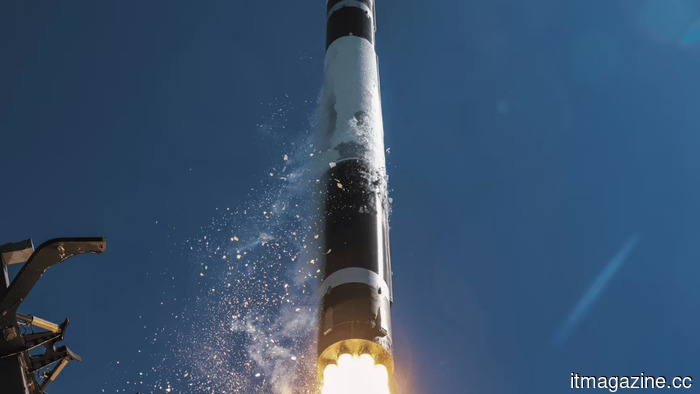 Rocket Lab's revenue for Q1 2026 increases by 64% to a record $200 million, with backlog reaching $2.2 billion and stock prices rising by 30%.
Rocket Lab announced a record revenue of $200 million for Q1, along with a backlog of $2.2 billion and a $30 million contract with Anduril for hypersonics. The stock jumped by 30%, but the Neutron rocket has yet to make its flight.
Rocket Lab's revenue for Q1 2026 increases by 64% to a record $200 million, with backlog reaching $2.2 billion and stock prices rising by 30%.
Rocket Lab announced a record revenue of $200 million for Q1, along with a backlog of $2.2 billion and a $30 million contract with Anduril for hypersonics. The stock jumped by 30%, but the Neutron rocket has yet to make its flight.
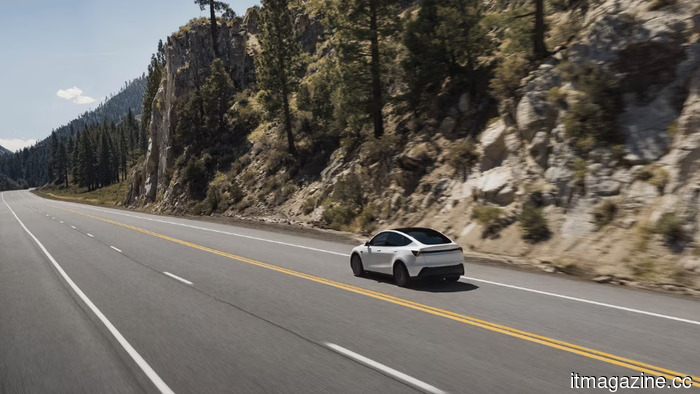 The Tesla Model Y becomes the first vehicle to successfully complete NHTSA ADAS safety assessments, as the agency looks into 3.2 million Teslas due to crashes involving FSD.
The Trump administration revealed that the Tesla Model Y has successfully met the NHTSA's updated ADAS safety standards. Meanwhile, the same agency is examining 3.2 million Teslas in relation to crashes involving Full Self-Driving capabilities.
The Tesla Model Y becomes the first vehicle to successfully complete NHTSA ADAS safety assessments, as the agency looks into 3.2 million Teslas due to crashes involving FSD.
The Trump administration revealed that the Tesla Model Y has successfully met the NHTSA's updated ADAS safety standards. Meanwhile, the same agency is examining 3.2 million Teslas in relation to crashes involving Full Self-Driving capabilities.
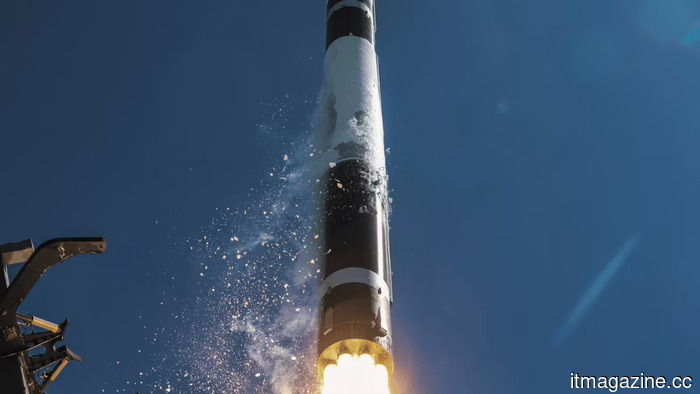 Rocket Lab's revenue for Q1 2026 increases by 64% to a record $200 million, while its backlog reaches $2.2 billion and its stock climbs by 30%.
Rocket Lab announced a record Q1 revenue of $200 million, a backlog amounting to $2.2 billion, and a $30 million hypersonics deal with Anduril. The stock rose by 30%, although the Neutron rocket has yet to fly.
Rocket Lab's revenue for Q1 2026 increases by 64% to a record $200 million, while its backlog reaches $2.2 billion and its stock climbs by 30%.
Rocket Lab announced a record Q1 revenue of $200 million, a backlog amounting to $2.2 billion, and a $30 million hypersonics deal with Anduril. The stock rose by 30%, although the Neutron rocket has yet to fly.
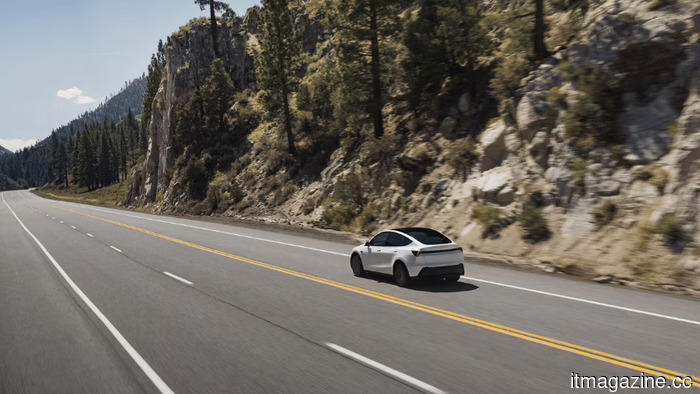 Tesla Model Y is the first vehicle to successfully pass the NHTSA's ADAS safety evaluations, while the agency is also looking into 3.2 million Teslas related to FSD crash incidents.
The Trump administration revealed that the Tesla Model Y has met NHTSA's new safety standards for ADAS. Meanwhile, the agency is currently examining 3.2 million Teslas in relation to crashes involving Full Self-Driving technology.
Tesla Model Y is the first vehicle to successfully pass the NHTSA's ADAS safety evaluations, while the agency is also looking into 3.2 million Teslas related to FSD crash incidents.
The Trump administration revealed that the Tesla Model Y has met NHTSA's new safety standards for ADAS. Meanwhile, the agency is currently examining 3.2 million Teslas in relation to crashes involving Full Self-Driving technology.
NHTSA is investigating Uber's partner Avride following 16 robotaxi accidents in Dallas over the span of four months.
The NHTSA has initiated an investigation into Avride, Uber's partner for autonomous vehicles, following 16 accidents in Dallas. The agency pointed to "excessive assertiveness and inadequate capability."