
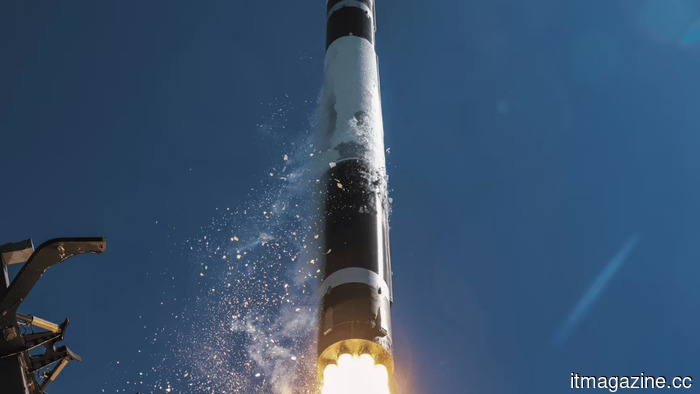
Rocket Lab's revenue for Q1 2026 increases by 64% to a record $200 million, with backlog reaching $2.2 billion and stock prices rising by 30%.
**TL;DR** Rocket Lab reported a 64 percent revenue increase, reaching a record 200 million dollars in Q1, with a backlog of 2.2 billion and its stock price hitting an all-time high. However, the Neutron rocket, crucial for its valuation, has yet to launch.
Rocket Lab's revenue surged 64 percent, its stock achieved record highs, and its backlog expanded to 2.2 billion dollars. The company secured more launch contracts in Q1 2026 than during the entire previous year. However, the rocket that underpins its market value has not yet been launched.
First-quarter revenue reached 200.3 million dollars, compared to 122.6 million a year prior, surpassing analysts' estimates that had already been upgraded twice in the last three months. The space systems division, responsible for manufacturing satellites and spacecraft components, accounted for 136.7 million dollars, while the launch business contributed 63.7 million, both exceeding expectations. In after-hours trading, the stock rose by 30 percent, giving the company a valuation of around 45 billion dollars.
**The Quarter**
The financial results reflect growth across all segments of the company. Gross margin climbed to 38.2 percent, up from the low thirties a year earlier. The net loss decreased to 45 million dollars from 60.6 million in Q1 2025. The adjusted EBITDA loss stood at 11.8 million, indicating that profitability may be achievable if the revenue trend continues.
In the quarter, Rocket Lab secured 31 new contracts for Electron and HASTE launches, as well as five contracts for Neutron, its medium-lift rocket that has yet to fly. The announcement included the largest launch deal in the company’s history, involving a bulk purchase of Neutron and Electron flights from an undisclosed customer. Additionally, Rocket Lab revealed a 30 million dollar contract from Anduril Industries for three HASTE hypersonic test flights from its Virginia launch complex. The HASTE vehicle, a suborbital variant of Electron, is being used to test hypersonic technologies at speeds surpassing Mach 5. Anduril is financing these flights with its own capital, highlighting a growing interest from the private sector for hypersonic testing that was traditionally limited to government programs.
**The Backlog**
Rocket Lab's backlog of 2.2 billion dollars is key to understanding why investors added 10 billion dollars to the company’s market capitalization in one evening. A year ago, its backlog was around 1.1 billion. This figure has effectively doubled within twelve months. The largest component includes an 816 million dollar contract to develop a missile defense constellation for the Space Development Agency, the U.S. Space Force's satellite procurement division.
For the second quarter, revenue guidance of 225 to 240 million dollars exceeds Wall Street's estimate of 205 million, suggesting that analysts have not fully accounted for the company's upward trajectory. CEO Peter Beck has stated that the pipeline supports ongoing growth into the second half of the year and beyond. Rocket Lab's customer base encompasses both government and commercial clients, including satellite launches for the National Reconnaissance Office, NASA, the Space Force, and allied military entities. Its role in developing spacecraft components for companies like GlobalStar and its work on the SDA’s Tranche 2 Transport Layer satellites showcase its diverse business model, positioning it as a vertically integrated space infrastructure provider rather than merely a launch service company.
**The Rocket**
Neutron is the medium-lift vehicle that is fundamental to Rocket Lab’s future aspirations. It is engineered to carry 13,000 kilograms to low Earth orbit in a reusable configuration and 15,000 kilograms in expendable mode. The rocket aims to contend for constellation deployments, national security tasks, and deep-space missions, areas currently dominated by SpaceX's Falcon 9.
Neutron has yet to make its inaugural flight. Beck mentioned that the first flight’s hardware integration is proceeding, engine qualification tests for the Archimedes engine are on track, and improvements are being made to the second stage and reusable fairing systems. The first launch is anticipated for later this year; however, Rocket Lab has previously stated "later this year" with shifting timelines, originally set for late 2024, then mid-2025, and now 2026. Each delay has been met with reasonable technical justifications and the patience of investors.
This patience is partly based on the success of Electron. While companies like Dawn Aerospace have shown that small nations can create reliable launch vehicles, Rocket Lab has made significant strides compared to any non-American, non-SpaceX entity in establishing a commercially viable orbital launch business. Electron has successfully completed over 60 missions with a success rate exceeding 95 percent, making it the most frequently launched small orbital rocket globally. The critical question remains whether the engineering rigor that ensured Electron's reliability can be scaled up
Other articles
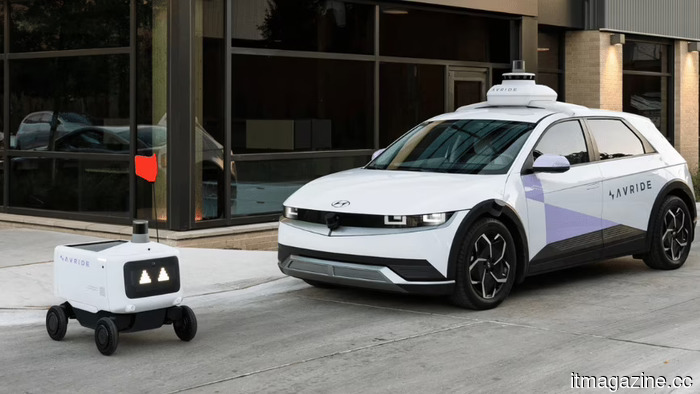 NHTSA is investigating Uber's partner Avride following 16 robotaxi accidents in Dallas over the span of four months.
The NHTSA has initiated an investigation into Avride, Uber's partner for autonomous vehicles, following 16 accidents in Dallas. The agency pointed to "excessive assertiveness and inadequate capability."
NHTSA is investigating Uber's partner Avride following 16 robotaxi accidents in Dallas over the span of four months.
The NHTSA has initiated an investigation into Avride, Uber's partner for autonomous vehicles, following 16 accidents in Dallas. The agency pointed to "excessive assertiveness and inadequate capability."
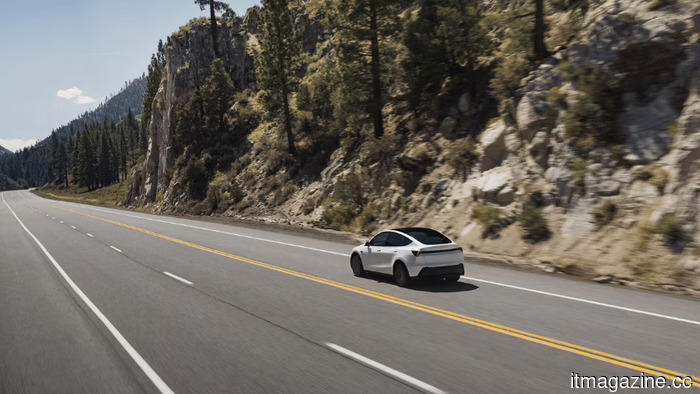 Tesla Model Y is the first vehicle to successfully pass the NHTSA's ADAS safety evaluations, while the agency is also looking into 3.2 million Teslas related to FSD crash incidents.
The Trump administration revealed that the Tesla Model Y has met NHTSA's new safety standards for ADAS. Meanwhile, the agency is currently examining 3.2 million Teslas in relation to crashes involving Full Self-Driving technology.
Tesla Model Y is the first vehicle to successfully pass the NHTSA's ADAS safety evaluations, while the agency is also looking into 3.2 million Teslas related to FSD crash incidents.
The Trump administration revealed that the Tesla Model Y has met NHTSA's new safety standards for ADAS. Meanwhile, the agency is currently examining 3.2 million Teslas in relation to crashes involving Full Self-Driving technology.
 I abandoned physical books, and my reading experience has improved immensely.
Reading at night, integrated dictionaries, more affordable books, and notes that you'll find useful in the future. This is why you should consider abandoning physical books and never returning to them.
I abandoned physical books, and my reading experience has improved immensely.
Reading at night, integrated dictionaries, more affordable books, and notes that you'll find useful in the future. This is why you should consider abandoning physical books and never returning to them.
 The Tesla Model Y becomes the first vehicle to successfully complete NHTSA ADAS safety assessments, as the agency looks into 3.2 million Teslas due to crashes involving FSD.
The Trump administration revealed that the Tesla Model Y has successfully met the NHTSA's updated ADAS safety standards. Meanwhile, the same agency is examining 3.2 million Teslas in relation to crashes involving Full Self-Driving capabilities.
The Tesla Model Y becomes the first vehicle to successfully complete NHTSA ADAS safety assessments, as the agency looks into 3.2 million Teslas due to crashes involving FSD.
The Trump administration revealed that the Tesla Model Y has successfully met the NHTSA's updated ADAS safety standards. Meanwhile, the same agency is examining 3.2 million Teslas in relation to crashes involving Full Self-Driving capabilities.
 Cloudflare reduces its workforce by 1,100 positions as it shifts focus to agentic AI, even though it surpassed earnings expectations for Q1 2026, resulting in a 24% drop in stock value.
Cloudflare reduced its workforce by 20% following a 600% increase in AI usage over three months. Despite Q1 revenue surpassing expectations at $640 million, shares dropped 24% due to the news of the restructuring.
Cloudflare reduces its workforce by 1,100 positions as it shifts focus to agentic AI, even though it surpassed earnings expectations for Q1 2026, resulting in a 24% drop in stock value.
Cloudflare reduced its workforce by 20% following a 600% increase in AI usage over three months. Despite Q1 revenue surpassing expectations at $640 million, shares dropped 24% due to the news of the restructuring.
 I stopped using physical books, and my reading experience has improved tremendously.
Reading at night, integrated dictionaries, more affordable books, and notes that will prove useful later. This is the argument for abandoning physical books and not returning to them.
I stopped using physical books, and my reading experience has improved tremendously.
Reading at night, integrated dictionaries, more affordable books, and notes that will prove useful later. This is the argument for abandoning physical books and not returning to them.
Rocket Lab's revenue for Q1 2026 increases by 64% to a record $200 million, with backlog reaching $2.2 billion and stock prices rising by 30%.
Rocket Lab announced a record revenue of $200 million for Q1, along with a backlog of $2.2 billion and a $30 million contract with Anduril for hypersonics. The stock jumped by 30%, but the Neutron rocket has yet to make its flight.