
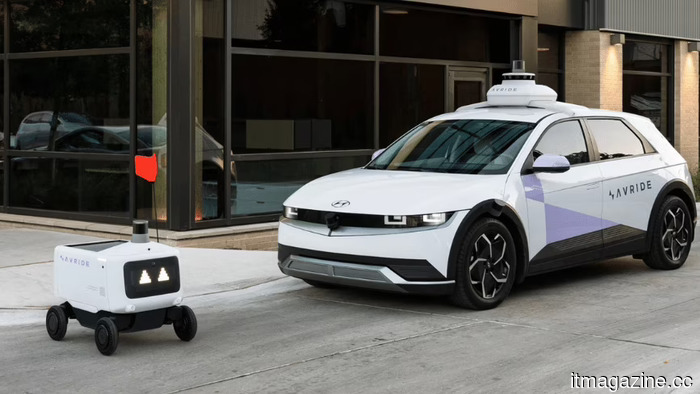
NHTSA looks into Uber's partner Avride following 16 robotaxi collisions in Dallas over a four-month period.
The National Highway Traffic Safety Administration has initiated an investigation into Avride, the autonomous vehicle partner of Uber, after discovering 16 crashes and one minor injury in the four months since the launch of its robotaxi service in Dallas. The regulator's comments are notably direct: the vehicles showed "excessive assertiveness and insufficient capability," a statement that could apply not only to Avride’s self-driving technology but also to the industry's overall eagerness to deploy autonomous vehicles before they can consistently avoid collisions.
The crashes, which took place from December 2025 to March 2026, involved Avride's fleet of Hyundai Ioniq 5 vehicles changing lanes into oncoming traffic, failing to slow down or stop for slow or stationary vehicles, and hitting objects on the road. All events occurred while a safety monitor was present in the driver's seat, and there was only one instance out of the 16 crashes where the safety monitor attempted to intervene.
Avride is a subsidiary of Nebius, an Amsterdam-based tech firm that emerged from the restructuring of Yandex NV after the Russian internet giant sold its domestic business in 2024. Founded by Yandex's Arkady Volozh, Nebius began with 1,300 employees and $2.5 billion in capital, with operations in data infrastructure, education technology, and autonomous driving. Avride acquired Yandex’s self-driving technology, which had been under development since 2017.
Uber announced its collaboration with Avride in October 2024, and the two companies launched a robotaxi service in a nine-square-mile area of downtown Dallas on December 3, 2025. Uber and Nebius allocated up to $375 million to expand Avride’s fleet to 500 vehicles. Additionally, Avride operates sidewalk delivery robots for Uber Eats in Austin, Dallas, and Jersey City, as well as for Grubhub at university campuses including Ohio State.
The NHTSA investigation encompasses all accidents related to Avride’s self-driving technology, as described by the agency’s Office of Defects Investigation. The minor injury occurred in December 2025 when an Avride vehicle struck the open door of a parked pickup truck. Other incidents included a vehicle making a lane change into a van and colliding with a dumpster. The agency noted that this behavior pattern "may also constitute traffic safety violations."
In its first-quarter 2026 earnings report, Uber stated that the number of autonomous trips increased tenfold compared to the previous year, reflecting the company’s strategy to integrate various autonomous vehicle partners into its ride-hailing service rather than developing its own self-driving technology. This approach contrasts sharply with Uber's previous strategy between 2015 and 2020, which involved spending billions to create an internal autonomous program that ultimately culminated in the tragic death of pedestrian Elaine Herzberg in March 2018 in Tempe, Arizona.
After discontinuing its autonomous division and selling its technology to Aurora Innovation, Uber shifted to a platform model. The company is testing a Lucid Gravity robotaxi with Nuro in San Francisco, while Volkswagen’s MOIA is testing self-driving ID. Buzz minibuses on Uber in Los Angeles. Additionally, Uber, Wayve, and Nissan are working on launching robotaxis in Tokyo, and Waymo rides can be booked through Uber in Austin and Atlanta. Uber is presently offering autonomous rides in eight cities and aims to reach 15 by year’s end.
This platform model provides Uber with scalability without the capital investment and safety liabilities associated with operating its own fleet. However, it also means that Uber's brand and its passengers are subject to the safety records of each partner it incorporates. Thus, when an Avride vehicle changes lanes into a van in Dallas, the ride was booked via the Uber app.
Avride is not the sole autonomous vehicle operator under regulatory scrutiny in Texas. Tesla's robotaxi service in Austin has been involved in 14 crashes since its launch, a rate that Electrek estimates to be roughly four times worse than the crash rate of human drivers. The NHTSA has intensified its investigation into 3.2 million Tesla vehicles equipped with Full Self-Driving software, initiating an engineering analysis that is a necessary step before a possible recall.
Waymo, which runs the largest and longest-established commercial robotaxi service with 3,000 vehicles, providing 500,000 paid rides weekly and surpassing 200 million fully autonomous miles, has set the standard against which regulators and the public assess other autonomous operators. While Waymo's safety record is not flawless, it is significantly better per mile than that of human drivers in the cities it serves. The disparity between Waymo's performance and Avride's 16 crashes in four months highlights the varied capabilities among companies legally allowed to operate on public roads.
Texas maintains some of the most lenient autonomous vehicle regulations in the United States, which has attracted numerous companies to the state as a launch market. However, this permissiveness also leads to a largely reactive regulatory response
Other articles
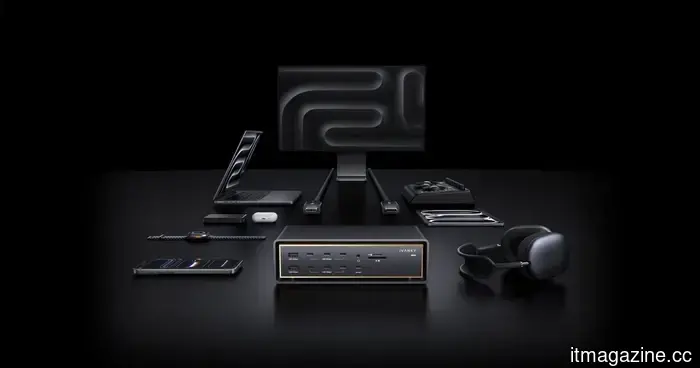 The Top Thunderbolt 5 Docks for Mac in 2026
Don't continue to accept docks that restrict your Mac's ability to deliver a smooth desktop-grade experience daily. As we conclude the top Thunderbolt 5 docks for Mac in 2026, explore the premier docking stations that transform cable clutter into an efficient multi-display arrangement.
The Top Thunderbolt 5 Docks for Mac in 2026
Don't continue to accept docks that restrict your Mac's ability to deliver a smooth desktop-grade experience daily. As we conclude the top Thunderbolt 5 docks for Mac in 2026, explore the premier docking stations that transform cable clutter into an efficient multi-display arrangement.
 Poland's water treatment facilities were compromised by hackers exploiting default passwords, as the US encounters a similar threat to its critical infrastructure.
Poland's ABW reported that five water treatment facilities experienced ICS breaches due to the use of default passwords. The US EPA discovered that 70% of water utilities in the United States do not meet fundamental cybersecurity standards.
Poland's water treatment facilities were compromised by hackers exploiting default passwords, as the US encounters a similar threat to its critical infrastructure.
Poland's ABW reported that five water treatment facilities experienced ICS breaches due to the use of default passwords. The US EPA discovered that 70% of water utilities in the United States do not meet fundamental cybersecurity standards.
 Netflix is trialing its own voice search functionality, which appears to be less frustrating.
Netflix is experimenting with a built-in AI-driven voice search feature that enables users to discover shows based on mood or vibe, providing text-based results without any personalization for the time being.
Netflix is trialing its own voice search functionality, which appears to be less frustrating.
Netflix is experimenting with a built-in AI-driven voice search feature that enables users to discover shows based on mood or vibe, providing text-based results without any personalization for the time being.
 The Pentagon has introduced war.gov/ufo, featuring 162 declassified UFO files as part of Trump's PURSUE initiative.
The Pentagon has made available 162 UFO documents on war.gov/ufo, which include mysterious Apollo 17 images and footage of military sightings. Among these files, 108 contain partial redactions.
The Pentagon has introduced war.gov/ufo, featuring 162 declassified UFO files as part of Trump's PURSUE initiative.
The Pentagon has made available 162 UFO documents on war.gov/ufo, which include mysterious Apollo 17 images and footage of military sightings. Among these files, 108 contain partial redactions.
 Meta aims to create an AI agent that can shop on Instagram on your behalf and perform like an entire agent.
Meta is said to be developing AI tools capable of handling daily tasks, including an Instagram shopping assistant that is expected to launch in late 2026.
Meta aims to create an AI agent that can shop on Instagram on your behalf and perform like an entire agent.
Meta is said to be developing AI tools capable of handling daily tasks, including an Instagram shopping assistant that is expected to launch in late 2026.
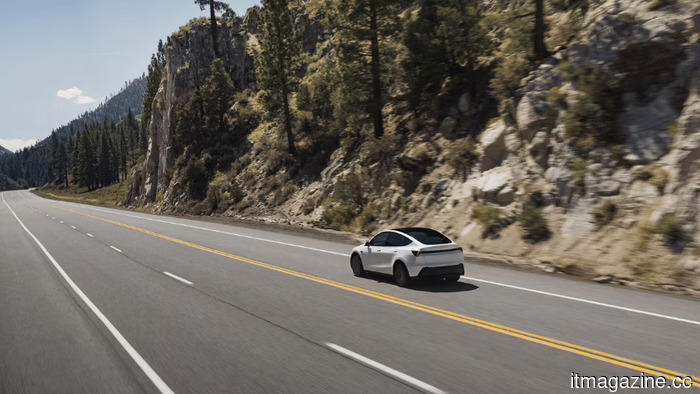 Tesla Model Y is the first vehicle to successfully pass the NHTSA's ADAS safety evaluations, while the agency is also looking into 3.2 million Teslas related to FSD crash incidents.
The Trump administration revealed that the Tesla Model Y has met NHTSA's new safety standards for ADAS. Meanwhile, the agency is currently examining 3.2 million Teslas in relation to crashes involving Full Self-Driving technology.
Tesla Model Y is the first vehicle to successfully pass the NHTSA's ADAS safety evaluations, while the agency is also looking into 3.2 million Teslas related to FSD crash incidents.
The Trump administration revealed that the Tesla Model Y has met NHTSA's new safety standards for ADAS. Meanwhile, the agency is currently examining 3.2 million Teslas in relation to crashes involving Full Self-Driving technology.
NHTSA looks into Uber's partner Avride following 16 robotaxi collisions in Dallas over a four-month period.
The NHTSA has launched an investigation into Avride, the autonomous vehicle partner of Uber, following 16 collisions in Dallas. The agency pointed to "excessive assertiveness and inadequate capability."