
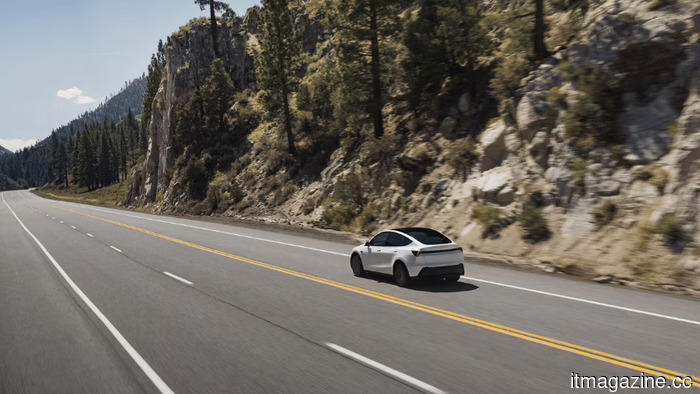
Tesla Model Y is the first vehicle to successfully pass the NHTSA's ADAS safety evaluations, while the agency is also looking into 3.2 million Teslas related to FSD crash incidents.
TL;DR: The Trump administration announced that the Tesla Model Y is the first vehicle to successfully complete NHTSA's new driver assistance safety tests. Concurrently, the agency is investigating 3.2 million Teslas for crashes occurring while using the company's more advanced system.
On Wednesday, the Trump administration revealed that the Tesla Model Y has become the first vehicle to clear NHTSA’s updated advanced driver assistance safety tests. At the same time, the agency is looking into 3.2 million Tesla vehicles involved in crashes while utilizing the firm's advanced self-driving technology. This announcement highlights Tesla's achievement in passing a test designed to assess a car's ability to detect pedestrians. Meanwhile, the investigation focuses on the same capability regarding Tesla's cars.
The main difference between the two circumstances lies in the gap between the parameters of the tests and the technology's intended functions. The ADAS benchmark evaluates features that are commonly found in various vehicles produced by manufacturers like Toyota, Honda, Hyundai, and BMW. Conversely, the investigation targets Tesla's Full Self-Driving software, which operates at an autonomy level not covered by the ADAS tests. Both the announcement and the investigation stem from the same agency and were released just weeks apart, concerning the same manufacturer.
The Model Y underwent eight assessments as part of NHTSA’s refreshed New Car Assessment Program. Four of these are established criteria that have been part of the program for several years: forward collision warning, crash imminent braking, dynamic brake support, and lane departure warning. The additional four are newly incorporated: pedestrian automatic emergency braking, lane keeping assistance, blind spot warning, and blind spot intervention.
These new tests are straightforward pass-fail evaluations of features that have been standard or optional in the automotive market for years. For instance, blind spot warnings have been included in mainstream vehicles since the mid-2010s, while pedestrian automatic emergency braking is a standard feature in most new cars sold in the U.S. Lane keeping assistance is also a feature provided at no extra cost in a $25,000 Honda Civic.
It's important to note that these assessments do not measure Tesla’s Autopilot or Full Self-Driving capabilities, nor do they evaluate the vehicle's performance when operating autonomously. Instead, they assess the functionality of the vehicle's fundamental safety systems, which are active when a human is driving. Passing these tests is essential but should not be considered extraordinary.
The updated NCAP standards were finalized by NHTSA in late 2024 to take effect in the 2026 model year. However, in September 2025, the Trump administration postponed this requirement to the 2027 model year after the Alliance for Automotive Innovation, the primary lobbying group for the industry, sought additional time. Notably, Tesla, Rivian, and Lucid are not members of that alliance.
This delay means that most automotive manufacturers have yet to submit their vehicles for the new tests, not due to an inability to pass, but because the deadline has been extended to 2027. Tesla voluntarily submitted the Model Y ahead of this revised timeline, making it the sole manufacturer to do so. This led to a press release from the Department of Transportation announcing Tesla as the “first vehicle” to pass tests that other automakers were informed they did not need to undergo yet.
The press release was titled “Trump’s Transportation Department Announces Tesla Model Y Is the First Vehicle to Pass NHTSA’s New ‘Advanced Driver Assistance System’ Tests.” The relationship between the Trump administration and Tesla's regulatory landscape is crucial to understanding the framing of this announcement. The department's delay allowed Tesla to be the only company to submit before the revised deadline, culminating in a release that highlights the president's name in the headline.
While NHTSA was certifying the basic safety features of the Model Y, its Office of Defects Investigation was intensifying an inquiry into 3.2 million Tesla vehicles equipped with Full Self-Driving software. This engineering analysis, initiated in March 2026, investigates crashes where FSD failed to recognize typical roadway conditions impairing camera visibility, such as glare, fog, and airborne debris.
The agency has documented instances where FSD-equipped vehicles entered opposing traffic lanes, disregarded red lights, and collided with pedestrians. Tesla’s robotaxi service in Austin has been involved in 14 crashes since its launch, a rate estimated by Electrek to be about four times worse than that of human drivers. NHTSA noted that the system “did not detect common roadway conditions that impaired camera visibility and/or provide alerts when camera performance had deteriorated until just before the crash.”
This engineering analysis is a necessary precursor to any potential recall. Tesla has requested and received multiple extensions to submit crash data to the agency. The inquiry pertains to software that Tesla charges up to $8,000 for, branded as “Full Self-Driving,” a label that NHTSA has remarked does not accurately reflect the system's capabilities.
The automotive and technology sectors categorize driver assistance on a
Other articles
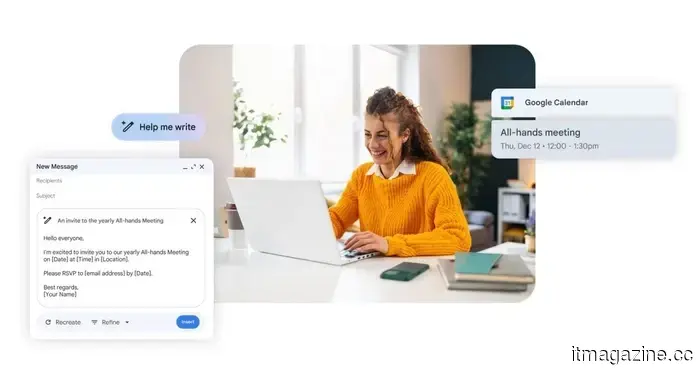 How Google Workspace assists small businesses in scaling with an AI co-founder.
Google Workspace with Gemini assists small teams in working more efficiently by serving as a digital co-founder, streamlining tasks and enhancing productivity throughout daily workflows.
How Google Workspace assists small businesses in scaling with an AI co-founder.
Google Workspace with Gemini assists small teams in working more efficiently by serving as a digital co-founder, streamlining tasks and enhancing productivity throughout daily workflows.
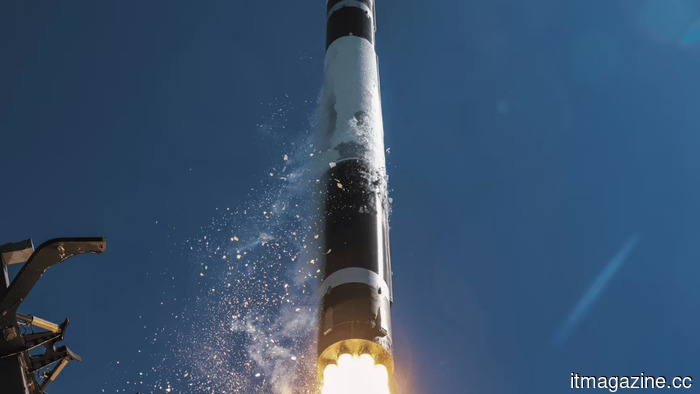 Rocket Lab's revenue for Q1 2026 increases by 64% to a record $200 million, with backlog reaching $2.2 billion and stock prices rising by 30%.
Rocket Lab announced a record revenue of $200 million for Q1, along with a backlog of $2.2 billion and a $30 million contract with Anduril for hypersonics. The stock jumped by 30%, but the Neutron rocket has yet to make its flight.
Rocket Lab's revenue for Q1 2026 increases by 64% to a record $200 million, with backlog reaching $2.2 billion and stock prices rising by 30%.
Rocket Lab announced a record revenue of $200 million for Q1, along with a backlog of $2.2 billion and a $30 million contract with Anduril for hypersonics. The stock jumped by 30%, but the Neutron rocket has yet to make its flight.
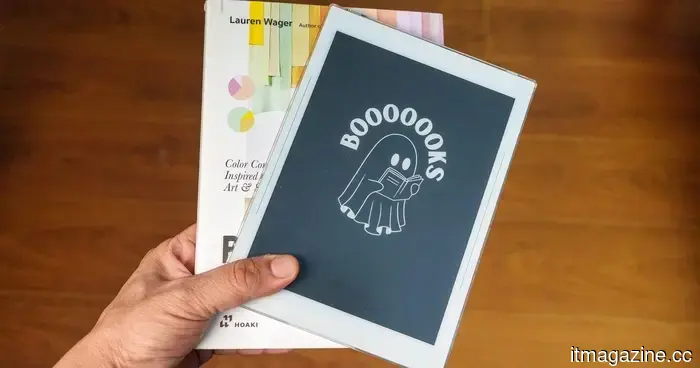 I stopped using physical books, and my reading experience has improved tremendously.
Reading at night, integrated dictionaries, more affordable books, and notes that will prove useful later. This is the argument for abandoning physical books and not returning to them.
I stopped using physical books, and my reading experience has improved tremendously.
Reading at night, integrated dictionaries, more affordable books, and notes that will prove useful later. This is the argument for abandoning physical books and not returning to them.
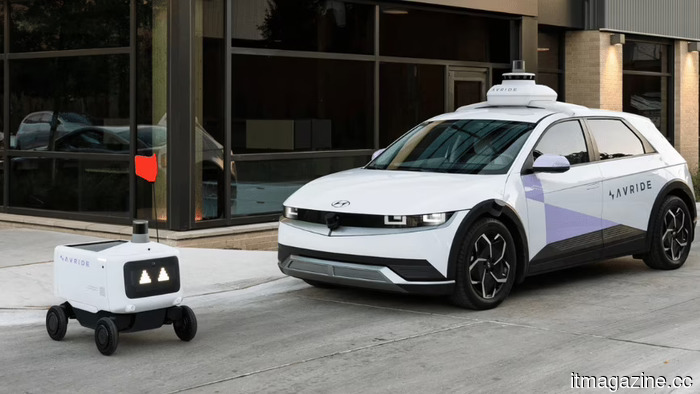 NHTSA is investigating Uber's partner Avride following 16 robotaxi accidents in Dallas over the span of four months.
The NHTSA has initiated an investigation into Avride, Uber's partner for autonomous vehicles, following 16 accidents in Dallas. The agency pointed to "excessive assertiveness and inadequate capability."
NHTSA is investigating Uber's partner Avride following 16 robotaxi accidents in Dallas over the span of four months.
The NHTSA has initiated an investigation into Avride, Uber's partner for autonomous vehicles, following 16 accidents in Dallas. The agency pointed to "excessive assertiveness and inadequate capability."
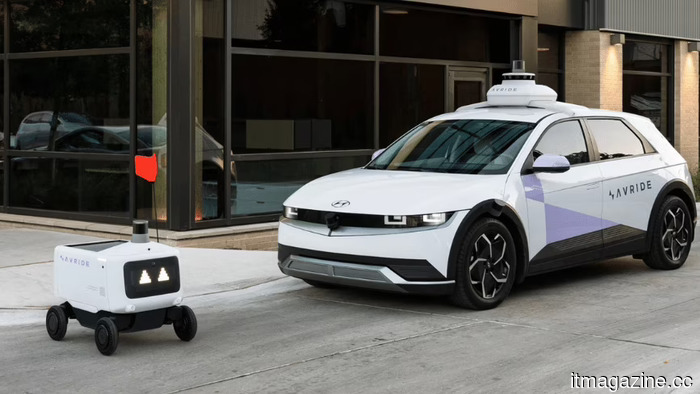 NHTSA looks into Uber's partner Avride following 16 robotaxi collisions in Dallas over a four-month period.
The NHTSA has launched an investigation into Avride, the autonomous vehicle partner of Uber, following 16 collisions in Dallas. The agency pointed to "excessive assertiveness and inadequate capability."
NHTSA looks into Uber's partner Avride following 16 robotaxi collisions in Dallas over a four-month period.
The NHTSA has launched an investigation into Avride, the autonomous vehicle partner of Uber, following 16 collisions in Dallas. The agency pointed to "excessive assertiveness and inadequate capability."
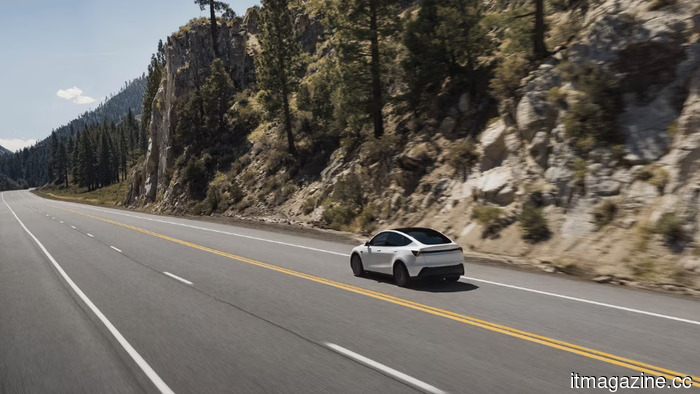 The Tesla Model Y becomes the first vehicle to successfully complete NHTSA ADAS safety assessments, as the agency looks into 3.2 million Teslas due to crashes involving FSD.
The Trump administration revealed that the Tesla Model Y has successfully met the NHTSA's updated ADAS safety standards. Meanwhile, the same agency is examining 3.2 million Teslas in relation to crashes involving Full Self-Driving capabilities.
The Tesla Model Y becomes the first vehicle to successfully complete NHTSA ADAS safety assessments, as the agency looks into 3.2 million Teslas due to crashes involving FSD.
The Trump administration revealed that the Tesla Model Y has successfully met the NHTSA's updated ADAS safety standards. Meanwhile, the same agency is examining 3.2 million Teslas in relation to crashes involving Full Self-Driving capabilities.
Tesla Model Y is the first vehicle to successfully pass the NHTSA's ADAS safety evaluations, while the agency is also looking into 3.2 million Teslas related to FSD crash incidents.
The Trump administration revealed that the Tesla Model Y has met NHTSA's new safety standards for ADAS. Meanwhile, the agency is currently examining 3.2 million Teslas in relation to crashes involving Full Self-Driving technology.