
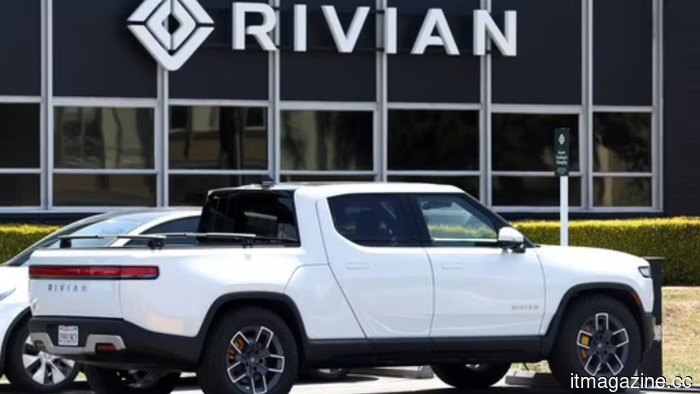
Volkswagen surpasses Amazon to become Rivian's largest shareholder, holding a 15.9% stake following a $1 billion payment for a software milestone.
**TL;DR** Volkswagen has surpassed Amazon to become Rivian’s largest shareholder after a billion-dollar share acquisition linked to a milestone in their software joint venture. VW holds 15.9% of Rivian, while Amazon's stake has decreased from 20% to 11.8% without divesting any shares. This investment highlights VW's struggles with its own software division and emphasizes its reliance on Rivian’s zonal architecture for future vehicle development.
When Rivian went public in November 2021, Amazon owned 20% of the company, having invested $700 million in 2019 and placed an order for 100,000 electric delivery vans. Though Amazon's initial investment surged to over $15 billion on Rivian's first trading day, it has not sold any shares since then. As a result, its stake has dwindled to 11.8% due to ongoing capital raises necessary for Rivian’s survival, which have consumed billions as the startup strives to establish itself as a viable car manufacturer. A recent SEC filing revealed that VW overtook Amazon as Rivian's leading shareholder by acquiring 62.9 million new shares at $15.90 each on April 30, resulting in a total of 209.8 million shares, or 15.9% of Rivian. This marks the first time since Rivian’s IPO that Amazon has not held the largest stake, indicating more about VW’s issues than Rivian’s successes.
**The Deal**
VW’s billion-dollar investment was triggered by a milestone reached in their joint venture, which was announced in 2024 with a total investment potential of $5.8 billion. This partnership focuses on developing a zonal electrical architecture for software-defined vehicles, which simplifies wiring and allows for over-the-air updates and autonomous features. The recent funding milestone was achieved after successful winter testing of production-ready architecture for VW's first software-defined vehicles. The venture employs over 1,500 individuals across various development centers, with vehicles from Volkswagen, Audi, and Scout brands now in testing.
VW didn’t invest around $6 billion in Rivian simply to gain shares in a company that delivered merely 10,365 vehicles last quarter and recorded a $3.6 billion loss last year; it did so because of its unsuccessful internal software division, CARIAD. Established in 2020 with aspirations of transforming VW into a software entity, CARIAD faced significant challenges, delaying key vehicle model releases and incurring enormous development costs, ultimately resulting in its diminished role within the company. As demand for electric vehicles declined across Europe, VW was forced to reduce production, leading to significant job losses and the closure of its first German factory in 88 years. Rivian’s zonal architecture represents the platform CARIAD failed to develop, and the equity stake signifies VW’s necessary entry into this technology.
**The Shift**
Amazon's shift from Rivian's primary shareholder is both symbolic and intentional. The e-commerce giant had a strategic motive behind its investment, as it secured a stake in its delivery van supplier, which has proven steadfast. In Rivian's first quarter of 2026, Amazon contributed $468 million to the company's $908 million in automotive revenue, representing over half of it, thanks to the ongoing deployment of electric vans. However, Amazon has not increased its stake, passively observing as VW's milestone-driven investment raised its ownership while Amazon's share diminished through dilution. This change in the shareholder landscape illustrates differing valuations: for Amazon, Rivian is primarily a van supplier, while for VW, Rivian represents a potential software ally.
The overall EV market in the U.S. has become increasingly difficult, with numerous electric vehicle models discontinued, paused, or cancelled as import tariffs, the end of federal tax credits, and rising costs have made electric car sales more challenging. Honda wrote off $15.7 billion after halting its entire O Series, while Tesla ended production of the Model S and Model X. VW has also faced setbacks in its U.S. ambitions, notably delaying the launch of its revived Scout brand until mid-2028, partly due to necessary integrations with Rivian’s exclusively battery electric software. The current tariff situation and the Scout delay elevate the significance of the Rivian investment for VW’s long-term platform strategy while also highlighting its precariousness as a short-term financial decision.
**The Money**
Rivian's financial state portrays a common narrative among EV startups striving for profitability. The company reported approximately $1.4 billion in revenue in the first quarter, up 11% year-on-year. In 2025, it achieved its first full year of gross profit, totaling $144 million, although the automotive segment returned to a gross loss of $62 million in Q1. The company's forecast anticipates vehicle deliveries between 62,000 and 67,000, with adjusted EBITDA losses projected between $1.8 billion and $2.1 billion,
Other articles
 Intel showcases its Computex 2026 lineup that includes handheld devices, desktops, and servers, with the 18A process emerging as a hallmark of its foundry services.
At Computex 2026, Intel will showcase Panther Lake Arc G3 handheld devices, a 52-core Nova Lake desktop, and a 288-core Clearwater Forest Xeon. All of these products are manufactured using the 18A process node.
Intel showcases its Computex 2026 lineup that includes handheld devices, desktops, and servers, with the 18A process emerging as a hallmark of its foundry services.
At Computex 2026, Intel will showcase Panther Lake Arc G3 handheld devices, a 52-core Nova Lake desktop, and a 288-core Clearwater Forest Xeon. All of these products are manufactured using the 18A process node.
 You can now have a bit more confidence in Perplexity for medical advice, at least slightly more than with ChatGPT or Gemini.
Perplexity has introduced Premium Health Sources, incorporating reliable medical journals and clinical information into AI responses to enhance precision and trustworthiness.
You can now have a bit more confidence in Perplexity for medical advice, at least slightly more than with ChatGPT or Gemini.
Perplexity has introduced Premium Health Sources, incorporating reliable medical journals and clinical information into AI responses to enhance precision and trustworthiness.
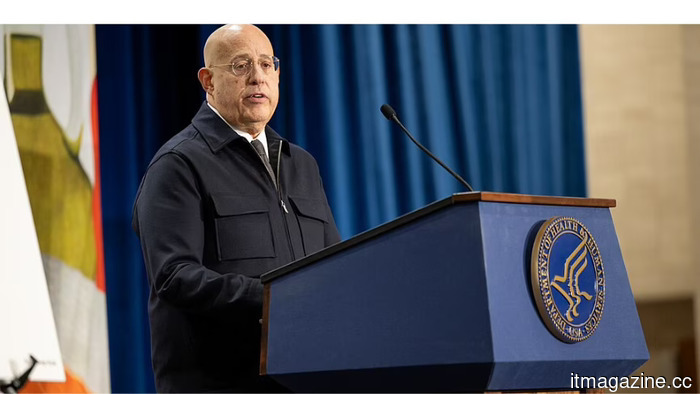 Peter Arnell, the designer responsible for the unsuccessful rebranding of Pepsi and Tropicana, has been appointed as the first U.S. chief brand architect for 27,000 government websites.
Peter Arnell has been appointed as America's first chief brand architect, with the responsibility of consolidating 27,000 federal websites by July 4. The studio has already not passed accessibility audits.
Peter Arnell, the designer responsible for the unsuccessful rebranding of Pepsi and Tropicana, has been appointed as the first U.S. chief brand architect for 27,000 government websites.
Peter Arnell has been appointed as America's first chief brand architect, with the responsibility of consolidating 27,000 federal websites by July 4. The studio has already not passed accessibility audits.
 Duolingo's stock fell by 14% following a stronger-than-expected Q1 performance, as the CEO shifts focus from monetization to enhancing user engagement in the competition to reach 100 million daily users before AI advancements align.
Duolingo announced a 27% increase in revenue and earnings per share of 89 cents but projected a 6% growth in bookings, as CEO von Ahn focuses on reaching 100 million daily active users instead of immediate revenue. The stock dropped 14%.
Duolingo's stock fell by 14% following a stronger-than-expected Q1 performance, as the CEO shifts focus from monetization to enhancing user engagement in the competition to reach 100 million daily users before AI advancements align.
Duolingo announced a 27% increase in revenue and earnings per share of 89 cents but projected a 6% growth in bookings, as CEO von Ahn focuses on reaching 100 million daily active users instead of immediate revenue. The stock dropped 14%.
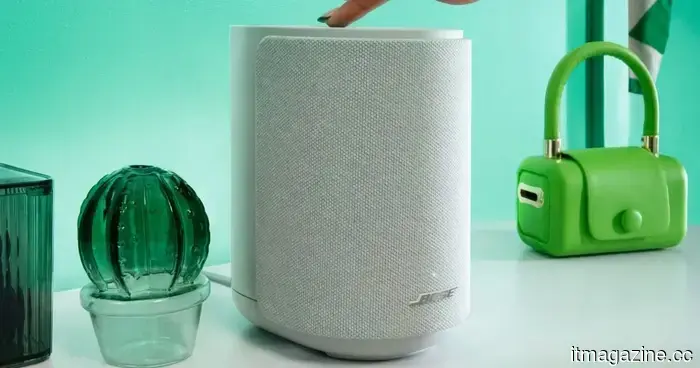 Amazon's Alexa+ has now integrated into your Bose speaker, provided you're ready to cover the fees.
The AI-driven assistant has partnered with Bose, allowing both new and current Bose speaker users to enjoy natural-language music exploration.
Amazon's Alexa+ has now integrated into your Bose speaker, provided you're ready to cover the fees.
The AI-driven assistant has partnered with Bose, allowing both new and current Bose speaker users to enjoy natural-language music exploration.
 Intel has showcased its Computex 2026 lineup, which includes handheld devices, desktops, and servers, as the 18A process emerges as a signature technology for the foundry.
At Computex 2026, Intel will present Panther Lake Arc G3 handhelds, a 52-core Nova Lake desktop, and a 288-core Clearwater Forest Xeon, all manufactured using the 18A process node.
Intel has showcased its Computex 2026 lineup, which includes handheld devices, desktops, and servers, as the 18A process emerges as a signature technology for the foundry.
At Computex 2026, Intel will present Panther Lake Arc G3 handhelds, a 52-core Nova Lake desktop, and a 288-core Clearwater Forest Xeon, all manufactured using the 18A process node.
Volkswagen surpasses Amazon to become Rivian's largest shareholder, holding a 15.9% stake following a $1 billion payment for a software milestone.
VW now owns 15.9% of Rivian following a $1 billion share acquisition, surpassing Amazon for the first time since Rivian's IPO in 2021. This investment secures software that VW was unable to develop on its own.