

32GB of RAM for Windows 11? Hey Microsoft, that seems like an issue for you!
There was a time when purchasing a PC seemed… logical. 8GB of RAM was sufficient, 16GB felt like a statement of power, and anything beyond that was designated for those engaged in truly demanding tasks. That equilibrium was maintained because software was mindful of hardware capabilities. Nowadays, however, that equilibrium has quietly disintegrated, and Microsoft appears to be perfectly fine with it.
Microsoft
The company’s now-retracted guidance that casually established 16GB as the baseline and 32GB as the “no worries” range wasn’t merely a suggestion. It represents a shift in accountability. Modern hardware provides no indication that we suddenly require double the memory for the same daily tasks. DDR5 memory is faster, more efficient, and more advanced than anything we've had before. On paper, systems should feel smoother, more responsive, and more efficient. Instead, users are being encouraged to upgrade just to maintain the same comfort level they had years ago.
This is where the frustration arises. The entire situation seems like Microsoft is stating that their operating system has outgrown its capabilities, and it’s the user’s responsibility to accommodate it by purchasing additional resources. That’s not progress; it’s a workaround presented as innovation.
Optimization Isn’t Dead, It’s Just Absent on Windows
Let’s not deceive ourselves into thinking this is a widespread industry issue. It isn’t. Platforms like macOS continue to demonstrate that optimization remains essential. Apple’s MacBook Neo, even with a modest 8GB of memory on paper, manages to deliver smooth, consistent performance thanks to tightly controlled and efficient software. The same applies to Linux distributions such as SteamOS, Bazzite, and CatchyOS, which run efficiently while still offering a complete desktop experience.
In contrast, Windows 11 has made idle RAM usage of 6 to 8GB the norm rather than the exception. This occurs before opening a browser, launching a game, or tackling anything even remotely demanding. It’s akin to moving into a house where half the electricity bill is already exhausted before turning on the lights. Rather than addressing the issue, the landlord suggests upgrading to a bigger power supply.
We are utilizing hardware that surpasses the computers used in the moon landing, yet even opening the Calculator application takes an unreasonably long time.
Part of the issue stems from how modern Windows applications are developed. Native, efficient applications have gradually been supplanted by web-based frameworks and Electron wrappers. Applications like Discord and WhatsApp on PC no longer function as traditional apps; they are simply enhanced browser tabs that behave as if they are independent entities. These applications inherently consume memory, and Microsoft’s own system components have mirrored this, with Edge WebView2 instances appearing in the background like uninvited guests at a dinner party.
Then there’s the saga of “AI Bloatware,” an exemplary case of corporate rebranding that would make a used car salesman blush. After the community rightfully protested against the initial wave of intrusive AI integration, Microsoft promised to downsize. What they actually did was merely change the labels and conceal the toggles. Those features are still present, lurking in the background and continuing to drain system resources.
Microsoft
The complete disregard for the user’s hardware is what truly frustrates. When your PC idles at 8GB of RAM usage, it’s not due to doing something remarkable for you; it’s because the operating system is too bloated to remain idle. Microsoft has sacrificed efficiency for “convenience,” which actually benefits their developers, who find it easier to encapsulate a website than to write genuine native code. It’s absurd that we need a supercomputer to run a spreadsheet and a chat application simultaneously.
If Microsoft is aware that improvements can be made, why are they expecting us to compensate for their current shortcomings?
The irony becomes even more pronounced with internal developments. Satya Nadella recently discussed Windows K2, a project aimed at making the OS leaner and more efficient. This admission is the ultimate self-contradiction. In one breath, the CEO acknowledges that the OS is a cumbersome mess needing a complete redesign to remain competitive, while in the next, the company urges users to buy 32GB of RAM as a temporary fix for the current failure. If a better, optimized future is already underway, why is the present solution being forced on users financially?
The Real Issue Isn’t Memory, It’s The Mindset
To clarify, 32GB of RAM certainly has its place. Heavy multitaskers, creators, and gamers dealing with modern AAA titles will benefit from that extra capacity. That’s not the issue. The problem lies in presenting it as the standard for everyone, irrespective of individual usage. Most Windows users simply want to browse the web, check their emails, and perhaps play a casual game of Minecraft. For these users, 16GB should suffice. The fact that it often does on other platforms makes this hard to rationalize. This isn’t about


Other articles
 Meta's AI analyzes images for bone structure to identify underage users on Instagram and Facebook.
Meta is employing AI visual analysis to examine photos and videos for physical traits such as height and bone structure in order to identify and eliminate users under the age of 13 from Instagram and Facebook.
Meta's AI analyzes images for bone structure to identify underage users on Instagram and Facebook.
Meta is employing AI visual analysis to examine photos and videos for physical traits such as height and bone structure in order to identify and eliminate users under the age of 13 from Instagram and Facebook.
 Satechi 3-in-1 Foldable Wireless Charging Stand Qi2 Review: Quick, compact, and my new go-to device
Satechi's 3-in-1 charging stand combines the practicality of a foldable design with top-notch wireless charging speeds available in any device of its type. Tired of tangled wires? This one is a standout solution.
Satechi 3-in-1 Foldable Wireless Charging Stand Qi2 Review: Quick, compact, and my new go-to device
Satechi's 3-in-1 charging stand combines the practicality of a foldable design with top-notch wireless charging speeds available in any device of its type. Tired of tangled wires? This one is a standout solution.
 A man who launched a Molotov cocktail at Sam Altman's residence and possessed a kill list targeting the AI CEO has entered a not guilty plea for attempted murder.
Daniel Moreno-Gama, 20, entered a not guilty plea to charges of attempted murder following an assault on Sam Altman's residence and possessing a kill list targeting AI executives. He could face a maximum sentence of life in prison.
A man who launched a Molotov cocktail at Sam Altman's residence and possessed a kill list targeting the AI CEO has entered a not guilty plea for attempted murder.
Daniel Moreno-Gama, 20, entered a not guilty plea to charges of attempted murder following an assault on Sam Altman's residence and possessing a kill list targeting AI executives. He could face a maximum sentence of life in prison.
 Bose enhances home audio with its most stylish and intelligent Lifestyle Collection.
Bose's latest home audio collection comes with ambitious claims: immersive sound without the mess, a soundbar redesign that's been a decade in the making, and a speaker compact enough to fit on your bookshelf.
Bose enhances home audio with its most stylish and intelligent Lifestyle Collection.
Bose's latest home audio collection comes with ambitious claims: immersive sound without the mess, a soundbar redesign that's been a decade in the making, and a speaker compact enough to fit on your bookshelf.
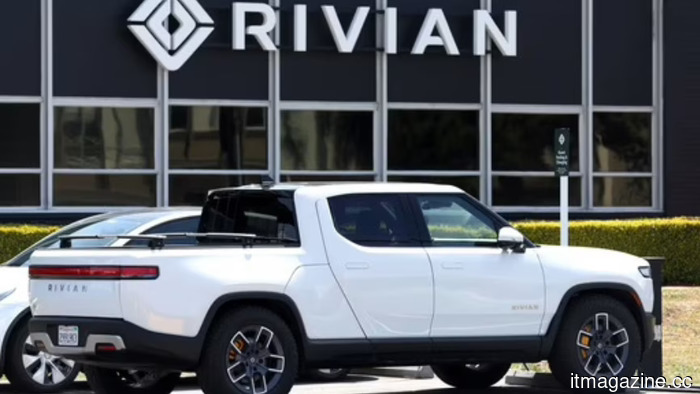 Volkswagen surpasses Amazon to become Rivian's largest shareholder, holding a 15.9% stake following a $1 billion payment for a software milestone.
VW currently possesses 15.9% of Rivian following a $1 billion share acquisition, marking the first time it has overtaken Amazon since Rivian's IPO in 2021. This investment secures the software that VW was unable to develop on its own.
Volkswagen surpasses Amazon to become Rivian's largest shareholder, holding a 15.9% stake following a $1 billion payment for a software milestone.
VW currently possesses 15.9% of Rivian following a $1 billion share acquisition, marking the first time it has overtaken Amazon since Rivian's IPO in 2021. This investment secures the software that VW was unable to develop on its own.
 Amazon's Alexa+ has now integrated into your Bose speaker, provided you're ready to cover the cost.
The AI-driven assistant has partnered with Bose, enabling both new and current Bose speaker users to utilize natural-language music discovery.
Amazon's Alexa+ has now integrated into your Bose speaker, provided you're ready to cover the cost.
The AI-driven assistant has partnered with Bose, enabling both new and current Bose speaker users to utilize natural-language music discovery.
32GB of RAM for Windows 11? Hey Microsoft, that seems like an issue for you!
Microsoft’s push for 32GB of RAM has led to criticism, with users attributing the issues to Windows 11’s inadequate optimization, increasing memory requirements, and escalating software bloat rather than genuine enhancements in performance.