

Intel showcases its Computex 2026 lineup that includes handheld devices, desktops, and servers, with the 18A process emerging as a hallmark of its foundry services.
TL;DR Intel will present Panther Lake handhelds, a 52-core Nova Lake desktop preview, and 288-core Clearwater Forest servers at Computex 2026, all utilizing the 18A process that supports its foundry initiatives with Apple, Amazon, and Musk’s Terafab.
Intel is set to attend Computex 2026 in Taipei on June 2, boasting a product in every computing segment for the first time in ten years, all tied to a unified manufacturing story. Panther Lake, which launched as a laptop chip at CES in January, is expanding into handheld devices with Arc G3 and Arc G3 Extreme processors targeted at gaming handhelds. Nova Lake, a 52-core desktop chip with a new socket and architecture, will be previewed ahead of a second-half launch. Clearwater Forest, a 288-core server processor that debuted at MWC in March, completes the Xeon portfolio for data centers and cloud inference. All products are built on Intel’s 18A process, the 1.8-nanometer technology that combines RibbonFET gate-all-around transistors with PowerVia backside power delivery, representing the leading semiconductor manufacturing capability produced entirely in the U.S. CEO Lip-Bu Tan is set to deliver the keynote, with the venue being just 40 kilometers from TSMC’s headquarters, signaling a clear competitive message.
The products
Panther Lake debuted as Core Ultra Series 3 at CES in January and is already being integrated into over 200 laptop designs. The chip achieves 180 total platform TOPS, combining 120 TOPS from its Xe3 integrated GPU with 50 TOPS from the NPU 5 neural processing unit, and boasts a 60 percent improvement in multi-threaded performance over its predecessor at similar power levels. The Computex expansion extends Panther Lake to gaming handhelds with the Arc G3 platform: a 14-core design composed of two performance cores, eight efficiency cores, and four low-power cores, coupled with a 10 or 12-core Xe3 GPU within a configurable power envelope of 25 to 80 watts. Companies like MSI, OneXPlayer, GPD, and Acer are expected to showcase handheld devices powered by the Arc G3 chips, with speculation of a Microsoft Xbox-branded handheld also being present.
Nova Lake, known as Core Ultra Series 4, represents Intel’s next desktop platform and will be previewed at Computex in anticipation of a late 2026 launch. The chip ranges from 8 to 52 cores featuring new Coyote Cove performance cores and Arctic Wolf efficiency cores, introduces the LGA 1954 socket, and integrates Xe3 graphics, Thunderbolt 5, and Wi-Fi 7. The power range spans 35 to 175 watts, covering both mainstream desktops and high-performance workstations. Nova Lake employs what Intel describes as a “big last level cache” architecture, inspired by AMD’s successful large L3 caches to keep data close to the CPU cores. Intel’s first-quarter earnings indicated significant demand for AI-driven CPUs: data center and AI revenue climbed by 22 percent year-over-year to $5.1 billion as agentic AI workloads shift processing back to CPUs from the GPU-only model that characterized the training phase.
The server
Clearwater Forest, officially introduced at MWC in March as Xeon 6+, represents Intel’s most architecturally advanced server processor. It includes 288 Darkmont efficiency cores distributed across 12 compute chiplets manufactured on 18A, assembled via Foveros Direct 3D stacking on Intel 3 base tiles. The chip boasts a 17 percent IPC uplift over its predecessor and targets the cloud inference and dense computing workloads that are increasingly in demand as AI deployments transition from training to production. The move toward agentic AI is boosting demand for inference compute among major cloud providers: Meta has allocated over $140 billion for chip procurement from Nvidia, AMD, and Amazon, with the inference workloads these chips address requiring more CPU resources for orchestration, memory management, and the real-time decision-making essential for autonomous AI agents.
Intel’s server narrative at Computex will also highlight developments with Crescent Island, its dedicated inference accelerator, and Jaguar Shores, a rack-scale computing platform aimed at the AI data centers of the late 2020s. Neither product has been formally launched, but both are expected to receive architectural insights during Tan’s keynote. The inference accelerator represents Intel striving to contend directly with Nvidia’s inference-optimized products rather than conceding the AI accelerator market entirely. Whether Intel can effectively create a competitive inference chip while also scaling its foundry business and unveiling three client platforms remains a key operational question that Computex will inevitably raise.
The process
The common thread connecting all products at Computex is the 18A process. Panther Lake is the first consumer chip constructed on this node. Clearwater Forest is the first server chip. The Arc G3 handheld processors are the first gaming-centric silicon. Nova
Other articles
 Amazon's Alexa+ has now integrated into your Bose speaker, provided you're ready to cover the fees.
The AI-driven assistant has partnered with Bose, allowing both new and current Bose speaker users to enjoy natural-language music exploration.
Amazon's Alexa+ has now integrated into your Bose speaker, provided you're ready to cover the fees.
The AI-driven assistant has partnered with Bose, allowing both new and current Bose speaker users to enjoy natural-language music exploration.
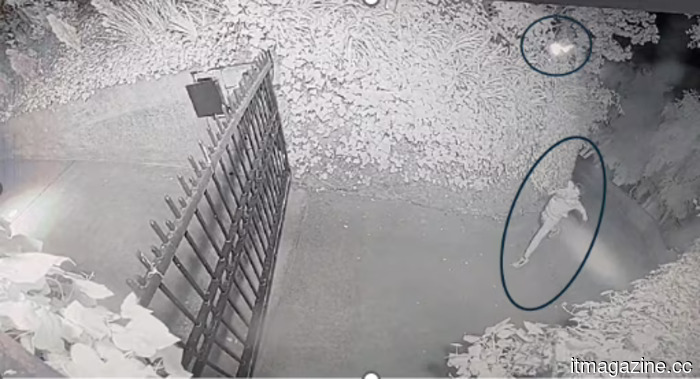 A man charged with attempted murder for throwing a Molotov cocktail at Sam Altman's residence and possessing a kill list targeting the AI CEO has pleaded not guilty.
Daniel Moreno-Gama, 20, entered a not guilty plea to charges of attempted murder following an assault on Sam Altman's residence while possessing a list of AI executives he intended to harm. He could face a sentence of up to life in prison.
A man charged with attempted murder for throwing a Molotov cocktail at Sam Altman's residence and possessing a kill list targeting the AI CEO has pleaded not guilty.
Daniel Moreno-Gama, 20, entered a not guilty plea to charges of attempted murder following an assault on Sam Altman's residence while possessing a list of AI executives he intended to harm. He could face a sentence of up to life in prison.
 RingConn's Gen 3 smart ring is now available, featuring haptic notifications and a battery life of 14 days.
The Gen 3 smart ring from RingConn is now open for pre-orders, with a starting price of $314. It features haptic alerts, a battery life of 14 days, and blood pressure monitoring that will be available through a future update.
RingConn's Gen 3 smart ring is now available, featuring haptic notifications and a battery life of 14 days.
The Gen 3 smart ring from RingConn is now open for pre-orders, with a starting price of $314. It features haptic alerts, a battery life of 14 days, and blood pressure monitoring that will be available through a future update.
 Intel has showcased its Computex 2026 lineup, which includes handheld devices, desktops, and servers, as the 18A process emerges as a signature technology for the foundry.
At Computex 2026, Intel will present Panther Lake Arc G3 handhelds, a 52-core Nova Lake desktop, and a 288-core Clearwater Forest Xeon, all manufactured using the 18A process node.
Intel has showcased its Computex 2026 lineup, which includes handheld devices, desktops, and servers, as the 18A process emerges as a signature technology for the foundry.
At Computex 2026, Intel will present Panther Lake Arc G3 handhelds, a 52-core Nova Lake desktop, and a 288-core Clearwater Forest Xeon, all manufactured using the 18A process node.
 The surge of humanoid robots in China is encountering a reality check, as 150 companies pursue a market where merely 23% of customers express satisfaction.
China is home to over 150 humanoid robot companies, holding a 90% share of the global market; however, buyer satisfaction stands at just 23%. Morgan Stanley cautions that a shake-out may occur as the number of IPOs surpasses demand.
The surge of humanoid robots in China is encountering a reality check, as 150 companies pursue a market where merely 23% of customers express satisfaction.
China is home to over 150 humanoid robot companies, holding a 90% share of the global market; however, buyer satisfaction stands at just 23%. Morgan Stanley cautions that a shake-out may occur as the number of IPOs surpasses demand.
 Intel showcases its Computex 2026 lineup featuring handheld devices, desktops, and servers, highlighting the 18A process as a key aspect of its foundry identity.
At Computex 2026, Intel will showcase Panther Lake Arc G3 handheld devices, a Nova Lake desktop with 52 cores, and a Clearwater Forest Xeon with 288 cores. All of these products are fabricated using the 18A process node.
Intel showcases its Computex 2026 lineup featuring handheld devices, desktops, and servers, highlighting the 18A process as a key aspect of its foundry identity.
At Computex 2026, Intel will showcase Panther Lake Arc G3 handheld devices, a Nova Lake desktop with 52 cores, and a Clearwater Forest Xeon with 288 cores. All of these products are fabricated using the 18A process node.
Intel showcases its Computex 2026 lineup that includes handheld devices, desktops, and servers, with the 18A process emerging as a hallmark of its foundry services.
At Computex 2026, Intel will showcase Panther Lake Arc G3 handheld devices, a 52-core Nova Lake desktop, and a 288-core Clearwater Forest Xeon. All of these products are manufactured using the 18A process node.