
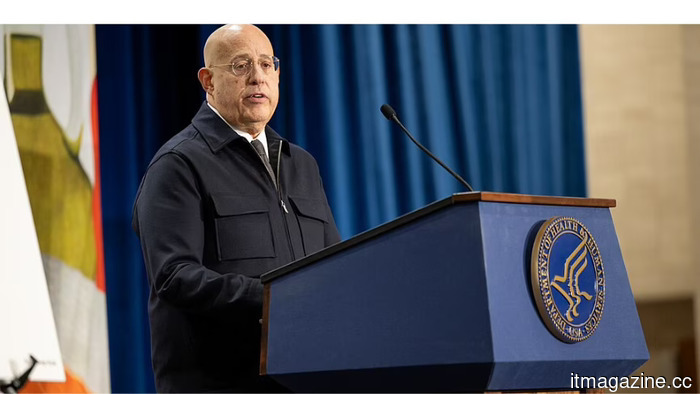
Peter Arnell, the designer responsible for the unsuccessful rebranding of Pepsi and Tropicana, has been appointed as the first U.S. chief brand architect for 27,000 government websites.
Peter Arnell, the designer known for the Pepsi logo strategy document and the Tropicana redesign that led to a 20% decline in sales, has been appointed as America’s first chief brand architect. He will oversee the branding of 27,000 government websites, with a deadline set for July 4, and will be based at the Eisenhower Executive Office Building within a National Design Studio that has already faced criticism for accessibility issues and AI-generated code.
The U.S. government now has a chief brand architect. Peter Arnell, whose extensive career includes creating the DKNY brand identity, redesigning the Pepsi logo with a detailed 27-page strategy document that drew comparisons to the Mona Lisa and the Parthenon, and managing the Tropicana packaging redesign that resulted in a 20% sales drop and was quickly reversed, has been assigned to lead the strategic and creative development of a standardized brand system for the federal government. The announcement was made by Joe Gebbia, the first chief design officer of America, during the Wall Street Journal’s Future of Everything conference. Arnell's role will involve redesigning government websites with a looming July 4 deadline, which is now under two months away.
The National Design Studio was formed through executive order in August 2025 as part of the "America by Design" initiative, aimed at making federal agencies' public-facing digital and physical services "usable and beautiful." Gebbia, who transitioned away from his operational role at Airbnb in 2022 and joined Tesla’s board, was tasked with revamping the government's online presence. Initially expected to integrate into the Department of Government Efficiency, he opted to establish his own office, expressing the desire to create government services that resemble the Apple Store—visually appealing and offering a great user experience, powered by modern software. The executive order allows agencies until July 4, 2026, to show initial improvements in their web and physical presence.
The studio has been proactive, rapidly recruiting design and engineering talent from Silicon Valley, launching revamped versions of various government websites, and spearheading DOGE’s initiative to create a fully online retirement application system for federal employees at the Office of Personnel Management. However, it has faced criticism, with reports highlighting that several studio websites failed accessibility audits performed by Equalize Digital due to issues like low-contrast text and inadequate heading structures, which could breach Section 508 of the Rehabilitation Act requiring accessibility for people with disabilities. The MAHA nutrition website even admitted its content was "undergoing a Section 508 review." Accessibility expert Anna Cook reviewed the code for the AmericaByDesign.gov site and pointed out its heavy reliance on unedited AI-generated content, cautioning that using outdated techniques in AI-generated code could pose security risks.
Arnell’s appointment as chief brand architect complicates an already contentious initiative. The history of brand redesigns is fraught with costly mistakes, and Arnell has been central to two notable failures. In 2008, PepsiCo hired Arnell Group to revamp the Pepsi logo and Tropicana packaging. The Pepsi project generated a strategy document criticized for its extravagance, referencing concepts like the golden ratio and gravitational fields, to justify a minor tweak of the logo. The Tropicana redesign removed the brand’s recognizable orange-with-a-straw visuals in favor of a minimalist design that consumers found unappealing, resulting in a 20% sales drop. PepsiCo reversed the packaging change within two months. Arnell later described the Pepsi logo he created as "bullshit" and distanced himself from the Tropicana misstep, claiming it was "not my brand."
After departing from Omnicom in 2011 following disputes, Arnell launched Intellectual Capital Investments and has since led a quieter career. This government position marks a significant return to the forefront, presenting an opportunity to work on a civic brand identity rather than a commercial one. This distinction is crucial, as the design challenges in the AI era are considerable, even for private enterprises where the stakes of a failed rebrand can be measured in quarterly profits. For a government, the ramifications are assessed based on citizens' access to essential services.
The National Design Studio operates within a wider trend of integrating Silicon Valley into the governance model established during the Trump administration. The collaboration between Silicon Valley and the Trump White House has ushered in a range of tech leaders into government roles, with figures like Elon Musk leading DOGE before stepping down, David Sacks advising on AI and cryptocurrency, and a September 2025 White House dinner attended by 33 Silicon Valley leaders, including Sam Altman and Mark Zuckerberg. Gebbia, who has expressed Democratic affiliations yet voted for Trump and supports the Make America Healthy Again movement, represents the design sector within this integration.
The studio's approach raises considerations beyond mere aesthetics. Previous government tech initiatives, like the United States Digital Service and 18F, were based on civic technology principles, focusing on incorporating Silicon Valley methodologies into government work while prioritizing user research, accessibility, iterative testing,
Other articles
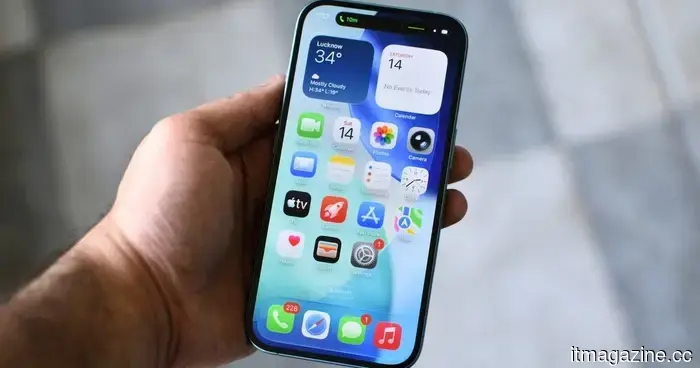 iOS 27 might allow users to select an AI model of their preference for tasks involving text and images.
For the first time since the launch of Apple Intelligence, iPhone users might soon have the option to choose which AI handles their tasks, such as composing emails, editing images, or enhancing Siri's capabilities.
iOS 27 might allow users to select an AI model of their preference for tasks involving text and images.
For the first time since the launch of Apple Intelligence, iPhone users might soon have the option to choose which AI handles their tasks, such as composing emails, editing images, or enhancing Siri's capabilities.
 32GB of RAM for Windows 11? Hey Microsoft, that seems like an issue for you!
Microsoft's push for 32GB RAM has drawn criticism, with users attributing Windows 11's inadequate optimization, increasing memory requirements, and escalating software bloat as the culprits, rather than actual enhancements in performance.
32GB of RAM for Windows 11? Hey Microsoft, that seems like an issue for you!
Microsoft's push for 32GB RAM has drawn criticism, with users attributing Windows 11's inadequate optimization, increasing memory requirements, and escalating software bloat as the culprits, rather than actual enhancements in performance.
 RingConn’s Gen 3 smart ring is released featuring haptic notifications and a battery life of up to 14 days.
The Gen 3 smart ring from RingConn is now open for pre-orders, beginning at $314. It features haptic alerts, a 14-day battery life, and blood pressure monitoring, which will be available in a future update.
RingConn’s Gen 3 smart ring is released featuring haptic notifications and a battery life of up to 14 days.
The Gen 3 smart ring from RingConn is now open for pre-orders, beginning at $314. It features haptic alerts, a 14-day battery life, and blood pressure monitoring, which will be available in a future update.
 China's surge in humanoid robots encounters a reality check, as 150 firms pursue a market where just 23% of customers are content.
China boasts over 150 humanoid robot companies and holds a 90% share of the global market, yet only 23% of buyers are satisfied. Morgan Stanley cautions that there may be a consolidation in the industry as the number of IPOs exceeds market demand.
China's surge in humanoid robots encounters a reality check, as 150 firms pursue a market where just 23% of customers are content.
China boasts over 150 humanoid robot companies and holds a 90% share of the global market, yet only 23% of buyers are satisfied. Morgan Stanley cautions that there may be a consolidation in the industry as the number of IPOs exceeds market demand.
 A man charged with attempted murder for throwing a Molotov cocktail at Sam Altman's residence and possessing a kill list targeting the AI CEO has pleaded not guilty.
Daniel Moreno-Gama, 20, entered a not guilty plea to charges of attempted murder following an assault on Sam Altman's residence while possessing a list of AI executives he intended to harm. He could face a sentence of up to life in prison.
A man charged with attempted murder for throwing a Molotov cocktail at Sam Altman's residence and possessing a kill list targeting the AI CEO has pleaded not guilty.
Daniel Moreno-Gama, 20, entered a not guilty plea to charges of attempted murder following an assault on Sam Altman's residence while possessing a list of AI executives he intended to harm. He could face a sentence of up to life in prison.
 Amazon's Alexa+ has now integrated into your Bose speaker, provided you're ready to cover the fees.
The AI-driven assistant has partnered with Bose, allowing both new and current Bose speaker users to enjoy natural-language music exploration.
Amazon's Alexa+ has now integrated into your Bose speaker, provided you're ready to cover the fees.
The AI-driven assistant has partnered with Bose, allowing both new and current Bose speaker users to enjoy natural-language music exploration.
Peter Arnell, the designer responsible for the unsuccessful rebranding of Pepsi and Tropicana, has been appointed as the first U.S. chief brand architect for 27,000 government websites.
Peter Arnell has been appointed as America's first chief brand architect, with the responsibility of consolidating 27,000 federal websites by July 4. The studio has already not passed accessibility audits.