
SK Hynix rises 12% as major tech companies increase their investment in AI memory.
A $725 billion capital expenditure increase among hyperscalers and a 20% rise in HBM prices have positioned the South Korean chip manufacturer as the second-most valuable company on the KOSPI. The trickier issue is determining when supply will meet demand.
There’s a lighthearted quip in semiconductor discussions about which component of an AI server is the costliest, with the graphics processor traditionally being the answer. However, for the last 18 months, that distinction has increasingly gone to the memory located alongside it.
On Monday, the market recognized this trend. SK Hynix, the South Korean memory firm that produces the majority of the world’s high-bandwidth memory for AI accelerators, surged by as much as 12% in Seoul, with shares reaching approximately 1.4 million won, or about $970, during morning trading, as reported by Reuters.
This surge elevated SK Hynix to the second-most valuable company on the KOSPI, second only to Samsung Electronics. The increase reflected foreign investments following strong earnings and reasserted AI infrastructure commitments from U.S. hyperscalers the prior week.
By any standard, this is an impressive journey for a company that many consumers may not recognize.
The reasoning behind this is simple. The combined capital expenditure of major tech firms for 2026 is expected to fall between $650 billion and $725 billion, depending on the analyst consulted—an increase of around 77% from 2025.
Microsoft has projected its expenditures to reach as much as $190 billion for the calendar year, with its CFO publicly attributing about $25 billion of this to rising memory-chip and component costs. Meta, in its first-quarter update, adjusted its own estimate to a range of $125–145 billion, citing similar pressures. Amazon’s Andy Jassy has committed around $200 billion, and Google has similarly been active. A large portion of this investment is directed towards AI training and inference clusters; a significant part lands within the bill of materials for high-bandwidth memory, where SK Hynix is a leader.
By late 2025, SK Hynix was estimated to control 57% of the global HBM market, based on data from analysts at Counterpoint and others. Such a concentrated market share is unusual for a commodity-adjacent sector, and it structurally positions the company's earnings to resemble those of a software platform rather than a traditional memory manufacturer.
SK Hynix reported a record operating profit for the first quarter on April 23, with operating margins for its memory segment estimated by some analysts to be above 70%.
Margins of this nature are not lasting. Nevertheless, they can persist as long as supply lags behind demand.
Reasons for the supply lag
HBM is not typical DRAM. It is a 3D-packaged memory designed to meet the bandwidth requirements of GPUs, and producing it involves a specific set of advanced packaging steps that the industry—including Samsung and Micron—has struggled to scale to meet buyers' demands.
According to TrendForce, both Samsung and SK Hynix have increased HBM3E prices by approximately 20% for 2026, with hyperscalers and accelerator vendors booking supply years ahead.
Earlier this year, Samsung’s memory chief cautioned that significant memory shortages could persist until 2027. The chairman of SK Group has further indicated that the broader chip-wafer constraints might last until 2030.
Regardless of whether these predictions are accurate, they clarify why long-term supply agreements, where a hyperscaler preemptively reserves output years in advance, are becoming standard practice. This trend also illustrates why SK Hynix and Samsung are increasingly signing such agreements directly with Microsoft and Google.
Thus, there are two categories of memory in 2026: the kind anyone can purchase and the kind essential for your AI roadmap. SK Hynix is firmly in the latter category.
There are, predictably, critics. The CAPE ratio for U.S. equities is currently about 38, a level not seen since the peak of the dot-com boom, and TNW has highlighted the unease this comparison triggers, even as it contends that today’s leading AI-focused companies, unlike many in 2000, are generally profitable.
SK Hynix falls squarely in the profitable group, yet it remains unusually dependent on a single product cycle. If hyperscaler capital expenditure slows down or if competing accelerator architectures lessen HBM demand per chip, the same operating leverage that has produced record quarters could shift in the opposite direction.
Another concern is whether the ongoing AI expansion will continue to yield the kind of returns that justify current capital expenditure levels. Meta has been simultaneously announcing record AI investments while cutting about 8,000 jobs, as it restructures around its spending—a situation that doesn’t quite align with a narrative of a robust organic boom. For now, investors are supporting both sides of this equation,
Other articles
 I utilize AI on a daily basis — here are three reasons I chose to pay for Claude instead of ChatGPT.
I set out to find a superior AI and ultimately transformed the way I approach my tasks. What began as a simple interest has evolved into something I depend on daily.
I utilize AI on a daily basis — here are three reasons I chose to pay for Claude instead of ChatGPT.
I set out to find a superior AI and ultimately transformed the way I approach my tasks. What began as a simple interest has evolved into something I depend on daily.
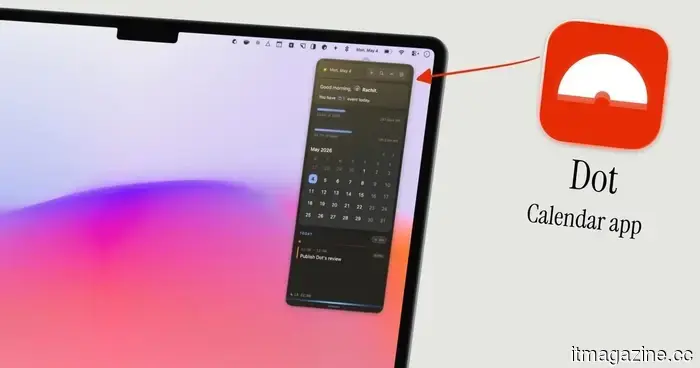 Dot is the Mac calendar application I wish I had discovered earlier in 2026.
I've always enjoyed using menu bar calendar applications. They allow me to quickly view upcoming events, add new ones effortlessly, and access my calendar from anywhere. Dot is the best one I've encountered.
Dot is the Mac calendar application I wish I had discovered earlier in 2026.
I've always enjoyed using menu bar calendar applications. They allow me to quickly view upcoming events, add new ones effortlessly, and access my calendar from anywhere. Dot is the best one I've encountered.
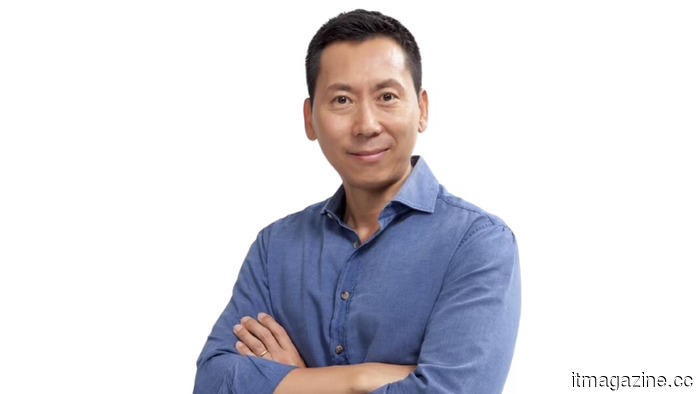 Won-Jin Lee assumes leadership of Samsung's TV division following a decline in profits.
Samsung has appointed Won-Jin Lee to lead its Visual Display division as profits from TVs in Q1 decreased and TCL has narrowed the gap to just one percentage point.
Won-Jin Lee assumes leadership of Samsung's TV division following a decline in profits.
Samsung has appointed Won-Jin Lee to lead its Visual Display division as profits from TVs in Q1 decreased and TCL has narrowed the gap to just one percentage point.
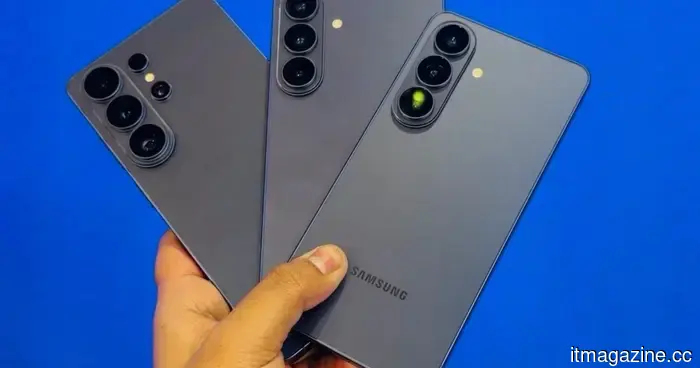 It's time to stop unconditionally believing that Snapdragon phones are the best.
Snapdragon continues to produce outstanding chips, but the performance of this year's Exynos and MediaTek makes the old narrative of "Qualcomm always winning" seem rather outdated.
It's time to stop unconditionally believing that Snapdragon phones are the best.
Snapdragon continues to produce outstanding chips, but the performance of this year's Exynos and MediaTek makes the old narrative of "Qualcomm always winning" seem rather outdated.
 I used the iPhone Air for six months, and there's just one thing I miss.
The iPhone Air has impressed me in ways I never anticipated. Half a year later, it remains my top choice among iPhones, but there's one feature that I'm continually thinking about that it lacks.
I used the iPhone Air for six months, and there's just one thing I miss.
The iPhone Air has impressed me in ways I never anticipated. Half a year later, it remains my top choice among iPhones, but there's one feature that I'm continually thinking about that it lacks.
 Plex is experiencing a significant increase in prices for remote streaming services.
Plex will conclude the introductory pricing for its Remote Watch Pass on June 1, increasing monthly charges to $2.99 and annual charges to $29.99.
Plex is experiencing a significant increase in prices for remote streaming services.
Plex will conclude the introductory pricing for its Remote Watch Pass on June 1, increasing monthly charges to $2.99 and annual charges to $29.99.
SK Hynix rises 12% as major tech companies increase their investment in AI memory.
SK Hynix shares surged by 12% as major technology companies confirmed their intentions to invest up to $725 billion in AI infrastructure, further intensifying the memory-chip supercycle.