
SK Hynix surges 12% as major tech companies increase their investment in AI memory.
A $725 billion capital expenditure increase from hyperscalers and a 20% rise in high-bandwidth memory (HBM) prices have positioned the South Korean chipmaker as the second-most valuable company on the KOSPI. The more challenging issue is when supply will meet demand.
There’s a lighthearted joke in semiconductor circles regarding which component of an AI server is the most costly. While the graphics processor was historically the clear choice, in recent months, the memory next to it has increasingly taken the lead.
On Monday, the market reacted to that joke.
SK Hynix, the South Korean memory expert that provides most of the global high-bandwidth memory for AI accelerators, saw its shares surge as much as 12% in Seoul, reaching approximately 1.4 million won (about $970) in morning trading, as reported by Reuters.
This rally elevated SK Hynix to the rank of the second-most valuable company on the KOSPI, following Samsung Electronics, reflecting strong foreign investor interest driven by robust earnings and reaffirmed AI infrastructure plans disclosed by U.S. hyperscalers the previous week.
This remarkable performance is significant for a company that many consumers may not recognize.
The reason is straightforward. The total capital expenditure from Big Tech for 2026 is projected to land between $650 billion and $725 billion, depending on the analyst, representing an increase of about 77% compared to 2025.
Microsoft has indicated a range of up to $190 billion for the calendar year, with its CFO attributing approximately $25 billion of this to rising costs for memory chips and components.
Meta, during its Q1 update, raised its forecast to $125–145 billion, citing similar factors. Amazon’s Andy Jassy has pledged about $200 billion. Google has also been notably active. Virtually all this funding is directed towards AI training and inference clusters, a significant portion of it going toward high-bandwidth memory, where SK Hynix holds a dominant position.
By late 2025, SK Hynix was estimated to control around 57% of the global HBM market, according to analysts at Counterpoint and others. This level of concentration is unusual for a commodity-adjacent industry and is the reason the company’s profits resemble those of a software platform more than a traditional memory manufacturer.
SK Hynix reported a record operating profit for the first quarter on April 23, with operating margins on its memory line reportedly exceeding 70% according to certain sell-side estimates.
Such high margins are not sustainable indefinitely, but they can persist as long as supply does not meet demand.
Understanding why supply has not caught up is key.
HBM is distinct from standard DRAM; it is a 3D-packaged memory designed to cater to bandwidth-intensive GPUs, and its production necessitates a specific set of advanced packaging techniques that the industry, including Samsung and Micron, has struggled to scale at the pace desired by buyers.
As per TrendForce, both Samsung and SK Hynix have raised HBM3E prices by approximately 20% for 2026, with supply booked years in advance by hyperscalers and accelerator vendors.
Earlier this year, Samsung’s memory chief publicly indicated that serious memory shortages are expected to continue through 2027. The chairman of SK Group has gone even further, predicting that the broader chip-wafer scarcity will extend until 2030.
Regardless of the accuracy of these forecasts, they clarify why long-term supply agreements—where a hyperscaler secures production years in advance—are becoming standard. They also explain reports of SK Hynix and Samsung increasingly entering such agreements directly with Microsoft and Google.
In summary, there will be two categories of memory in 2026: the type accessible to anyone and the type essential for your AI strategy. SK Hynix specializes in the latter.
Of course, there are those who dissent. The CAPE ratio for U.S. equities currently hovers around 38, a level reminiscent of the height of the dot-com bubble, which raises concerns, even as TNW points out that today's leading AI-related companies are, unlike many in 2000, generally profitable.
SK Hynix falls squarely into that profitable group, but it is also heavily dependent on a single product cycle. If hyperscaler capital expenditures taper off or if alternative accelerator designs lessen HBM requirements per chip, the same operating leverage that has produced record quarters may reverse.
There’s also the matter of whether the AI expansion will continue yielding returns sufficient to justify current capital expenditure levels. Meta has announced both significant AI investment and the elimination of around 8,000 jobs as part of a restructuring effort, a development that doesn’t fully support the narrative of a healthy organic growth phase. For now, investors seem willing to support both ends of this equation, as they have done in previous technology cycles, but they can change their views rapidly.
Other articles
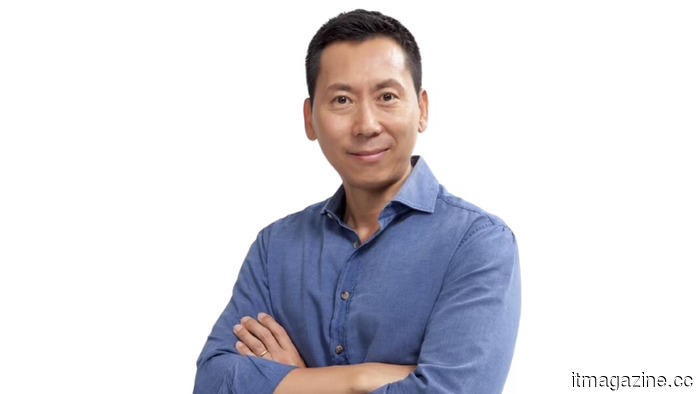 Won-Jin Lee assumes leadership of Samsung's TV division following a decline in profits.
Samsung has appointed Won-Jin Lee to lead its Visual Display division as profits from TVs in Q1 decreased and TCL has narrowed the gap to just one percentage point.
Won-Jin Lee assumes leadership of Samsung's TV division following a decline in profits.
Samsung has appointed Won-Jin Lee to lead its Visual Display division as profits from TVs in Q1 decreased and TCL has narrowed the gap to just one percentage point.
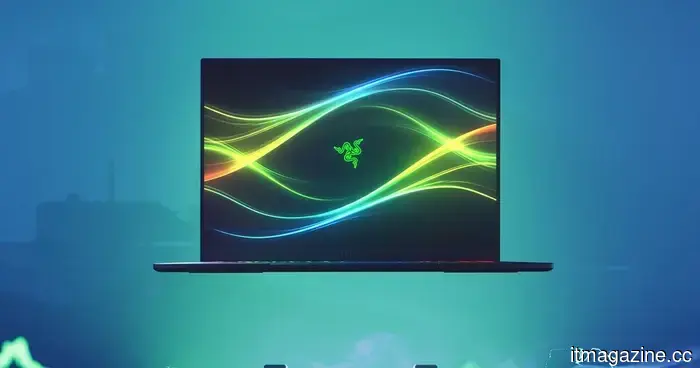 Razer enhances the Blade 16 by offering options for 64GB RAM and RTX 5090.
Razer has unveiled new configurations for the Blade 16, now featuring up to 64GB of LPDDR5X RAM and an RTX 5090 GPU, elevating the gaming laptop to the level of a workstation.
Razer enhances the Blade 16 by offering options for 64GB RAM and RTX 5090.
Razer has unveiled new configurations for the Blade 16, now featuring up to 64GB of LPDDR5X RAM and an RTX 5090 GPU, elevating the gaming laptop to the level of a workstation.
 I utilize AI on a daily basis — here are three reasons why I chose to pay for Claude instead of ChatGPT.
I sought out a more effective AI and ultimately transformed my work processes. What began as mere curiosity has evolved into a resource I depend on daily.
I utilize AI on a daily basis — here are three reasons why I chose to pay for Claude instead of ChatGPT.
I sought out a more effective AI and ultimately transformed my work processes. What began as mere curiosity has evolved into a resource I depend on daily.
 The wisest life decision I made was to delete Instagram, which brought peace to my troubled spirit.
I impulsively deleted Instagram, but what came next was significantly calmer. Amid the restlessness and the calmness, I rediscovered my focus, reclaimed my time, and uncovered a version of my life that genuinely felt like mine once more.
The wisest life decision I made was to delete Instagram, which brought peace to my troubled spirit.
I impulsively deleted Instagram, but what came next was significantly calmer. Amid the restlessness and the calmness, I rediscovered my focus, reclaimed my time, and uncovered a version of my life that genuinely felt like mine once more.
 Anthropic and Wall Street are creating a $1.5 billion pipeline for private equity.
Anthropic is completing a $1.5 billion joint venture with Blackstone, Hellman & Friedman, Goldman Sachs, and General Atlantic to implement Claude in portfolio companies of private equity.
SK Hynix rises 12% as major tech companies increase their investment in AI memory.
SK Hynix shares surged by 12% as major technology companies confirmed their intentions to invest up to $725 billion in AI infrastructure, further intensifying the memory-chip supercycle.
Anthropic and Wall Street are creating a $1.5 billion pipeline for private equity.
Anthropic is completing a $1.5 billion joint venture with Blackstone, Hellman & Friedman, Goldman Sachs, and General Atlantic to implement Claude in portfolio companies of private equity.
SK Hynix rises 12% as major tech companies increase their investment in AI memory.
SK Hynix shares surged by 12% as major technology companies confirmed their intentions to invest up to $725 billion in AI infrastructure, further intensifying the memory-chip supercycle.
SK Hynix surges 12% as major tech companies increase their investment in AI memory.
SK Hynix's stock surged by 12% as major technology companies reinforced their intentions to invest as much as $725 billion in AI infrastructure, further intensifying the memory-chip supercycle.