
It's time to stop unconditionally believing that Snapdragon phones are the best.
For years, the discussion surrounding smartphone chips has been quite clear-cut. A phone equipped with a Snapdragon chip was generally considered the superior choice, while those with Exynos or MediaTek chips were often met with skepticism. Qualcomm built its reputation over time, but by 2026, that structure no longer appears as robust.
Recently, MediaTek’s latest Dimensity 9000 series chips have been performing very closely to the Snapdragon 8 series SoCs, with Exynos typically lagging behind. However, the competition has now become significantly more engaging.
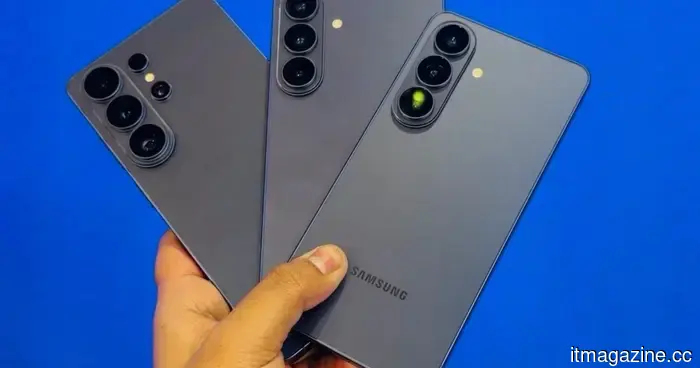
My recent experience with the Galaxy S26, which includes the Exynos 2600, surprised me with its performance. When considering the Snapdragon 8 Elite Gen 5 in the S26 Ultra and the Dimensity 9500 in devices like the Oppo Find X9, the notion that "Snapdragon equals better" starts to show some flaws.
**Benchmark Results**
**Galaxy S26 (Exynos 2600)**:
AnTuTu Total: 3,101,654
Geekbench 6 Single-Core: 3,036
Geekbench 6 Multi-Core: 10,534
3DMark Wild Life Extreme: 6,366
Stress Test Stability (%): 53.5
Temperature After Stress Test (°C): 40.2
**Galaxy S26 Ultra (Snapdragon 8 Elite Gen 5)**:
AnTuTu Total: 3,638,265
Geekbench 6 Single-Core: 3,524
Geekbench 6 Multi-Core: 10,823
3DMark Wild Life Extreme: 6,519
Stress Test Stability (%): 63.2
Temperature After Stress Test (°C): 38.7
**Oppo Find X9 (Dimensity 9500)**:
AnTuTu Total: 3,512,048
Geekbench 6 Single-Core: 3,207
Geekbench 6 Multi-Core: 9,345
3DMark Wild Life Extreme: 7,142
Stress Test Stability (%): 54.9
Temperature After Stress Test (°C): 39.2
**The Galaxy S26 is a pleasant surprise**
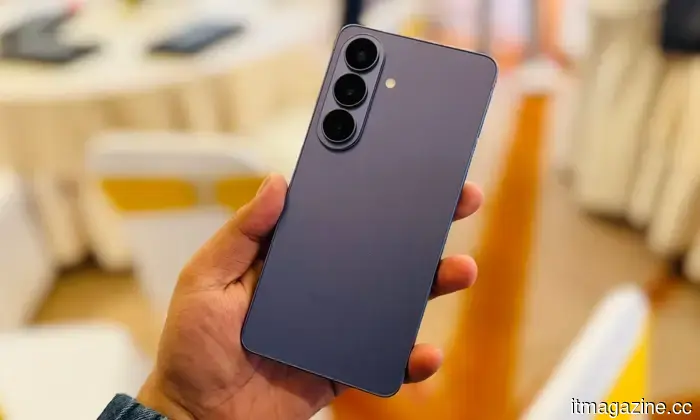
The most unexpected element is that the Exynos 2600 does not appear to be a noticeable weak point. In my assessments, the standard Galaxy S26 achieved scores of 3,036 for single-core and 10,534 for multi-core in Geekbench 6 and an AnTuTu score of 2,859,177. Traditionally, Samsung has released its flagship devices in two variants: Snapdragon models for North America, China, and Japan, and Exynos versions for the rest of the world. The company faced significant backlash for this division, as previous flagship models with Exynos chips frequently lagged behind their Snapdragon counterparts.
This criticism, along with production yield challenges, led Samsung to produce several generations of Galaxy S phones using only Snapdragon processors. However, it appears that Exynos is making a comeback. The Galaxy S26 scored 6,366 on 3DMark Wild Life Extreme, with mixed stress-test results showing 53.5% stability. These are impressive figures for a smaller flagship, especially one many might have initially dismissed upon seeing "Exynos" listed in the specifications.
**The S26 Ultra is faster, but not by a large margin**
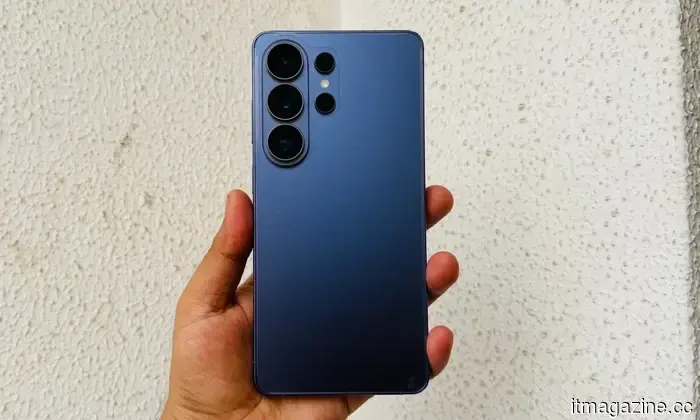
The Galaxy S26 Ultra retains certain advantages, which isn't surprising. Its Wild Life Extreme Stress Test yielded a top loop score of 6,519 with 63.2% stability, enhanced by its larger vapor chamber cooling system. While its overall thermal performance is better, the difference isn't significant enough to drastically change the dialogue when comparing it to the standard S26. In both AnTuTu and Geekbench, the S26 Ultra outperformed, yet the gap is no longer as prominent as it was in past Snapdragon versus Exynos comparisons.
When comparing GeekBench scores, the performance between the two is nearly identical. Even without the upgraded cooling, the Galaxy S26 managed to remain surprisingly competitive with the S26 Ultra during the stress test. The Ultra does pull ahead in terms of stability, an important factor when discussing consistent performance under load.
**MediaTek adds excitement to the competition**
The Dimensity 9500 in the Oppo Find X9 Pro is what truly spices up this discussion. It achieved a single-core Geekbench 6 score of 3,203, surpassing the base Galaxy S26, and also edged ahead with an AnTuTu score of 3,512,048. With a 3DMark Wild Life Extreme score of 7,142, it outperformed both the S26 and the S26 Ultra.
MediaTek is no longer just the "other" flagship chip manufacturer. It is producing top-tier performance numbers, placing it alongside Qualcomm and Samsung's proprietary chips. For a long time, Dimensity chips

Other articles
 Razer enhances the Blade 16 by offering options for 64GB RAM and RTX 5090.
Razer has unveiled new configurations for the Blade 16, now featuring up to 64GB of LPDDR5X RAM and an RTX 5090 GPU, elevating the gaming laptop to the level of a workstation.
Razer enhances the Blade 16 by offering options for 64GB RAM and RTX 5090.
Razer has unveiled new configurations for the Blade 16, now featuring up to 64GB of LPDDR5X RAM and an RTX 5090 GPU, elevating the gaming laptop to the level of a workstation.
 The wisest life decision I made was to delete Instagram, which brought peace to my troubled spirit.
I impulsively deleted Instagram, but what came next was significantly calmer. Amid the restlessness and the calmness, I rediscovered my focus, reclaimed my time, and uncovered a version of my life that genuinely felt like mine once more.
The wisest life decision I made was to delete Instagram, which brought peace to my troubled spirit.
I impulsively deleted Instagram, but what came next was significantly calmer. Amid the restlessness and the calmness, I rediscovered my focus, reclaimed my time, and uncovered a version of my life that genuinely felt like mine once more.
 I utilize AI on a daily basis — here are three reasons I chose to pay for Claude instead of ChatGPT.
I set out to find a superior AI and ultimately transformed the way I approach my tasks. What began as a simple interest has evolved into something I depend on daily.
I utilize AI on a daily basis — here are three reasons I chose to pay for Claude instead of ChatGPT.
I set out to find a superior AI and ultimately transformed the way I approach my tasks. What began as a simple interest has evolved into something I depend on daily.
 OpenAI's Codex now includes a small AI pet that keeps you informed as you program.
OpenAI has launched Codex Pets, which are optional animated companions for its Codex desktop application. These pets appear on your screen and monitor the actions of the coding agent as they happen in real-time.
OpenAI's Codex now includes a small AI pet that keeps you informed as you program.
OpenAI has launched Codex Pets, which are optional animated companions for its Codex desktop application. These pets appear on your screen and monitor the actions of the coding agent as they happen in real-time.
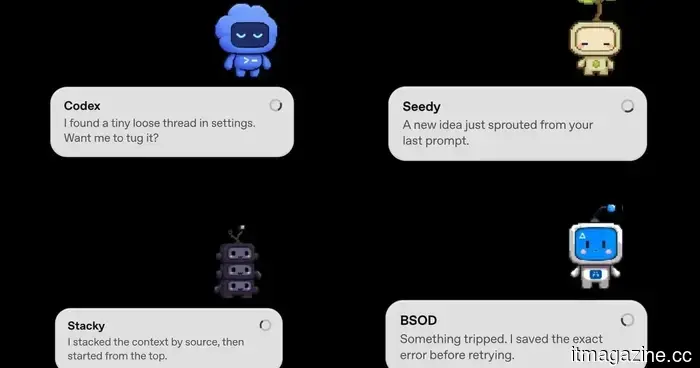 OpenAI's Codex now features a small AI companion that provides updates as you code.
OpenAI has launched Codex Pets, which are optional animated companions for its Codex desktop application. These pets will be displayed on your screen and monitor the activities of the coding agent in real-time.
OpenAI's Codex now features a small AI companion that provides updates as you code.
OpenAI has launched Codex Pets, which are optional animated companions for its Codex desktop application. These pets will be displayed on your screen and monitor the activities of the coding agent in real-time.
 Won-Jin Lee assumes control of Samsung's TV division following a decline in profits.
Samsung has appointed Won-Jin Lee to lead its Visual Display division as the profit for Q1 from TVs decreased and TCL narrowed the gap to just one percentage point.
Won-Jin Lee assumes control of Samsung's TV division following a decline in profits.
Samsung has appointed Won-Jin Lee to lead its Visual Display division as the profit for Q1 from TVs decreased and TCL narrowed the gap to just one percentage point.
It's time to stop unconditionally believing that Snapdragon phones are the best.
Snapdragon continues to produce outstanding chips, but the performance of this year's Exynos and MediaTek makes the old narrative of "Qualcomm always winning" seem rather outdated.