
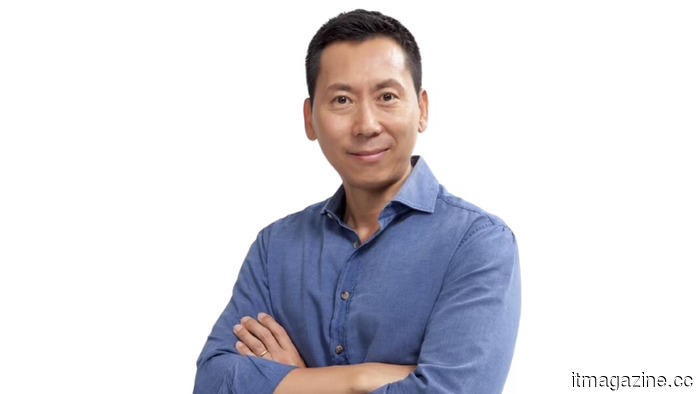
Won-Jin Lee assumes leadership of Samsung's TV division following a decline in profits.
Won-Jin Lee, an experienced marketing professional, is set to lead the Visual Display business following a decline in TV profits over the last quarter. His predecessor has transitioned to a role focused on AI and robotics. Samsung Electronics has replaced its television business head for the first time in over two years, indicating an acknowledgment that all is not well for the world's largest TV manufacturer.
On Monday, the company announced that Won-Jin Lee, previously the president of the Global Marketing Office, will take charge of the Visual Display business, according to a statement from Samsung's newsroom. Yong Seok-woo, the outgoing head of the Visual Display division, who has managed the unit for over two years, will shift into an advisory role within the Device eXperience division, concentrating on future technologies like AI and robotics.
Initially, this move may appear to be a standard restructuring. However, it seems more akin to a necessary adjustment.
Samsung continues to be a leading player in the television market. The company proudly notes that 2025 marks its twentieth consecutive year as the global TV market leader by revenue, boasting a 29.1 percent market share and an impressive 54.3 percent share of the premium segment for televisions priced over $2,500. By conventional standards in consumer electronics, this is not a sector in need of salvation.
However, when measured by how Samsung perceives itself, the last few quarters have been challenging. A report in late April indicated that profits from its TV sector fell in the first quarter, attributing this to stagnant demand and increasing raw material costs. The statement to Reuters about Lee’s appointment indicated that the new leader is anticipated to provide "a fresh perspective and the change needed," which is the type of language Samsung typically uses when facing difficulties.
The competition that is gradually undermining Samsung's leadership is not an American or Japanese brand, but TCL.
When considering unit shipments rather than revenue, the reality is more competitive than the overall numbers imply. According to Counterpoint’s monthly tracker, Samsung held a 17 percent share of unit shipments in November 2025, with TCL closely following at 16 percent and Hisense at 10 percent. Reports from SamMobile, FlatpanelsHD, and Broadband TV News revealed that TCL has reduced the gap to just one percentage point, aided by aggressive pricing on Mini-LED panels and rapid growth in emerging markets across Eastern Europe, the Middle East, and Africa.
In March, TCL Electronics signed a binding agreement to acquire a controlling 51 percent stake in Sony’s television division, a joint venture that will commence in April 2027. This agreement, more than any quarterly financial results, represents a significant shift for Samsung’s leadership. A Chinese hardware company backed by Japanese engineering expertise presents a different kind of competition than one that stands alone.
Samsung is not losing its position in the TV market but is, for the first time in many years, on the defensive against new challengers.
Why appoint a marketing chief now?
Lee’s previous role as head of the Global Marketing Office is highly indicative of his new responsibilities. This office is where Samsung formulates its branding, advertising, and content strategies across different categories. According to Samsung's announcement, Lee has played a significant role in developing the services and content features that accompany the company's TV and mobile hardware.
The Korea Herald characterized the appointment as Samsung relying on a "marketing veteran to reboot the TV business," which aptly reflects the situation. This is not merely an engineering reshuffle.
This decision illustrates Samsung's perspective on the direction of the competitive landscape. Distinguishing hardware has become increasingly challenging, especially in the mid-range segment, where Chinese companies can rival Samsung’s panel technology at considerably lower prices.
The area where Samsung can maintain its edge lies in the connected-TV operating system, advertising inventory through Samsung TV Plus, and subscription bundles that transform a one-time appliance sale into an ongoing customer relationship. Although Samsung has pursued premium hardware narratives over the years, exemplified by its extravagant modular MicroLED “Wall,” the upcoming decade's revenue potential is likely to stem more from software and services operating on simpler panels.
In essence, Lee’s task is to reshape Samsung’s TV division to resemble a media company more than a hardware manufacturer. Whether the rest of the organization is structurally prepared for this transition is a different issue, one that has historically presented challenges for Samsung.
An equally significant move in the next five years involves Yong Seok-woo, the outgoing head of Visual Display, becoming an adviser within the Device eXperience division, focusing on AI and robotics.
This is not a gentle transition. The Device eXperience Division encompasses Samsung’s strategy for consumer electronics, mobile, and emerging devices, and AI and robotics are the specific areas where Samsung has indicated, through its investments in edge-AI chips and acquisitions such as the French ultrasound startup Sonio, that it aims to increase visibility.
Yong is recognized for his deep understanding of the home appliance and panel
Other articles
 Dot is the Mac calendar application I wish I had discovered earlier in 2026.
I've always enjoyed using menu bar calendar applications. They allow me to quickly view upcoming events, add new ones effortlessly, and access my calendar from anywhere. Dot is the best one I've encountered.
Dot is the Mac calendar application I wish I had discovered earlier in 2026.
I've always enjoyed using menu bar calendar applications. They allow me to quickly view upcoming events, add new ones effortlessly, and access my calendar from anywhere. Dot is the best one I've encountered.
 The wisest life decision I made was to delete Instagram, which brought peace to my troubled spirit.
I impulsively deleted Instagram, but what came next was significantly calmer. Amid the restlessness and the calmness, I rediscovered my focus, reclaimed my time, and uncovered a version of my life that genuinely felt like mine once more.
The wisest life decision I made was to delete Instagram, which brought peace to my troubled spirit.
I impulsively deleted Instagram, but what came next was significantly calmer. Amid the restlessness and the calmness, I rediscovered my focus, reclaimed my time, and uncovered a version of my life that genuinely felt like mine once more.
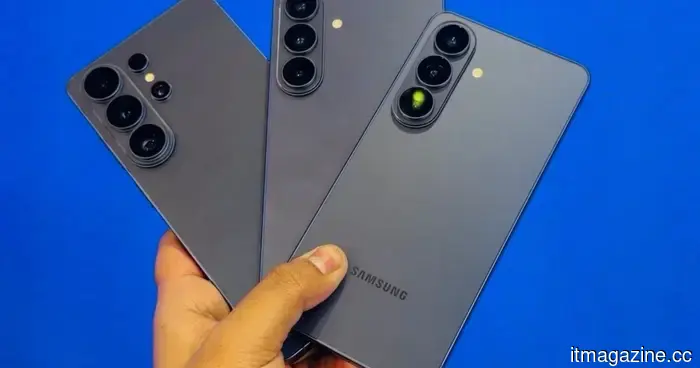 It's time we cease to uncritically accept that Snapdragon phones are the best.
While Snapdragon continues to produce outstanding chips, this year's results from Exynos and MediaTek challenge the previous notion that "Qualcomm always comes out on top."
It's time we cease to uncritically accept that Snapdragon phones are the best.
While Snapdragon continues to produce outstanding chips, this year's results from Exynos and MediaTek challenge the previous notion that "Qualcomm always comes out on top."
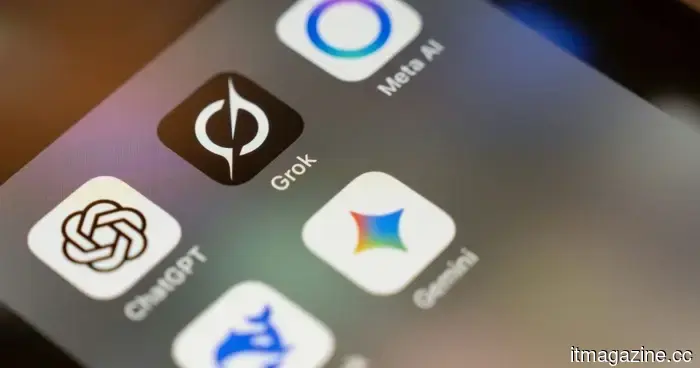 Grok is set to join ChatGPT and Perplexity on your CarPlay dashboard.
Your car dashboard is gradually becoming a highly sought-after space for AI in technology. Grok is the newest entrant aiming for a presence there, and unlike the two chatbots already available on CarPlay, it is focusing solely on Voice mode.
SK Hynix surges 12% as major tech companies increase their investment in AI memory.
SK Hynix's stock surged by 12% as major technology companies reinforced their intentions to invest as much as $725 billion in AI infrastructure, further intensifying the memory-chip supercycle.
Grok is set to join ChatGPT and Perplexity on your CarPlay dashboard.
Your car dashboard is gradually becoming a highly sought-after space for AI in technology. Grok is the newest entrant aiming for a presence there, and unlike the two chatbots already available on CarPlay, it is focusing solely on Voice mode.
SK Hynix surges 12% as major tech companies increase their investment in AI memory.
SK Hynix's stock surged by 12% as major technology companies reinforced their intentions to invest as much as $725 billion in AI infrastructure, further intensifying the memory-chip supercycle.
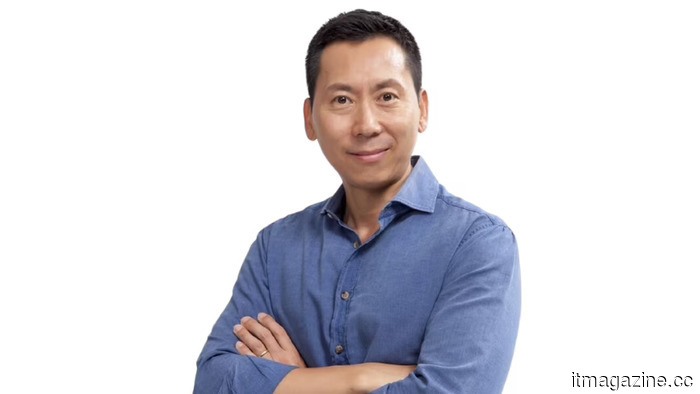 Won-Jin Lee assumes control of Samsung's TV division following a decline in profits.
Samsung has appointed Won-Jin Lee to lead its Visual Display division as the profit for Q1 from TVs decreased and TCL narrowed the gap to just one percentage point.
Won-Jin Lee assumes control of Samsung's TV division following a decline in profits.
Samsung has appointed Won-Jin Lee to lead its Visual Display division as the profit for Q1 from TVs decreased and TCL narrowed the gap to just one percentage point.
Won-Jin Lee assumes leadership of Samsung's TV division following a decline in profits.
Samsung has appointed Won-Jin Lee to lead its Visual Display division as profits from TVs in Q1 decreased and TCL has narrowed the gap to just one percentage point.