
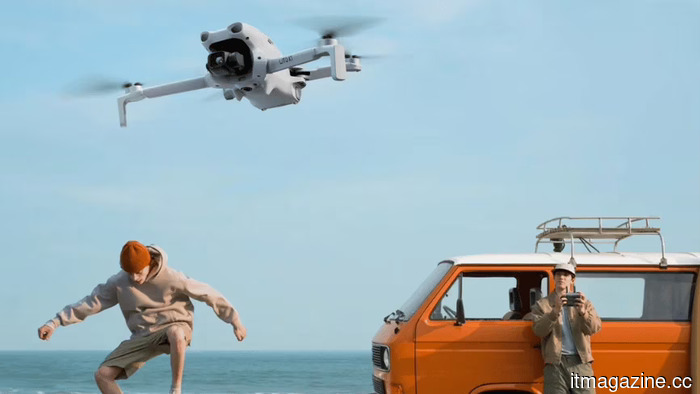
DJI faces bans in both Beijing and Washington as security concerns regarding drones pressure the world's leading manufacturer from both directions.
**Summary**: DJI, which holds up to 80% of the global consumer drone market, is now prohibited from selling its products in both Beijing and Washington after the Chinese capital instituted a ban on all drone sales effective May 1, 2026, and the US FCC prevented new DJI products from obtaining market authorization in December 2025. The company anticipates a $1.5 billion revenue loss in the US and faces the risk of other Chinese cities adopting similar regulations to those in Beijing.
On May 1, employees at DJI's main retail outlet in Beijing's Guomao district began removing drones from display. Models like the Neo, Mavic, and Mini, which had established DJI as a leading consumer electronics brand, were taken off the shelves. The store remained open but complied with a regulation enacted by Beijing’s legislature in March, banning the sale, rental, and transport of drones within the capital. E-commerce sites such as Taobao and JD.com also ceased drone shipping to Beijing on the same day. Inside the city's Sixth Ring Road, residents are now limited to storing no more than three drones or ten essential components at one address without official approval. All drone owners in Beijing were required to register their devices with local law enforcement by April 30, complete a 30-minute test via an official app, and verify their identities. Possession of unregistered drones is now illegal.
Five months prior, the US Federal Communications Commission included DJI and all other foreign drones on its Covered List, a designation for national security that blocks new devices from receiving the necessary FCC authorization for legal sale in the US. DJI claims that 25 upcoming products intended for the US market in 2026 are now on hold, equating to about $1.5 billion in lost revenue. The company filed a lawsuit in February in the Ninth Circuit, challenging the FCC’s decision as procedurally incorrect and unconstitutional. The case is still ongoing, with no resolution anticipated soon.
DJI, a pioneer in the consumer drone market that holds anywhere from 54% to 80% of the global share based on the segment, now finds itself unable to sell products in either Washington or Beijing.
**Beijing's Perspective**:
The regulations implemented in Beijing are extensive, focusing on every stage of drone ownership: acquisition, transport, storage, registration, operation, and disposal. Approval from authorities is needed for any outdoor drone flights within Beijing’s jurisdiction. Individuals flying drones without permission face fines of up to 10,000 yuan (about $1,460) and confiscation of their devices. Fines for storage violations can reach 5,000 yuan for individuals and 10,000 yuan for companies. Drones and critical components may not be brought into the city without permission and can only be carried by registered owners who have confirmed their identities with police.
The official rationale is security, as Beijing serves as China’s political hub, housing key government buildings and military sites. The rise in unauthorized drone flights near sensitive areas worldwide has led to a conclusion that the potential security risk from unchecked consumer drones in a capital city outweighs their commercial and recreational benefits.
The online response was immediate, with users on Chinese social media labeling the regulations as a "crazy one-size-fits-all system." Drone sellers across mainland China reported a sharp decline in April sales as consumers hesitated to purchase equipment they might not be allowed to use legally. Listings for used drones surged on Chinese resale platforms as Beijing residents tried to sell their devices before the registration deadline. China has shown a readiness to impose strict regulations on its technology sector, from blocking foreign acquisitions to enforcing mandatory AI content labeling. The drone ban aligns with a trend where Beijing prioritizes state security over commercial interests, even at the expense of a domestic company.
**Washington's Perspective**:
The ban in the US operates under a different framework but yields a similar outcome. The National Defense Authorization Act mandated that a US national security agency complete a formal review of DJI by December 23, 2025. However, no agency conducted the review by that deadline. As a result, DJI was added to the FCC Covered List, preventing new products from receiving necessary import and sales authorization. Existing DJI drones that have already received FCC approval can still be owned and operated, but new models are barred from entering the market.
The FCC's decision positioned itself as a measure to protect US airspace in anticipation of significant upcoming events, including the 2026 FIFA World Cup and the America250 celebrations. The Pentagon has referenced classified intelligence to support this designation, although DJI contends that no specific security threat linked to its products has been publicly revealed. The trend of Western governments restricting Chinese technology companies on national security grounds has broadened from Huawei's exclusion from 5G networks to a wider array of technologies including drones, connected vehicles, and AI systems.
DJI estimates the loss of around $1.5 billion, which includes approximately $700 million from FCC authorizations for
Other articles
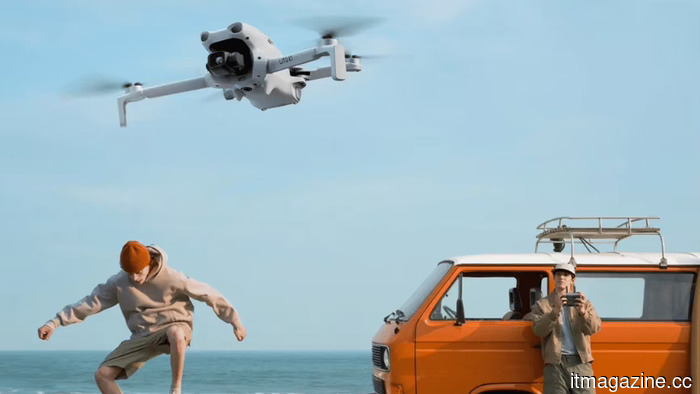 DJI is prohibited in both Beijing and Washington as security concerns regarding drones pressure the world's leading manufacturer from both directions.
Beijing prohibited all drone sales starting May 1. In December, the US FCC prohibited new products from DJI. The company that pioneered the industry finds itself in a conflict involving two governments.
DJI is prohibited in both Beijing and Washington as security concerns regarding drones pressure the world's leading manufacturer from both directions.
Beijing prohibited all drone sales starting May 1. In December, the US FCC prohibited new products from DJI. The company that pioneered the industry finds itself in a conflict involving two governments.
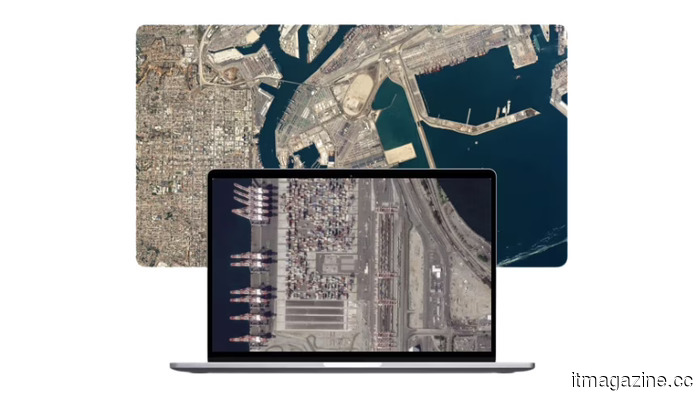 Planet Labs introduces three additional Pelican satellites, buoyed by a $900 million backlog and defense contracts that contribute to its first year of profitability.
Planet Labs initiated the launch of Pelicans 7-9 equipped with Nvidia AI, progressing towards a 32-satellite constellation. The company has achieved profitability, boasting a backlog of $900 million along with significant contracts with NATO and the NRO.
Planet Labs introduces three additional Pelican satellites, buoyed by a $900 million backlog and defense contracts that contribute to its first year of profitability.
Planet Labs initiated the launch of Pelicans 7-9 equipped with Nvidia AI, progressing towards a 32-satellite constellation. The company has achieved profitability, boasting a backlog of $900 million along with significant contracts with NATO and the NRO.
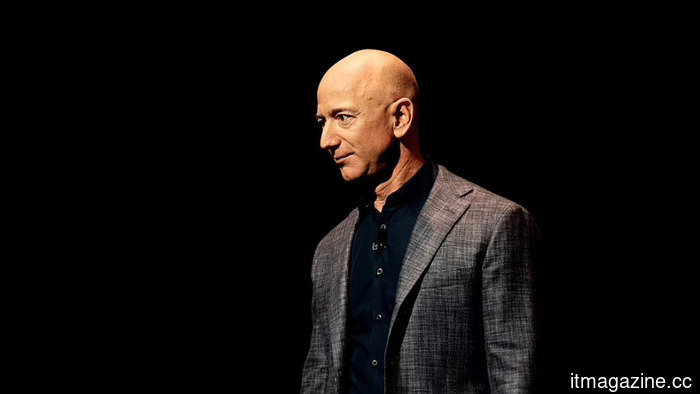 Amazon's revenue for Q1 reached $181.5 billion; however, a $16.8 billion gain from Anthropic has inflated net income, while free cash flow plummeted by 95%.
AWS experienced a 28% increase, reaching $37.6 billion, while Amazon's custom chip division surpassed $20 billion in annual revenue. However, over half of the net income was attributed to a revaluation of their investment in Anthropic.
Amazon's revenue for Q1 reached $181.5 billion; however, a $16.8 billion gain from Anthropic has inflated net income, while free cash flow plummeted by 95%.
AWS experienced a 28% increase, reaching $37.6 billion, while Amazon's custom chip division surpassed $20 billion in annual revenue. However, over half of the net income was attributed to a revaluation of their investment in Anthropic.
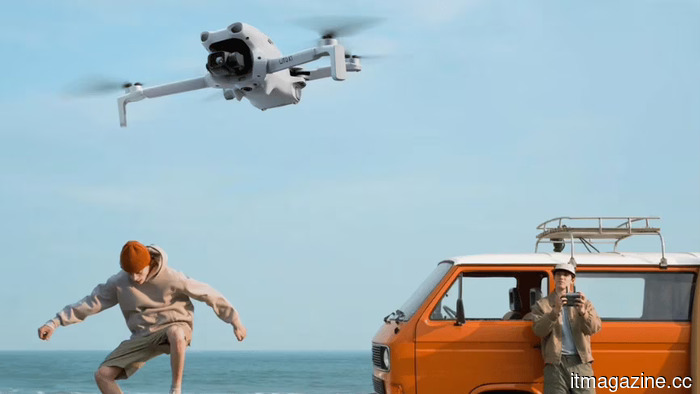 DJI has been prohibited in both Beijing and Washington as security concerns regarding drones press the world's largest manufacturer from both directions.
Beijing prohibited all drone sales starting May 1. In December, the US FCC halted new DJI products. The company that pioneered the industry now finds itself caught between two governments.
DJI has been prohibited in both Beijing and Washington as security concerns regarding drones press the world's largest manufacturer from both directions.
Beijing prohibited all drone sales starting May 1. In December, the US FCC halted new DJI products. The company that pioneered the industry now finds itself caught between two governments.
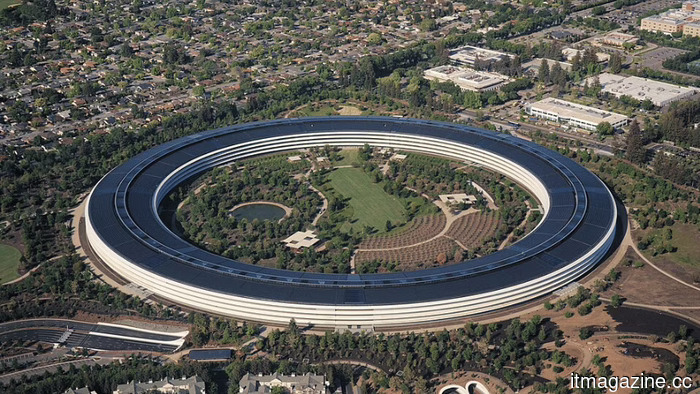 Apple abandons its net cash neutral goal as incoming CEO Ternus gets ready to make investments in AI and acquisitions.
Apple has discontinued its net cash neutral policy following Q2 earnings of $111.2 billion. Incoming CEO Ternus will now have the ability to invest instead of solely returning cash to shareholders.
Apple abandons its net cash neutral goal as incoming CEO Ternus gets ready to make investments in AI and acquisitions.
Apple has discontinued its net cash neutral policy following Q2 earnings of $111.2 billion. Incoming CEO Ternus will now have the ability to invest instead of solely returning cash to shareholders.
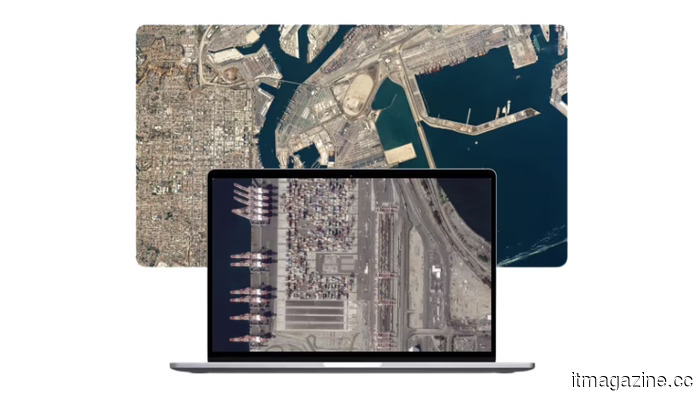 Planet Labs introduces three additional Pelican satellites as a $900 million backlog and defense contracts lead to its first profitable year.
Planet Labs deployed Pelicans 7-9 featuring Nvidia AI, progressing toward a 32-satellite constellation. The company achieved profitability, boasting a $900M backlog along with significant agreements with NATO and the NRO.
Planet Labs introduces three additional Pelican satellites as a $900 million backlog and defense contracts lead to its first profitable year.
Planet Labs deployed Pelicans 7-9 featuring Nvidia AI, progressing toward a 32-satellite constellation. The company achieved profitability, boasting a $900M backlog along with significant agreements with NATO and the NRO.
DJI faces bans in both Beijing and Washington as security concerns regarding drones pressure the world's leading manufacturer from both directions.
Beijing prohibited all drone sales starting May 1. In December, the US FCC halted the introduction of new DJI products. The company that pioneered the industry finds itself in a dilemma involving two governments.