
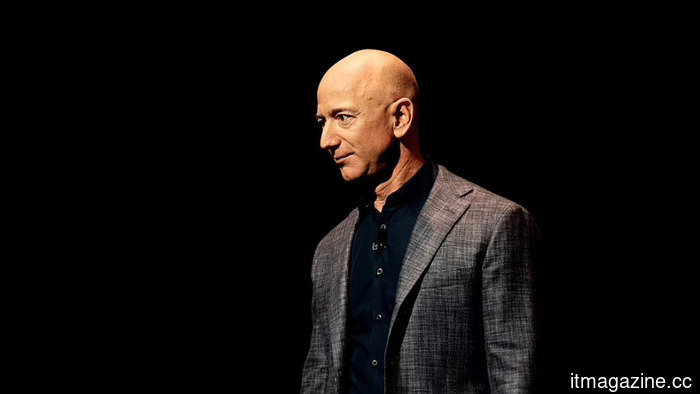
Amazon's revenue for Q1 reached $181.5 billion; however, a $16.8 billion gain from Anthropic has inflated net income, while free cash flow plummeted by 95%.
TL;DR
Amazon reported Q1 2026 revenue of $181.5 billion and net income of $30.3 billion, with $16.8 billion of pre-tax profit stemming from a mark-to-market gain on its Anthropic investment rather than from its operations. AWS revenue surged by 28% to $37.6 billion, the fastest growth rate in three years. However, free cash flow plummeted by 95% to $1.2 billion as capital expenditures reached $44.2 billion.
In Q1 2026, Amazon's net sales increased by 17% year over year to $181.5 billion, surpassing analyst expectations by over $4 billion. Net income nearly doubled to $30.3 billion from $17.1 billion a year prior, with earnings per share at $2.78, exceeding the consensus of $1.64. AWS grew its revenue by 28% to $37.6 billion, marking its fastest growth since 2022, and advertising revenue increased by 24% to $17.2 billion. Capital expenditures rose to $44.2 billion from $25 billion last year. While the headline figures were impressive, the composition of profits was more complex.
Approximately $16.8 billion of Amazon’s pre-tax income for the quarter was derived from a revaluation of its investment in Anthropic, the AI firm behind the Claude models. Amazon has invested up to $25 billion in Anthropic, with part of that investment converting from convertible notes to preferred stock during the quarter, influenced by Anthropic's latest funding round. This accounting gain increased Amazon's $8 billion cumulative investment in Anthropic to a market value exceeding $70 billion. Excluding the Anthropic gain, Amazon’s operating profit would be $23.9 billion, which is still strong but noteworthy. More than half of the net income that fueled the earnings-per-share beat originated not from product sales or cloud services but from a stake in a company that has yet to achieve profitability.
The operational performance below the Anthropic gain is robust. AWS's 28% revenue growth indicates an acceleration from the previous quarter’s 24% rate, representing the division’s fastest growth since 2022. Operating income from AWS reached $14.2 billion, significantly above the $12.8 billion consensus estimate. CEO Andy Jassy informed analysts that demand for AWS continues to exceed supply, resulting in growing backlogs as enterprise clients engage in multi-year cloud and AI contracts.
Amazon's custom chip division, which includes Trainium, Graviton, and Nitro, now generates over $20 billion in annualized revenue at triple-digit growth rates. Jassy suggested it could evolve into a $50 billion annual business if sold in the open market. The Trainium2, Amazon's AI training and inference accelerator, has almost sold out, and the forthcoming Trainium3, which began shipping in early 2026, is nearing full subscription. Uber has recently joined Amazon's customer roster for Trainium, while Meta has signed a multibillion-dollar agreement for Graviton5 processors due to heightened AI compute demand outstripping its capacity. This custom chip initiative is transforming AWS from a cloud platform into a vertically integrated compute provider, increasingly competing with Microsoft Azure, Google Cloud, and Nvidia.
The accounting implications of the Anthropic investment gain raise questions relevant not only to Amazon but also to other major tech firms with significant investments in private AI companies. According to current accounting standards, Amazon must assess its Anthropic investment at fair value following any significant financing event that provides a new price reference. Anthropic's shares have been trading at an implied valuation of $1 trillion in secondary markets, and the company is reportedly engaged in early discussions regarding an IPO as soon as October 2026. Each increase in valuation is directly reflected in Amazon’s net income, artificially boosting earnings per share without any actual cash inflow.
This situation is not exclusive to Amazon. Alphabet also holds a large stake in Anthropic through its investment commitments. An analysis by Fortune, published on the same day as the earnings report, noted that about half of the "extraordinary AI profits" reported by both Amazon and Alphabet in Q1 2026 originated from their respective stakes in Anthropic, rather than their operational businesses. This creates a scenario where the AI companies spending the most on infrastructure, and consequently generating the least free cash flow, are concurrently reporting record earnings due to their investments in privately valued companies that are marked up by external investors.
The free cash flow dilemma
Amazon’s trailing twelve-month free cash flow decreased to $1.2 billion, reflecting a 95% year-over-year decline, primarily due to capital expenditures. In the quarter, Amazon invested $44.2 billion in data centers, networking equipment, custom chips, and the infrastructure needed to support AI demand. The total capital expenditure commitments for 2026 are approximately $200 billion, making Amazon the largest spender
Other articles
 DJI faces bans in both Beijing and Washington as security concerns regarding drones pressure the world's leading manufacturer from both directions.
Beijing prohibited all drone sales starting May 1. In December, the US FCC halted the introduction of new DJI products. The company that pioneered the industry finds itself in a dilemma involving two governments.
DJI faces bans in both Beijing and Washington as security concerns regarding drones pressure the world's leading manufacturer from both directions.
Beijing prohibited all drone sales starting May 1. In December, the US FCC halted the introduction of new DJI products. The company that pioneered the industry finds itself in a dilemma involving two governments.
 LG's newest luxurious gaming monitor features a 45-inch OLED display that achieves 330Hz at 5K resolution.
The LG UltraGear 45GX950B incorporates AI functionalities such as upscaling and scene optimization, while maintaining the same OLED panel and key specifications as its previous model.
LG's newest luxurious gaming monitor features a 45-inch OLED display that achieves 330Hz at 5K resolution.
The LG UltraGear 45GX950B incorporates AI functionalities such as upscaling and scene optimization, while maintaining the same OLED panel and key specifications as its previous model.
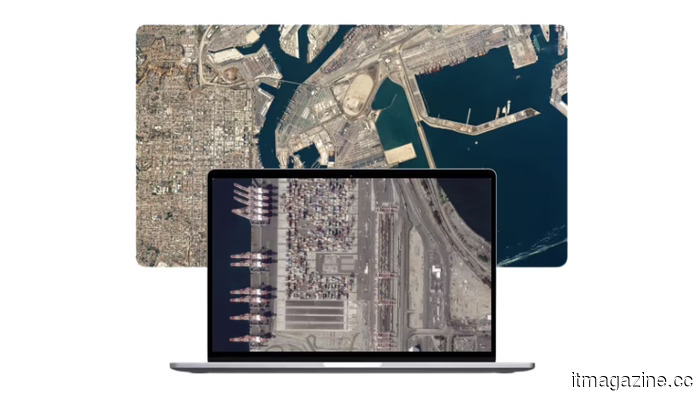 Planet Labs introduces three additional Pelican satellites as a $900 million backlog and defense contracts lead to its first profitable year.
Planet Labs deployed Pelicans 7-9 featuring Nvidia AI, progressing toward a 32-satellite constellation. The company achieved profitability, boasting a $900M backlog along with significant agreements with NATO and the NRO.
Planet Labs introduces three additional Pelican satellites as a $900 million backlog and defense contracts lead to its first profitable year.
Planet Labs deployed Pelicans 7-9 featuring Nvidia AI, progressing toward a 32-satellite constellation. The company achieved profitability, boasting a $900M backlog along with significant agreements with NATO and the NRO.
 Grok is set to arrive on CarPlay as iOS 26.4 transforms the car dashboard into the next battleground for AI platforms.
Grok has joined ChatGPT, Perplexity, Claude, and Gemini on CarPlay following the opening of the platform to AI chatbots with iOS 26.4. The car dashboard has now become the most competitive display in the tech industry.
Grok is set to arrive on CarPlay as iOS 26.4 transforms the car dashboard into the next battleground for AI platforms.
Grok has joined ChatGPT, Perplexity, Claude, and Gemini on CarPlay following the opening of the platform to AI chatbots with iOS 26.4. The car dashboard has now become the most competitive display in the tech industry.
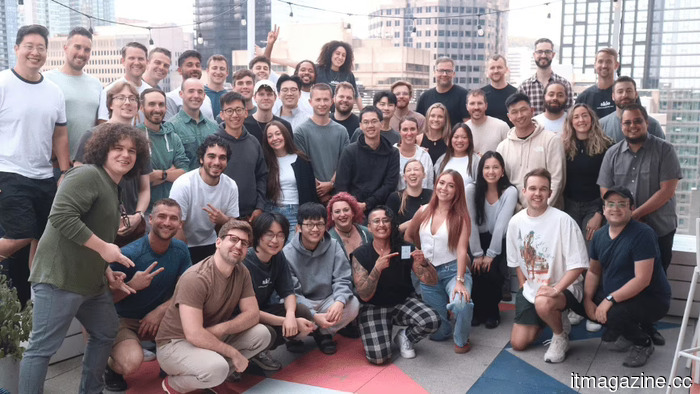 Skio, which received support from Y Combinator, was sold to Recharge for $105 million in cash after achieving an annual recurring revenue of $32 million without a marketing or sales team.
Skio secured $8M in funding, achieved an annual recurring revenue of $32M without a sales team or advertisements, and was acquired by Recharge, a competitor of Shopify in the subscription space, for $105M in cash. The founder has also launched an AI startup named Icon.
Skio, which received support from Y Combinator, was sold to Recharge for $105 million in cash after achieving an annual recurring revenue of $32 million without a marketing or sales team.
Skio secured $8M in funding, achieved an annual recurring revenue of $32M without a sales team or advertisements, and was acquired by Recharge, a competitor of Shopify in the subscription space, for $105M in cash. The founder has also launched an AI startup named Icon.
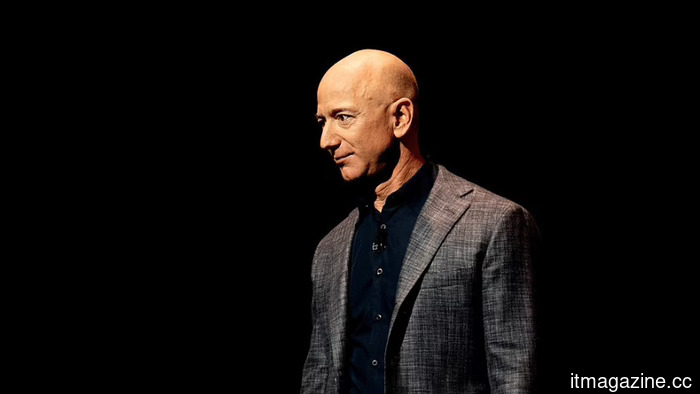 Amazon's revenue for Q1 reaches $181.5 billion, but a $16.8 billion gain from Anthropic boosts net income while free cash flow plummets by 95%.
AWS increased by 28% to reach $37.6 billion, and Amazon's custom chip division surpassed $20 billion on an annualized basis. However, over half of the net income was derived from a revaluation of its investment in Anthropic.
Amazon's revenue for Q1 reaches $181.5 billion, but a $16.8 billion gain from Anthropic boosts net income while free cash flow plummets by 95%.
AWS increased by 28% to reach $37.6 billion, and Amazon's custom chip division surpassed $20 billion on an annualized basis. However, over half of the net income was derived from a revaluation of its investment in Anthropic.
Amazon's revenue for Q1 reached $181.5 billion; however, a $16.8 billion gain from Anthropic has inflated net income, while free cash flow plummeted by 95%.
AWS experienced a 28% increase, reaching $37.6 billion, while Amazon's custom chip division surpassed $20 billion in annual revenue. However, over half of the net income was attributed to a revaluation of their investment in Anthropic.