
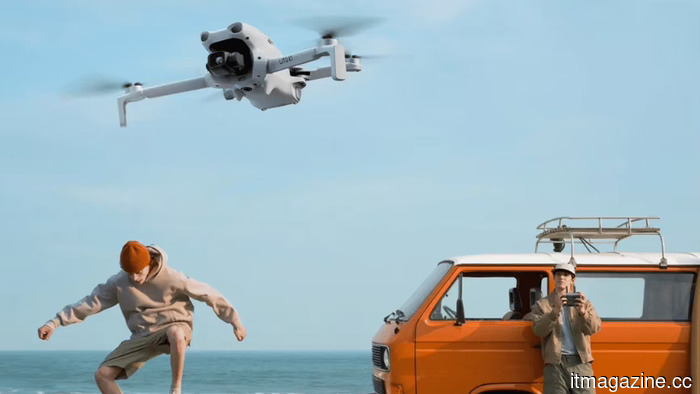
DJI is prohibited in both Beijing and Washington as security concerns regarding drones pressure the world's leading manufacturer from both directions.
DJI, which holds up to 80% of the global consumer drone market, is now unable to sell its products in both Beijing and Washington following a ban on all drone sales in China’s capital effective from May 1, 2026, and the US Federal Communications Commission's (FCC) restriction on new DJI products from receiving market authorization in December 2025. The company anticipates a loss of $1.5 billion in revenue from the US and faces the risk of other Chinese cities implementing similar regulations as Beijing.
On May 1, employees at DJI’s main store in Beijing's Guomao business district began removing all drones from the shelves. The Neo, Mavic, Mini, and other models that established DJI's dominance in the consumer electronics sector were pulled from display to comply with new legislation passed by Beijing’s legislature in March. This regulation prohibits the sale, rental, and transportation of drones into the capital. E-commerce platforms such as Taobao and JD.com also suspended drone shipments to Beijing that same day. Within the city’s Sixth Ring Road, residents are now restricted from storing more than three drones or ten critical components at one address without government consent. Drone owners in Beijing had until April 30 to register their devices with local law enforcement, complete a 30-minute test on an official app, and authenticate their identity. Possession of unregistered drones is now illegal.
Five months earlier, 11,000 kilometers away, the FCC classified DJI and all other foreign-manufactured drones as part of its Covered List due to national security concerns, restricting new devices from obtaining the necessary FCC authorization for legal sales in the US. DJI reports that 25 new products intended for the US market in 2026 are now on hold, resulting in an estimated $1.5 billion in lost revenue. The company initiated a lawsuit in the Ninth Circuit in February, arguing that the FCC’s actions are procedurally flawed and unconstitutional, and the case remains unresolved.
DJI, recognized for pioneering modern consumer drones and commanding between 54 and 80 percent of the global market share based on various segments, is now barred from selling its products in both Washington and Beijing.
The regulations in Beijing are extensive and go beyond just flight limitations; they regulate every phase of drone ownership, including purchase, transport, storage, registration, usage, and disposal. Approval from authorities is needed for all outdoor drone flights within Beijing, and individuals who fly without this approval can face fines of up to 10,000 yuan (around $1,460) along with device confiscation. Storage violations can result in fines of up to 5,000 yuan for individuals and 10,000 yuan for companies. Drones and key components cannot enter the city without authorization and can only be transported by registered owners who have validated their identity with police.
The official rationale for these regulations is security. As the political heart of China, Beijing houses crucial locations such as the Communist Party leadership compound at Zhongnanhai, the Great Hall of the People, military facilities, and governmental offices. The increase in drone incursions over sensitive areas globally has led to the conclusion that the potential security risks posed by unregulated consumer drones in a capital city outweigh their commercial or recreational benefits.
The online reaction has been swift and critical. Users on Chinese social media labeled the regulations as a “crazy one-size-fits-all system.” Drone retailers across mainland China experienced significant drops in sales in April as consumers hesitated to purchase equipment that may not be usable legally. Listings for used drones surged on resale platforms as Beijing residents scrambled to sell their devices before the registration deadline. China’s aggressive regulation of its technology industry, from blocking foreign purchases to mandating AI content labeling, aligns with the drone ban as it prioritizes state security over commercial liberty, even at the expense of a Chinese business.
In contrast, the American ban operates differently but results in a similar situation for DJI. Under the National Defense Authorization Act, Congress mandated that a US national security agency conduct a formal review of DJI by December 23, 2025. The failure of any agency to complete this review by the deadline resulted in DJI being added to the FCC Covered List, which prevents new products from receiving necessary authorization for import and sale. Existing DJI drones, which already have FCC approval, remain legal for ownership and operation, but new models cannot be introduced to the market.
The FCC stated its actions were aimed at protecting US airspace in anticipation of significant upcoming events such as the 2026 FIFA World Cup, the America250 celebrations, and the 2028 Los Angeles Summer Olympics. The Pentagon supported the designation based on classified intelligence, although DJI contends that no specific security threat associated with its products has been publicly identified. The trend of Western governments imposing restrictions on Chinese technology firms over national security concerns has now expanded from Huawei's exclusion from 5G networks to encompass a wider array including drones, connected vehicles, and AI models.
DJI’s estimated
Other articles
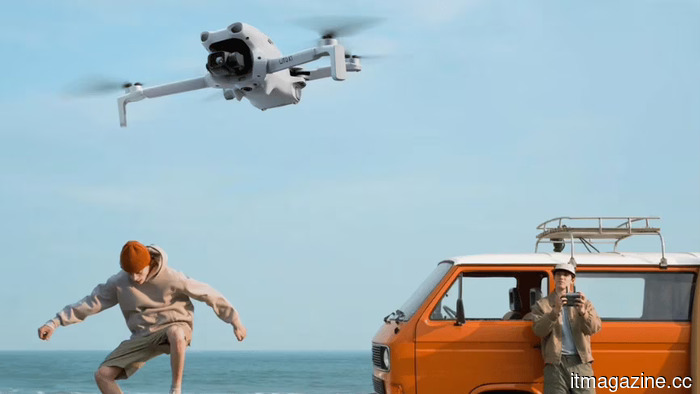 DJI has been prohibited in both Beijing and Washington as security concerns regarding drones press the world's largest manufacturer from both directions.
Beijing prohibited all drone sales starting May 1. In December, the US FCC halted new DJI products. The company that pioneered the industry now finds itself caught between two governments.
DJI has been prohibited in both Beijing and Washington as security concerns regarding drones press the world's largest manufacturer from both directions.
Beijing prohibited all drone sales starting May 1. In December, the US FCC halted new DJI products. The company that pioneered the industry now finds itself caught between two governments.
 Grok is set to be integrated with CarPlay as iOS 26.4 transforms the car dashboard into the next battleground for AI platforms.
Grok has been added to CarPlay alongside ChatGPT, Perplexity, Claude, and Gemini following the release of iOS 26.4, which allowed AI chatbots on the platform. The car dashboard has become the most competitive interface in technology.
Grok is set to be integrated with CarPlay as iOS 26.4 transforms the car dashboard into the next battleground for AI platforms.
Grok has been added to CarPlay alongside ChatGPT, Perplexity, Claude, and Gemini following the release of iOS 26.4, which allowed AI chatbots on the platform. The car dashboard has become the most competitive interface in technology.
 China's smartphone supply chain shifts towards humanoid robots, with Lingyi iTech aiming for 500,000 units by 2030.
Lingyi iTech, Lens Technology, and Foxconn are converting smartphone manufacturing plants for the production of humanoid robots. Morgan Stanley has revised its 2026 forecast for China, increasing it to 28,000 units.
China's smartphone supply chain shifts towards humanoid robots, with Lingyi iTech aiming for 500,000 units by 2030.
Lingyi iTech, Lens Technology, and Foxconn are converting smartphone manufacturing plants for the production of humanoid robots. Morgan Stanley has revised its 2026 forecast for China, increasing it to 28,000 units.
 Grok is set to arrive on CarPlay as iOS 26.4 transforms the car dashboard into a battleground for AI platforms.
Grok has joined ChatGPT, Perplexity, Claude, and Gemini on CarPlay following the release of iOS 26.4, which allowed AI chatbots on the platform. The car dashboard has now become the most competitive interface in technology.
Grok is set to arrive on CarPlay as iOS 26.4 transforms the car dashboard into a battleground for AI platforms.
Grok has joined ChatGPT, Perplexity, Claude, and Gemini on CarPlay following the release of iOS 26.4, which allowed AI chatbots on the platform. The car dashboard has now become the most competitive interface in technology.
 China's smartphone supply chain shifts focus to humanoid robots as Lingyi iTech aims for production of 500,000 units by 2030.
Lingyi iTech, Lens Technology, and Foxconn are converting their smartphone manufacturing facilities for humanoid robots. Morgan Stanley has increased its 2026 forecast for China to 28,000 units.
China's smartphone supply chain shifts focus to humanoid robots as Lingyi iTech aims for production of 500,000 units by 2030.
Lingyi iTech, Lens Technology, and Foxconn are converting their smartphone manufacturing facilities for humanoid robots. Morgan Stanley has increased its 2026 forecast for China to 28,000 units.
 Planet Labs introduces three additional Pelican satellites, buoyed by a $900 million backlog and defense contracts that contribute to its first year of profitability.
Planet Labs initiated the launch of Pelicans 7-9 equipped with Nvidia AI, progressing towards a 32-satellite constellation. The company has achieved profitability, boasting a backlog of $900 million along with significant contracts with NATO and the NRO.
Planet Labs introduces three additional Pelican satellites, buoyed by a $900 million backlog and defense contracts that contribute to its first year of profitability.
Planet Labs initiated the launch of Pelicans 7-9 equipped with Nvidia AI, progressing towards a 32-satellite constellation. The company has achieved profitability, boasting a backlog of $900 million along with significant contracts with NATO and the NRO.
DJI is prohibited in both Beijing and Washington as security concerns regarding drones pressure the world's leading manufacturer from both directions.
Beijing prohibited all drone sales starting May 1. In December, the US FCC prohibited new products from DJI. The company that pioneered the industry finds itself in a conflict involving two governments.