
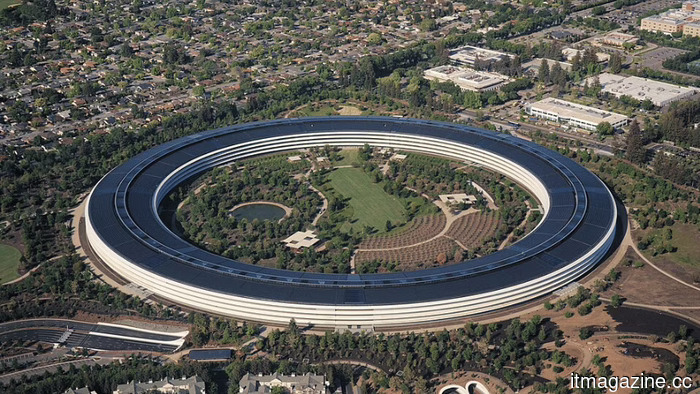
Apple abandons its net cash neutral goal as incoming CEO Ternus gets ready to make investments in AI and acquisitions.
**TL;DR** Apple has ended its net cash neutral policy after seven years, indicating that incoming CEO John Ternus will have greater freedom to invest in AI infrastructure and acquisitions instead of solely returning excess cash to shareholders. This change coincided with the Q2 2026 results of $111.2 billion in revenue and a new $100 billion buyback, with analysts interpreting the policy shift as a move towards a more investment-oriented approach.
For almost 15 years, Apple’s financial strategy revolved around returning over $1 trillion to shareholders through stock buybacks and dividends. Tim Cook took over a company that had a significant cash reserve, a remnant of the near-bankruptcy experience in the 1990s under Steve Jobs. Cook reversed Jobs’ opposition to buybacks, reinstated the dividend in 2012, and in 2018 established a formal net cash neutrality policy, aimed at keeping Apple’s cash and debt in balance by gradually lowering the cash reserves. This strategy proved successful, expanding Apple’s investor base, driving a remarkable increase in valuation, and transforming a $348 billion company into one worth $4 trillion.
Recently, during Apple’s fiscal second-quarter earnings call, this strategy was altered. Chief Financial Officer Kevan Parekh announced that the company would no longer consider net cash neutrality a formal goal, stating, “We will independently evaluate cash and debt.” He noted that capital returns would remain an essential aspect of Apple’s approach to delivering long-term shareholder value. The company authorized an additional $100 billion for buybacks and raised the dividend by 4 percent to 27 cents per share, indicating that the old strategy is not entirely vanishing. However, the announcement suggests significant changes are underway.
**The signal** John Ternus, Apple’s hardware engineering chief, is set to become CEO on September 1, and the change in cash policy is the clearest indication of how his leadership will differ from Cook’s. Cook, with a background in operations, managed Apple as a financial engineering entity, consistently generating substantial cash flow and returning it to investors. In contrast, Ternus, who has spent 25 years designing the actual products that account for about 80 percent of Apple’s revenue, is now expected to keep more cash available for investments.
Evercore analyst Amit Daryanani interpreted this shift straightforwardly, noting, “Now they have the optionality to do it less,” in reference to buybacks. He sees this as a signal that the company aims to make more acquisitions and invest cash differently. Apple’s largest acquisition to date was the $3 billion Beats Electronics deal in 2014. In a market where companies like Meta and Alphabet are committing to capital expenditures in the range of $145 billion to $190 billion for AI infrastructure, Apple’s previous caution in investments has shifted from being a sign of prudence to a competitive weakness.
**The numbers** The quarterly results that accompanied this policy change were robust, allowing the shift to be perceived as confidence rather than a desperate act. Apple announced revenue of $111.2 billion for the March quarter, a 17 percent year-on-year increase, with earnings per share of $2.01. Services revenue reached a record $31 billion, up 16 percent. iPhone sales were noted as the strongest in the company’s history, exceeding analyst expectations and boosting the stock price.
Apple currently holds approximately $54 billion in net cash on its balance sheet. Since implementing its net cash neutrality policy in 2018, the company has reduced that amount by over $100 billion through buybacks and dividends. The new policy enables Ternus to determine annually or quarterly how much of Apple’s cash is returned to shareholders versus retained for business purposes. This flexibility may lead to slower or less frequent buybacks or dividend increases, while allowing for potential acquisitions, increased research and development, or substantial investments in AI infrastructure that were previously avoided.
**The AI gap** The combined capital expenditure from the five largest US cloud and technology firms is projected to exceed $650 billion in 2026, focusing almost entirely on data centers, GPUs, and networking for artificial intelligence. Apple is notably absent from the top tier of this spending. The company has invested in Apple Intelligence as its on-device AI framework and is redesigning Siri into a dedicated chatbot app for iOS 27. However, it has not developed the large-scale cloud AI infrastructure that its competitors have and has taken a more cautious stance on generative AI.
Ternus is stepping into a role at a company that is lagging in AI infrastructure. Competitors in Silicon Valley are allocating tens of billions of dollars quarterly to AI compute, while Apple’s strategy has primarily relied on running AI models on devices to ensure privacy, which limits capabilities. The new cash policy implies that the company may be gearing up for more aggressive investments in its AI infrastructure, partnerships, or acquisitions of AI firms to enhance its competencies.
**The continuity** Ternus
Other articles
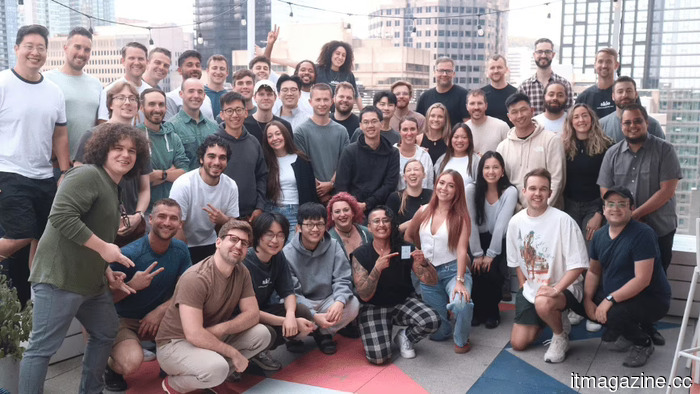 Skio, which received support from Y Combinator, was sold to Recharge for $105 million in cash after achieving an annual recurring revenue of $32 million without a marketing or sales team.
Skio secured $8M in funding, achieved an annual recurring revenue of $32M without a sales team or advertisements, and was acquired by Recharge, a competitor of Shopify in the subscription space, for $105M in cash. The founder has also launched an AI startup named Icon.
Skio, which received support from Y Combinator, was sold to Recharge for $105 million in cash after achieving an annual recurring revenue of $32 million without a marketing or sales team.
Skio secured $8M in funding, achieved an annual recurring revenue of $32M without a sales team or advertisements, and was acquired by Recharge, a competitor of Shopify in the subscription space, for $105M in cash. The founder has also launched an AI startup named Icon.
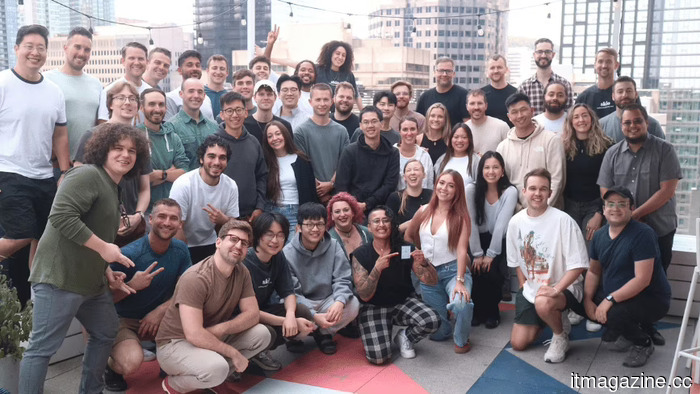 Skio, supported by Y Combinator, was sold to Recharge for $105 million in cash after achieving an annual recurring revenue of $32 million without a marketing or sales team.
Skio secured $8 million in funding, reached an annual recurring revenue of $32 million without a sales team or advertising, and was sold to Recharge, a competitor of Shopify in the subscription space, for $105 million in cash. The founder has previously launched an AI startup called Icon.
Skio, supported by Y Combinator, was sold to Recharge for $105 million in cash after achieving an annual recurring revenue of $32 million without a marketing or sales team.
Skio secured $8 million in funding, reached an annual recurring revenue of $32 million without a sales team or advertising, and was sold to Recharge, a competitor of Shopify in the subscription space, for $105 million in cash. The founder has previously launched an AI startup called Icon.
 DJI faces bans in both Beijing and Washington as security concerns regarding drones pressure the world's leading manufacturer from both directions.
Beijing prohibited all drone sales starting May 1. In December, the US FCC halted the introduction of new DJI products. The company that pioneered the industry finds itself in a dilemma involving two governments.
DJI faces bans in both Beijing and Washington as security concerns regarding drones pressure the world's leading manufacturer from both directions.
Beijing prohibited all drone sales starting May 1. In December, the US FCC halted the introduction of new DJI products. The company that pioneered the industry finds itself in a dilemma involving two governments.
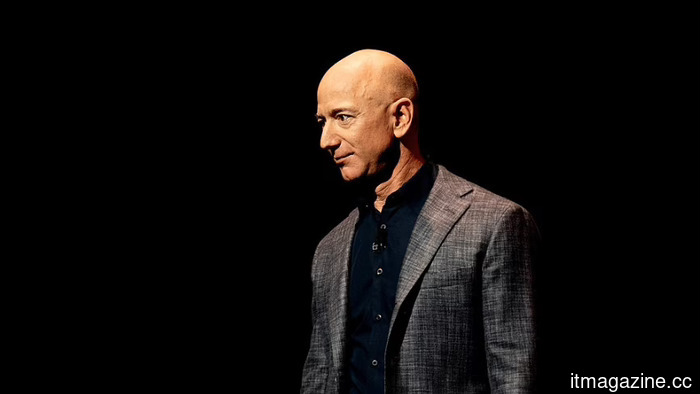 Amazon's revenue in Q1 reaches $181.5 billion, but the $16.8 billion gain from Anthropic inflates net income, while free cash flow declines by 95%.
AWS increased by 28% to reach $37.6 billion, while Amazon's custom chip division surpassed $20 billion on an annualized basis. However, over half of the net income was derived from a revaluation of the Anthropic investment.
Amazon's revenue in Q1 reaches $181.5 billion, but the $16.8 billion gain from Anthropic inflates net income, while free cash flow declines by 95%.
AWS increased by 28% to reach $37.6 billion, while Amazon's custom chip division surpassed $20 billion on an annualized basis. However, over half of the net income was derived from a revaluation of the Anthropic investment.
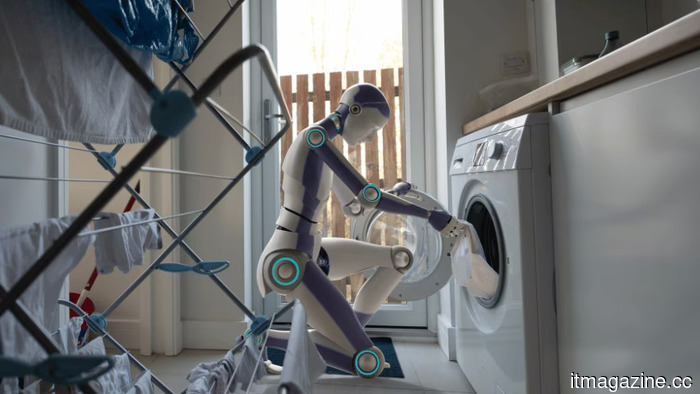 China's smartphone supply chain shifts focus to humanoid robots as Lingyi iTech aims for production of 500,000 units by 2030.
Lingyi iTech, Lens Technology, and Foxconn are converting their smartphone manufacturing facilities for humanoid robots. Morgan Stanley has increased its 2026 forecast for China to 28,000 units.
China's smartphone supply chain shifts focus to humanoid robots as Lingyi iTech aims for production of 500,000 units by 2030.
Lingyi iTech, Lens Technology, and Foxconn are converting their smartphone manufacturing facilities for humanoid robots. Morgan Stanley has increased its 2026 forecast for China to 28,000 units.
 LG's newest luxurious gaming monitor features a 45-inch OLED display that achieves 330Hz at 5K resolution.
The LG UltraGear 45GX950B incorporates AI functionalities such as upscaling and scene optimization, while maintaining the same OLED panel and key specifications as its previous model.
LG's newest luxurious gaming monitor features a 45-inch OLED display that achieves 330Hz at 5K resolution.
The LG UltraGear 45GX950B incorporates AI functionalities such as upscaling and scene optimization, while maintaining the same OLED panel and key specifications as its previous model.
Apple abandons its net cash neutral goal as incoming CEO Ternus gets ready to make investments in AI and acquisitions.
Apple has discontinued its net cash neutral policy following Q2 earnings of $111.2 billion. Incoming CEO Ternus will now have the ability to invest instead of solely returning cash to shareholders.