

McKinsey's latest AI report claims that the productivity benefits are genuine but contingent.
The firm's new report titled ‘AI productivity gains and the performance paradox’ concludes that the majority of existing AI applications merely ‘accelerate existing work’ without overhauling workflows. McKinsey is releasing this finding while aiming for a 1:1 ratio of its 40,000 human consultants to 40,000 AI agents by the end of the year.
McKinsey’s strategy practice has released an analysis outlining that the corporate sector is facing what it calls an ‘AI paradox’: while there is an increase in the adoption of generative and agentic AI and capital investment is ramping up, achieving ‘sustained impact on performance is challenging.’
This report asserts that most current AI applications act as ‘tools that speed up existing tasks’ while ‘largely maintaining traditional workflows.’ It posits that significant productivity gains will only be realized when organizations redesign their processes around AI, rather than just adding it superficially.
To illustrate its point, the report draws a historical analogy to the introduction of electricity in factories. The authors note that when electricity was first utilized, many businesses merely replaced steam engines with electric motors, improving efficiency while keeping production layouts unchanged. “The real breakthrough occurred later when smaller motors allowed for a rearrangement of machines based on workflows, leading to redesigned factories built around electricity that produced innovative operating models.”
McKinsey argues that general-purpose technologies seldom create value in a single phase. For executives examining the analysis, the firm offers three recommendations: evaluate how AI will transform industry profit pools; develop or enhance AI-driven competitive advantages; and leverage speed as a structural benefit.
The report highlights examples such as JPMorgan Chase's real-time AI fraud detection, BMW's computer vision quality inspections, and Siemens’ AI-driven predictive maintenance, categorizing them as part of the work-acceleration tier. It contrasts these with more profound process redesigns that push companies beyond what McKinsey has previously termed the ‘gen AI paradox.’
The context for this report reflects an increasing awareness of the disconnect between AI investment and observable returns. The Federal Reserve Bank of St. Louis reports a 1.9% excess cumulative productivity growth since the launch of ChatGPT in November 2022—a significant figure, yet below what is necessary to justify current AI capital expenditures.
JPMorgan's capital expenditure analysis cautions that $650 billion in annual revenue would be required ‘indefinitely’ to achieve a 10% return on current AI investments, likening it to the late-1990s telecom fiber buildout, where the infrastructure was established but revenue growth was insufficient, ultimately leading to investor losses.
Research from MIT Media Lab revealed that 95% of organizations experience no measurable returns from adopting AI. Deloitte’s upcoming 2026 report on the ‘State of AI in the Enterprise’ indicates that while 66% of 3,235 surveyed leaders claim productivity enhancements from AI, only 20% have seen revenue growth, and merely 34% are using AI for substantial product or process transformation.
According to PwC’s 2026 Global CEO Survey, which included 4,454 CEOs from 95 countries, 56% assert that they have derived ‘nothing’ from their AI investments, and only 12% report AI as both increasing revenues and decreasing costs. Research by Workday found that 37–40% of the time purportedly saved by AI is often used for reviewing, correcting, and verifying AI-generated content.
Greg Brockman, president of OpenAI, stated that AI is now responsible for 80% of OpenAI’s code development, alongside findings from a February 2026 NBER study showing that 80% of companies utilizing AI report no productivity enhancement whatsoever.
The broader context is complicated by a significant divergence in expert predictions, making it difficult to conclusively answer the ‘is AI working’ question based solely on public data. McKinsey has previously estimated that AI could contribute $4.4 trillion to the global economy, while Nobel laureate Daron Acemoglu anticipates only a ‘modest 0.5% productivity gain over the next decade.’ The divide between these two perspectives—up to a hundredfold difference depending on the lower estimate—represents the uncertainty guiding AI investment decisions.
What adds weight to McKinsey’s skeptical stance is the firm’s own concurrent deployment of AI. At CES 2026 in January, McKinsey CEO Bob Sternfels disclosed that the firm operates 25,000 AI agents alongside its 40,000 human consultants, aiming for a 1:1 ratio by the year’s end. Last year alone, McKinsey saved 1.5 million hours in search and synthesis tasks, reporting a 10% increase in back-office productivity with 25% fewer employees. While positions such as engagement managers, senior consultants, and strategic advisors grew by 25%, roles like research analysts, data processors, and administrative support saw a corresponding decrease.
Though the firm doesn't dispute the potential for AI
Other articles
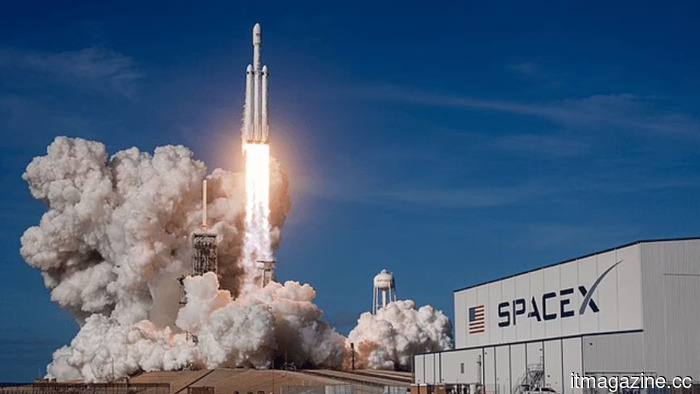 SpaceX has invested over $15 billion in the Starship program.
SpaceX has invested over $15 billion in the development of Starship and is aiming for a launch frequency similar to that of airlines.
SpaceX has invested over $15 billion in the Starship program.
SpaceX has invested over $15 billion in the development of Starship and is aiming for a launch frequency similar to that of airlines.
 China's $16.5 billion micro-drama sector emerges as the world's first widespread application of AI-generated video.
In just one month, 50,000 AI micro-dramas were launched on Douyin. The cost of production has decreased by 90%. State-funded subsidies support the hubs. China's micro-drama sector represents the initial commercial-scale experiment with AI-generated content.
According to Sing Tao, Uber has purchased its competitor Fly Taxi in Hong Kong.
Sing Tao Daily reports that Uber has purchased Fly Taxi in Hong Kong. If the deal is verified, it eliminates the primary competitor for metered-taxi-hailing apps from the market.
China's $16.5 billion micro-drama sector emerges as the world's first widespread application of AI-generated video.
In just one month, 50,000 AI micro-dramas were launched on Douyin. The cost of production has decreased by 90%. State-funded subsidies support the hubs. China's micro-drama sector represents the initial commercial-scale experiment with AI-generated content.
According to Sing Tao, Uber has purchased its competitor Fly Taxi in Hong Kong.
Sing Tao Daily reports that Uber has purchased Fly Taxi in Hong Kong. If the deal is verified, it eliminates the primary competitor for metered-taxi-hailing apps from the market.
 US debt surpasses 100% of GDP as Big Tech's $690 billion investment in AI vies for the same capital markets.
US debt reaches 100% of GDP for the first time since World War II, with interest payments exceeding $1 trillion. Big Tech's capital expenditure on AI surpasses $690 billion. Both are funded from the same debt source.
US debt surpasses 100% of GDP as Big Tech's $690 billion investment in AI vies for the same capital markets.
US debt reaches 100% of GDP for the first time since World War II, with interest payments exceeding $1 trillion. Big Tech's capital expenditure on AI surpasses $690 billion. Both are funded from the same debt source.
 US debt surpasses 100% of GDP as the $690 billion AI investment by Big Tech vies for the same capital markets.
U.S. debt reaches 100% of GDP for the first time since World War II, with interest payments exceeding $1 trillion. Meanwhile, Big Tech's AI capital expenditures surpass $690 billion. Both are funded through debt from the same source.
US debt surpasses 100% of GDP as the $690 billion AI investment by Big Tech vies for the same capital markets.
U.S. debt reaches 100% of GDP for the first time since World War II, with interest payments exceeding $1 trillion. Meanwhile, Big Tech's AI capital expenditures surpass $690 billion. Both are funded through debt from the same source.
 The 6,000 mAh battery in the Razr Fold should be a concern for Samsung and Google: Here’s the reason.
Samsung and Google have dominated the U.S. foldable market for years, but have subtly overlooked its most significant drawback. Motorola has now entered the scene and made that flaw difficult to overlook.
The 6,000 mAh battery in the Razr Fold should be a concern for Samsung and Google: Here’s the reason.
Samsung and Google have dominated the U.S. foldable market for years, but have subtly overlooked its most significant drawback. Motorola has now entered the scene and made that flaw difficult to overlook.
McKinsey's latest AI report claims that the productivity benefits are genuine but contingent.
McKinsey's latest report contends that the majority of companies are speeding up their current tasks instead of rethinking their workflows in relation to AI.