
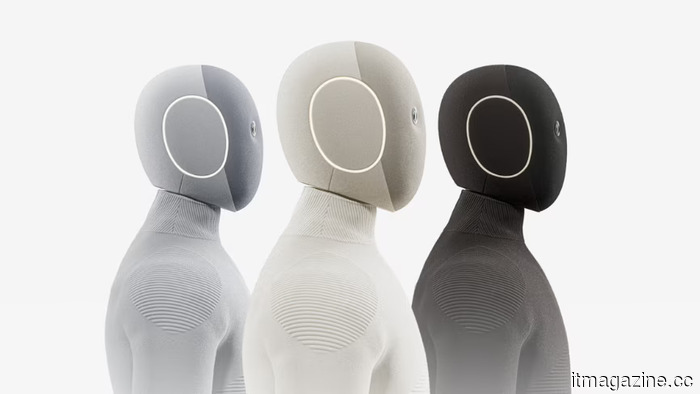
1X has begun delivering NEO humanoid robots to households in the US.
The Norway-based company 1X Technologies has established its vertically integrated NEO factory in Hayward, marking a significant step towards introducing a general-purpose humanoid robot for private homes at a US scale, with shipping set for this year amidst a competitive landscape.
The new 58,000-square-foot manufacturing facility in Hayward, California, is designed for consumer-scale production of the NEO humanoid robot, with an initial capacity of 10,000 units in the first year and a goal of exceeding 100,000 units annually by the end of 2027. The company, founded in Norway and supported by OpenAI, has labeled this plant as the first vertically integrated humanoid robot factory in the US, with the first customer shipments scheduled for 2026.
Presently, the factory employs over 200 individuals and is in the process of expanding. NEO is produced with essential components fabricated in-house, including motors, batteries, structural elements, transmission systems, soft goods, and sensors—a method the company refers to as bottom-up American manufacturing. Bernt Børnich, the CEO and founder of 1X, stated in the announcement, “This is not merely a factory opening; it's evidence that the future of humanoid robotics is being developed right here in the U.S.”
The Hayward facility serves as a precursor to a larger production plant that is under construction in San Carlos, California.
The Product
NEO is marketed as a versatile home robot, aimed at assisting humans in domestic environments rather than functioning as an industrial bipedal suited for warehouses or factories. The robot comes in three colors (Tan, Gray, and Dark Brown) and is available through two purchasing options: an Early Access model priced at $20,000 with priority delivery in 2026, or a subscription service at $499 monthly.
Powered by Nvidia’s Jetson Thor onboard computing platform and trained using Nvidia’s Isaac open robotics simulation framework, NEO has seen demand surpass initial forecasts. The company reports that its first-year production capacity sold out within just five days after preorders began in October 2025.
1X has secured $100 million to bring NEO to market, with the robot designed under strict safety parameters: it is lightweight, has a soft touch, and avoids pinch points and other risks—this intentional design caters to the aim of utilizing the robot in private homes instead of industrial environments, where heavier humanoids prevail.
NEO acquires household skills through embodied AI, a process in which robots learn by interacting with their surroundings. Users can also manually showcase tasks using a VR headset and controllers, and the robot features conversational capabilities akin to ChatGPT, as compared by Børnich. The ability of these features to ensure reliable performance across a range of unstructured tasks found in homes is an unanswered query that customer shipments later this year will begin addressing.
Two Routes to Market
In addition to the consumer product, 1X has outlined a commercial strategy that includes a parallel enterprise track. In December 2025, the company formed a partnership with the private equity firm EQT to distribute up to 10,000 NEO units to companies within EQT’s portfolio from 2026 to 2030, targeting areas such as facility operations, manufacturing, logistics, and healthcare.
This dual-track strategy allows 1X to gain higher-margin revenue from enterprise customers while enabling a gradual reduction in costs for the home model. This approach mirrors the strategy used by electric vehicle manufacturers, where luxury and commercial clients subsidize the rollout for consumers.
The targeted annual production of 10,000 units is significant given that most humanoid robot manufacturers are still producing in the hundreds. However, the most critical comparison is with Tesla, particularly after Wang Hao, Tesla's president in China, referred to the Shanghai Gigafactory as a “golden key” for mass-producing the company’s Optimus humanoid robot. Tesla has indicated plans to manufacture several hundred Optimus units in 2026, scaling up to thousands and tens of thousands by 2027 and 2028, with internal aspirations of producing one million units annually from Shanghai—although these figures have not been publicly confirmed.
China's humanoid robotics sector is rapidly advancing as well. Unitree’s G1 and H1 robots are currently available at prices well below Tesla's projected figures. Other companies such as Agibot, UBTECH, Fourier Intelligence, and a growing number of Chinese startups are also targeting this market.
Chinese governments have recognized humanoid robots as a critical technology, providing subsidies and policy support much faster than other regions have moved. This competitive landscape challenges 1X's American-made, vertically integrated model against the scale provided by state-backed Chinese initiatives and Tesla’s automotive manufacturing capabilities.
Europe is also expanding in this field. Neura Robotics, established in Germany in 2019, has grown to over 600 employees and raised €120 million in January 2025. Founder David Reger has indicated that he
Other articles
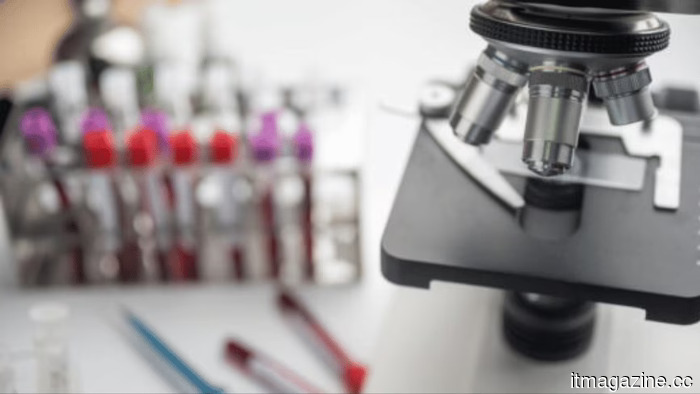 NYBCe and Chan Zuckerberg Biohub are joining forces to create an iPSC platform derived from cord blood for use in regenerative medicine.
NYBCe and CZ Biohub will obtain iPSC lines from immune cells in cord blood, establishing common, widely compatible resources for cell therapy, disease modeling, and AI-based drug development.
NYBCe and Chan Zuckerberg Biohub are joining forces to create an iPSC platform derived from cord blood for use in regenerative medicine.
NYBCe and CZ Biohub will obtain iPSC lines from immune cells in cord blood, establishing common, widely compatible resources for cell therapy, disease modeling, and AI-based drug development.
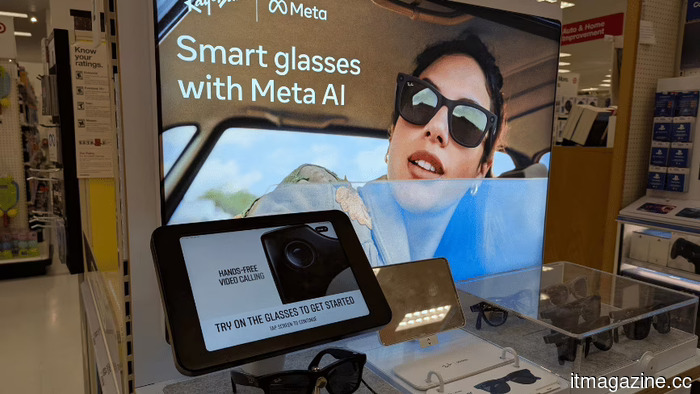 Meta terminates its contract with Sama following reports from Kenyan workers who encountered intimate videos recorded by users of Ray-Ban smart glasses.
After reporting to journalists that they witnessed users engaging in sexual acts and undressing in footage from Meta smart glasses, 1,108 Kenyan workers were terminated from their positions. This development prompted reactions from regulators and legal professionals.
According to Sing Tao, Uber has purchased its competitor Fly Taxi in Hong Kong.
Sing Tao Daily reports that Uber has purchased Fly Taxi in Hong Kong. If the deal is verified, it eliminates the primary competitor for metered-taxi-hailing apps from the market.
Meta terminates its contract with Sama following reports from Kenyan workers who encountered intimate videos recorded by users of Ray-Ban smart glasses.
After reporting to journalists that they witnessed users engaging in sexual acts and undressing in footage from Meta smart glasses, 1,108 Kenyan workers were terminated from their positions. This development prompted reactions from regulators and legal professionals.
According to Sing Tao, Uber has purchased its competitor Fly Taxi in Hong Kong.
Sing Tao Daily reports that Uber has purchased Fly Taxi in Hong Kong. If the deal is verified, it eliminates the primary competitor for metered-taxi-hailing apps from the market.
 Reddit's revenue for Q1 increases by 69% to $663 million, and its shares rise by 9%.
Reddit announced that its revenue for the first quarter of 2026 reached $663 million, reflecting a 69% year-over-year increase. The results exceeded expectations in all areas, and the company has elevated its guidance for the second quarter above consensus.
Reddit's revenue for Q1 increases by 69% to $663 million, and its shares rise by 9%.
Reddit announced that its revenue for the first quarter of 2026 reached $663 million, reflecting a 69% year-over-year increase. The results exceeded expectations in all areas, and the company has elevated its guidance for the second quarter above consensus.
 Reddit's Q1 revenue increases by 69% to reach $663 million, while its shares rise by 9%.
Reddit announced a revenue of $663 million for the first quarter of 2026, representing a 69% increase year-over-year. The results exceeded expectations in all categories and the company raised its guidance for the second quarter above consensus estimates.
Reddit's Q1 revenue increases by 69% to reach $663 million, while its shares rise by 9%.
Reddit announced a revenue of $663 million for the first quarter of 2026, representing a 69% increase year-over-year. The results exceeded expectations in all categories and the company raised its guidance for the second quarter above consensus estimates.
 US debt surpasses 100% of GDP as the $690 billion AI investment by Big Tech vies for the same capital markets.
U.S. debt reaches 100% of GDP for the first time since World War II, with interest payments exceeding $1 trillion. Meanwhile, Big Tech's AI capital expenditures surpass $690 billion. Both are funded through debt from the same source.
US debt surpasses 100% of GDP as the $690 billion AI investment by Big Tech vies for the same capital markets.
U.S. debt reaches 100% of GDP for the first time since World War II, with interest payments exceeding $1 trillion. Meanwhile, Big Tech's AI capital expenditures surpass $690 billion. Both are funded through debt from the same source.
1X has begun delivering NEO humanoid robots to households in the US.
Backed by OpenAI, 1X has launched a factory in Hayward, California, with plans to manufacture 10,000 NEO home humanoid robots in the first year, increasing production to over 100,000 by the close of 2027.