

Octopus has invested $500 million in Living Carbon for reforestation efforts, while Google, Meta, and McKinsey have purchased carbon credits from mines in the Appalachian region.
**TL;DR**
Octopus Energy Generation has pledged $500 million to Living Carbon, a biotech startup focused on planting trees on degraded land to sequester CO₂, aiming for a removal of 50 million tonnes over 40 years. Google, Meta, and McKinsey have each purchased 131,240 tonnes of carbon credits from Living Carbon’s Appalachian projects via the Symbiosis Coalition. The arrangement reveals a paradox: the tech giants buying these credits are concurrently responsible for significant increases in global electricity consumption driven by their AI data centers.
Octopus Energy Generation has announced a $500 million investment in Living Carbon, a San Francisco-based biotech firm that specializes in reforesting degraded areas to capture carbon dioxide. Announced on April 30, this deal will finance reforestation initiatives throughout North America with the objective of sequestering up to 50 million tonnes of CO₂ over a span of 40 years. Additionally, Octopus has invested $13 million directly in Living Carbon's carbon operations. In a separate arrangement, Google, Meta, and McKinsey, all part of the Symbiosis Coalition, have signed contracts to acquire 131,240 tonnes of carbon removal over a decade from Living Carbon’s Appalachian reforestation efforts, which involve planting native hardwoods and pines on sites previously used for mining and depleted agricultural lands. While the headline focuses on a $500 million investment in tree planting, the underlying issue is that the tech companies purchasing these carbon credits are the same entities whose data centers produce emissions comparable to the global airline sector, and whose expansion in AI infrastructure is rising at a troubling pace each quarter.
**The company**
Founded in 2019 by Maddie Hall and Patrick Mellor, Living Carbon operates as a public benefit company dedicated to restoring land that cannot regenerate naturally. This startup exclusively targets degraded areas, including abandoned coal mines, depleted farmland, and regions damaged by industrial activities. Its innovative strategy initially involved genetically modifying hybrid poplar trees to enhance photosynthesis by inserting genes from pumpkins and green algae, thereby reducing photorespiration and channeling energy into growth. In controlled experimentation, these genetically modified poplars exhibited a 53% increase in above-ground biomass compared to unmodified varieties, although Living Carbon has noted that genetically engineered trees constitute only about 5% of their overall plantings. The US Department of Agriculture determined that Living Carbon's trees do not require regulation as genetically modified organisms, allowing for their commercial planting—a decision that has attracted investment as well as backlash from environmental advocates concerned about the long-term ecological impact of introducing engineered species into natural habitats.
The company secured $21 million in a Series A funding round, backed by investors such as Lowercarbon Capital, Temasek, Toyota, and Felicis Ventures, and has since scaled its operations to plant millions of trees each year. The Octopus investment marks a significant scale-up. A commitment of $500 million represents project financing typically linked to energy infrastructure rather than venture capital, applied here to forestry. Octopus Energy Generation, the investment division of the UK energy company Octopus Energy, oversees roughly £8 billion in renewable energy assets, including wind, solar, and energy storage. Its involvement in nature-based carbon removal suggests that institutional investors are beginning to apply the same financial rigor to reforestation projects that they use for solar farms and offshore wind energy: long payback timelines, reliable cash flow from credit sales, and returns linked to regulatory and corporate demand for verified carbon removal.
**The buyers**
The **heart** of EU tech: Recent developments from the EU tech landscape, an anecdote from our wise founder Boris, and some questionable AI-generated artwork. Subscribe now for free, delivered weekly to your inbox! The corporate purchasers of Living Carbon’s credits are members of the Symbiosis Coalition, an advance market commitment for nature-based carbon removal, which was established in 2024 by Google, Meta, Microsoft, and Salesforce. The coalition has since grown to include McKinsey, Bain, and REI, collectively pledging to acquire up to 20 million tonnes of nature-based carbon removal credits by 2030. After analyzing 185 projects across over 40 nations, the coalition designated Living Carbon’s Appalachian reforestation as one of its supported initiatives. Google, Meta, and McKinsey have contracted for 131,240 tonnes of carbon removal over 10 years to be achieved through the planting of native species on former mining areas that have suffered economically and ecologically from the coal industry's decline.
The irony in the roster of buyers can't be overlooked. Research from VU Amsterdam indicates that Google’s AI operations could soon consume electricity comparable to that of Ireland. Meta has raised its capital expenditure guidance for 2026 to $145 billion, predominantly for AI data centers whose energy needs will necessitate nuclear plants, space-based solar installations, and wind farms to meet demand. McKinsey, which advises major corporations on strategy and operations, has estimated that achieving
Other articles
 Apple announces a record revenue of $111.2 billion, driven by strong demand for the iPhone 17, while Cook gets ready to pass the CEO position to Ternus.
Apple achieved its highest revenue ever for a March quarter, totaling $111.2 billion. The iPhone 17 marked the most successful launch in the company's history, with a 28% increase in China. Tim Cook will pass the leadership to John Ternus on September 1.
Apple announces a record revenue of $111.2 billion, driven by strong demand for the iPhone 17, while Cook gets ready to pass the CEO position to Ternus.
Apple achieved its highest revenue ever for a March quarter, totaling $111.2 billion. The iPhone 17 marked the most successful launch in the company's history, with a 28% increase in China. Tim Cook will pass the leadership to John Ternus on September 1.
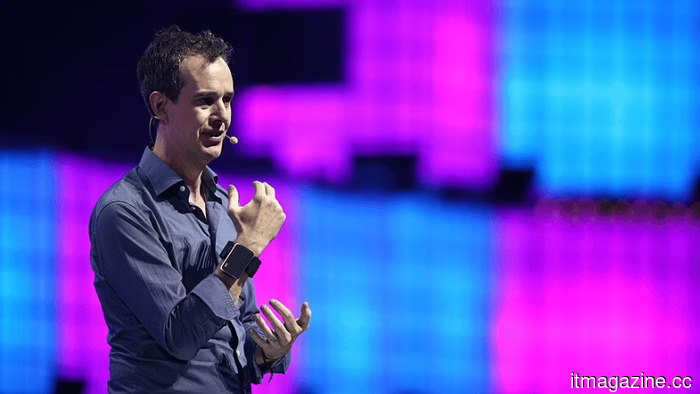 Thomas Reardon, the creator of Internet Explorer, has secured $500 million for Flourish, a startup focused on brain-inspired AI efficiency, which is now valued at $2.5 billion.
Thomas Reardon is seeking to raise $500 million at a $2.5 billion valuation for Flourish, a company that employs neuroscience to significantly reduce the power consumption of AI. Lux Capital and GV are leading this funding round.
Thomas Reardon, the creator of Internet Explorer, has secured $500 million for Flourish, a startup focused on brain-inspired AI efficiency, which is now valued at $2.5 billion.
Thomas Reardon is seeking to raise $500 million at a $2.5 billion valuation for Flourish, a company that employs neuroscience to significantly reduce the power consumption of AI. Lux Capital and GV are leading this funding round.
 Octopus invests $500 million in Living Carbon for reforestation, while Google, Meta, and McKinsey purchase carbon credits from mining sites in Appalachia.
Octopus Energy invests $500 million in Living Carbon to reforest damaged land in the US. Google, Meta, and McKinsey acquire 131,240 tonnes of carbon credits. The irony is significant.
Octopus invests $500 million in Living Carbon for reforestation, while Google, Meta, and McKinsey purchase carbon credits from mining sites in Appalachia.
Octopus Energy invests $500 million in Living Carbon to reforest damaged land in the US. Google, Meta, and McKinsey acquire 131,240 tonnes of carbon credits. The irony is significant.
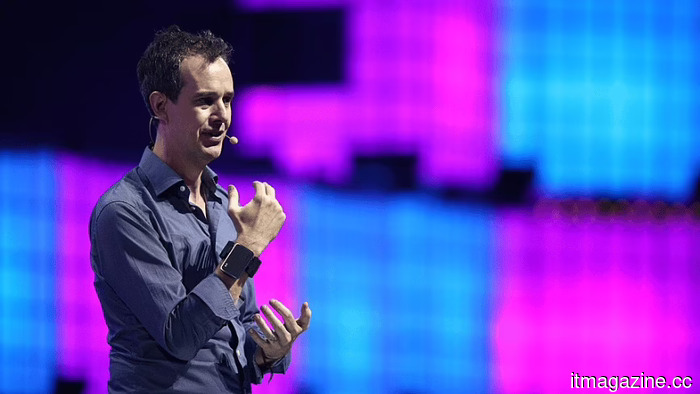 Thomas Reardon, the creator of Internet Explorer, has secured $500 million for Flourish, a startup focused on brain-inspired AI efficiency, which is now valued at $2.5 billion.
Thomas Reardon is seeking to raise $500 million at a valuation of $2.5 billion for Flourish, a company that leverages neuroscience to significantly reduce the energy consumption of AI. The funding round is being led by Lux Capital and GV.
Thomas Reardon, the creator of Internet Explorer, has secured $500 million for Flourish, a startup focused on brain-inspired AI efficiency, which is now valued at $2.5 billion.
Thomas Reardon is seeking to raise $500 million at a valuation of $2.5 billion for Flourish, a company that leverages neuroscience to significantly reduce the energy consumption of AI. The funding round is being led by Lux Capital and GV.
 BYD may have found a solution to the biggest drawback of owning an electric vehicle.
BYD is showcasing a new charging system centered on its second-generation Blade Battery, with vehicles already utilizing it on location. The company asserts that it offers considerably faster charging speeds, but the broader effects will rely on the deployment and real-world reliability.
BYD may have found a solution to the biggest drawback of owning an electric vehicle.
BYD is showcasing a new charging system centered on its second-generation Blade Battery, with vehicles already utilizing it on location. The company asserts that it offers considerably faster charging speeds, but the broader effects will rely on the deployment and real-world reliability.
 BYD may have just addressed the biggest downside of owning an electric vehicle.
BYD is showcasing a new charging system centered on its second-generation Blade Battery, with vehicles already utilizing it on location. The company asserts that it offers considerably quicker charging speeds, but the broader implications will rely on its deployment and real-world reliability.
BYD may have just addressed the biggest downside of owning an electric vehicle.
BYD is showcasing a new charging system centered on its second-generation Blade Battery, with vehicles already utilizing it on location. The company asserts that it offers considerably quicker charging speeds, but the broader implications will rely on its deployment and real-world reliability.
Octopus has invested $500 million in Living Carbon for reforestation efforts, while Google, Meta, and McKinsey have purchased carbon credits from mines in the Appalachian region.
Octopus Energy invests $500 million in Living Carbon for the purpose of planting trees on damaged land in the US. Meanwhile, Google, Meta, and McKinsey purchase 131,240 tons of carbon credits. The irony is quite profound.