
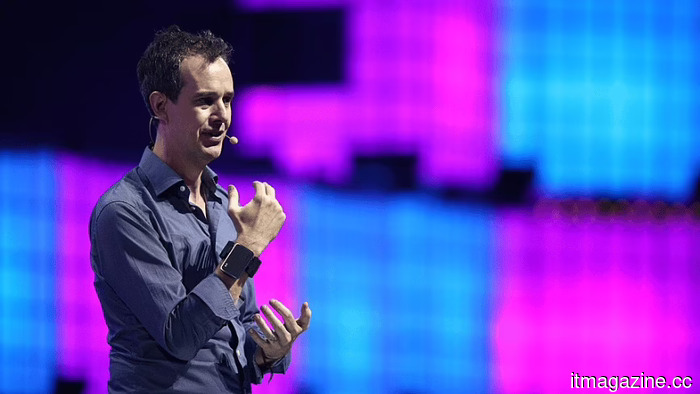
Thomas Reardon, the creator of Internet Explorer, has secured $500 million for Flourish, a startup focused on brain-inspired AI efficiency, which is now valued at $2.5 billion.
**Summary**: Thomas Reardon, the creator of Internet Explorer and former CEO of CTRL-labs, is seeking around $500 million for his new venture, Flourish, which is valued at $2.5 billion. Flourish aims to develop AI systems that are significantly more energy-efficient by applying insights from connectomics and neuroscience, focusing on software architectural improvements rather than new hardware. Lux Capital and GV, previous investors in CTRL-labs, are anticipated to lead this funding round.
**The Background**: Thomas Reardon has a notable history; he was pivotal in the conception of Internet Explorer in 1994, which transformed Microsoft and initiated a landmark antitrust case. In 2015, he co-founded CTRL-labs, creating a neural interface technology that translated brain signals into digital commands and was later sold to Meta for an estimated $500 million to $1 billion. His academic credentials include a PhD in neuroscience from Columbia University. Now, he seeks to utilize lessons from the human brain to create AI that uses power far more efficiently than current models, as indicated by the anticipated $2.5 billion valuation for Flourish without any commercial product yet. The company consists of a solid thesis and an expert team of neuroscientists.
**The Challenge**: The AI sector's energy consumption is nearing a national economy’s scale. In 2022, global consumption by data centers and AI infrastructure hit around 460 terawatt-hours, projected to almost double by 2026 and reach 3% of global electricity use by 2030. In the U.S., data centers accounted for over 4% of the total electricity in 2023, expected to rise to 9% by 2030. In response, major tech companies are investing heavily in energy solutions, yet Reardon contends that merely increasing energy production is not the answer. He points out that the human brain operates on only 20 watts, vastly more efficiently than current AI systems, which can use megawatts during training. Flourish's approach aims to tackle the architectural inefficiencies in how AI learns and processes information, rather than hardware limitations.
**The Strategy**: Flourish plans to integrate AI researchers and neuroscientists to delve into connectomics, which involves mapping neural connections in the brain. This research reveals how biological networks operate differently from the predominantly used transformer models in AI, showcasing their efficiency in information processing. Instead of creating new chips, Flourish seeks to enhance AI algorithms and architectural frameworks based on biological principles, aiming for efficiency not possible through hardware upgrades alone.
**The Founder**: The $2.5 billion valuation reflects confidence in Reardon’s background and the support from investors who have previously backed him. Lux Capital and GV have a history of investing in his projects and are returning for this significant round, indicating a strong belief in Flourish’s potential. Reardon’s career spans a diverse range of fields, making him well-suited to tackle complex technical challenges and deliver valuable technology.
**The Market Context**: Flourish is entering a market where the need for energy-efficient AI is pressing. Major cloud providers are facing power availability issues, limiting their infrastructure expansions. Innovative solutions, even as extreme as space-based data centers, are being considered to meet the growing demand. Any advancements in reducing AI power consumption could significantly impact infrastructure investments. If Flourish can achieve substantial energy savings, the financial implications for cloud providers could be substantial.
**The Risks**: However, there are inherent risks with such a high valuation for a company lacking a tangible product or proven model. Flourish is being valued similarly to well-established companies with extensive customer bases and revenue streams. Investors are banking on the team, the problem's significance, and Reardon's credentials rather than proven outcomes, which is indicative of the current climate in AI funding. Flourish’s challenge lies in delivering results to justify its valuation, as it attempts to leverage knowledge from disparate fields to innovate in AI architecture. The core question remains whether the efficiency of the human brain can be mirrored in software systems.
Other articles
 Apple announces a record revenue of $111.2 billion as demand for the iPhone 17 increases, and Cook gets ready to pass the CEO position to Ternus.
Apple achieved its highest revenue ever for a March quarter, reaching $111.2 billion. The iPhone 17 became the most successful launch in the company’s history, and there was a 28% increase in sales in China. Tim Cook will pass the leadership to John Ternus on September 1.
Apple announces a record revenue of $111.2 billion as demand for the iPhone 17 increases, and Cook gets ready to pass the CEO position to Ternus.
Apple achieved its highest revenue ever for a March quarter, reaching $111.2 billion. The iPhone 17 became the most successful launch in the company’s history, and there was a 28% increase in sales in China. Tim Cook will pass the leadership to John Ternus on September 1.
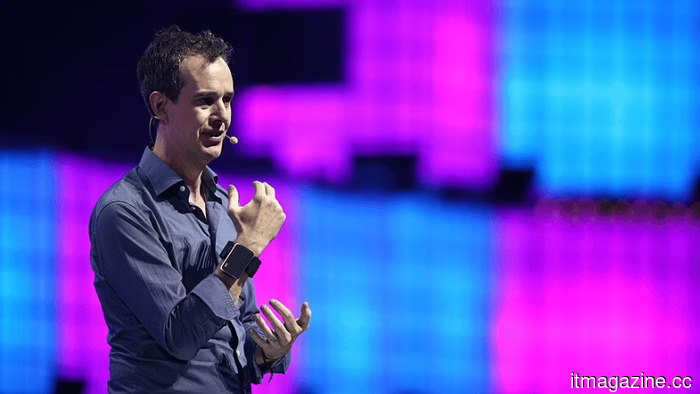 Thomas Reardon, the creator of Internet Explorer, has secured $500 million for Flourish, a startup focused on brain-inspired AI efficiency, which is now valued at $2.5 billion.
Thomas Reardon is seeking to raise $500 million at a $2.5 billion valuation for Flourish, a company that employs neuroscience to significantly reduce the power consumption of AI. Lux Capital and GV are leading this funding round.
Thomas Reardon, the creator of Internet Explorer, has secured $500 million for Flourish, a startup focused on brain-inspired AI efficiency, which is now valued at $2.5 billion.
Thomas Reardon is seeking to raise $500 million at a $2.5 billion valuation for Flourish, a company that employs neuroscience to significantly reduce the power consumption of AI. Lux Capital and GV are leading this funding round.
 Apple announces a record revenue of $111.2 billion, driven by strong demand for the iPhone 17, while Cook gets ready to pass the CEO position to Ternus.
Apple achieved its highest revenue ever for a March quarter, totaling $111.2 billion. The iPhone 17 marked the most successful launch in the company's history, with a 28% increase in China. Tim Cook will pass the leadership to John Ternus on September 1.
Apple announces a record revenue of $111.2 billion, driven by strong demand for the iPhone 17, while Cook gets ready to pass the CEO position to Ternus.
Apple achieved its highest revenue ever for a March quarter, totaling $111.2 billion. The iPhone 17 marked the most successful launch in the company's history, with a 28% increase in China. Tim Cook will pass the leadership to John Ternus on September 1.
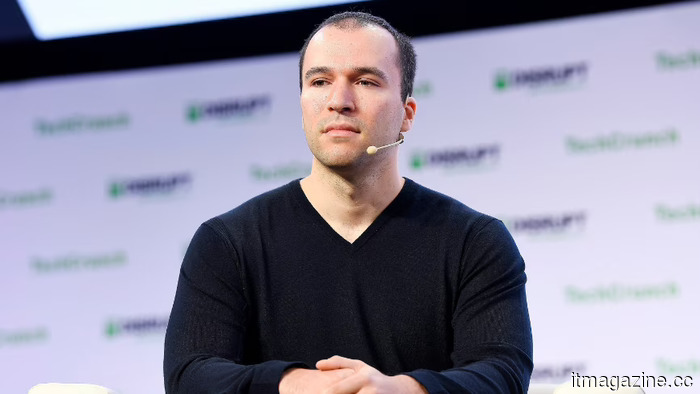 Greg Brockman states that 80% of OpenAI's code is currently created by AI.
OpenAI's president Greg Brockman stated that AI is currently responsible for writing about 80% of the company's code at Sequoia's AI Ascent 2026 event.
Greg Brockman states that 80% of OpenAI's code is currently created by AI.
OpenAI's president Greg Brockman stated that AI is currently responsible for writing about 80% of the company's code at Sequoia's AI Ascent 2026 event.
 The Xbox Ally X has introduced its own frame upscaling technology that competes with DLSS, along with several other updates.
Auto SR introduces AI-enhanced upscaling to the ROG Xbox Ally X without requiring any action from developers; it operates at the OS level for both DirectX 11 and 12 games.
The Xbox Ally X has introduced its own frame upscaling technology that competes with DLSS, along with several other updates.
Auto SR introduces AI-enhanced upscaling to the ROG Xbox Ally X without requiring any action from developers; it operates at the OS level for both DirectX 11 and 12 games.
 Octopus invests $500 million in Living Carbon for reforestation, while Google, Meta, and McKinsey purchase carbon credits from mining sites in Appalachia.
Octopus Energy invests $500 million in Living Carbon to reforest damaged land in the US. Google, Meta, and McKinsey acquire 131,240 tonnes of carbon credits. The irony is significant.
Octopus invests $500 million in Living Carbon for reforestation, while Google, Meta, and McKinsey purchase carbon credits from mining sites in Appalachia.
Octopus Energy invests $500 million in Living Carbon to reforest damaged land in the US. Google, Meta, and McKinsey acquire 131,240 tonnes of carbon credits. The irony is significant.
Thomas Reardon, the creator of Internet Explorer, has secured $500 million for Flourish, a startup focused on brain-inspired AI efficiency, which is now valued at $2.5 billion.
Thomas Reardon is seeking to raise $500 million at a valuation of $2.5 billion for Flourish, a company that leverages neuroscience to significantly reduce the energy consumption of AI. The funding round is being led by Lux Capital and GV.