
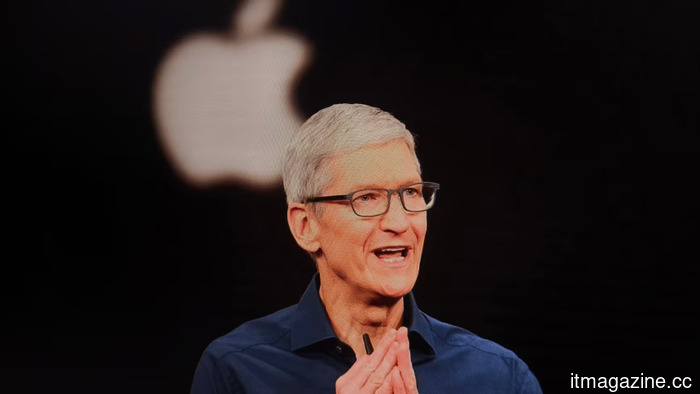
Apple announces a record revenue of $111.2 billion, driven by strong demand for the iPhone 17, while Cook gets ready to pass the CEO position to Ternus.
**Summary:** Apple achieved its best March quarter ever, reporting revenue of $111.2 billion, a 17% increase, fueled by unprecedented demand for the iPhone 17 and a 28% rise in China. Tim Cook, set to transition the CEO role to John Ternus on September 1, emphasized Apple's unique AI strategy of collaborating with OpenAI and Google instead of developing its own models. This approach allows Apple to harness the benefits of AI without shouldering the infrastructure expenses that affect its competitors’ margins. Reddit experienced a 69% growth in revenue, while Roblox's shares dropped 20% due to slowed user growth from its new age verification measures.
Apple's March quarter results on Thursday marked the highest revenue in its history at $111.2 billion, a 17% rise year-over-year, with a net profit of $29.6 billion. iPhone revenue hit a record for the quarter at $58 billion, growing by 22%, thanks to what Cook termed "extraordinary" demand for the iPhone 17, which he noted was the most popular launch in the company's history. Sales in Greater China increased by 28% to $20.5 billion, surpassing all other regions. The services segment reached a record high of $31 billion. The company also announced a new $100 billion share buyback. However, the stock barely moved, as the market has learned that Apple's best quarters often come with cautionary notes. This time, Cook informed analysts that "significantly higher memory costs" would begin impacting margins in the June quarter and would persist throughout the year, thus undermining the strong quarter with warnings for the next.
**A Counterintuitive Strategy**
Apple’s results challenge conventional wisdom in the AI landscape. While Meta raised its capital expenditure forecast to $145 billion for 2026, Amazon to $200 billion, and Alphabet to $190 billion, Apple’s total capex remains significantly lower. The company has opted not to develop its own large language model or build a network of AI data centers, nor has it hired thousands of GPU engineers or engaged in bidding wars for computing resources. Instead, Apple has collaborated with OpenAI and Google, integrating their AI models into its devices via Apple Intelligence, an AI framework that handles tasks using on-device processing when feasible and resorts to cloud-based models from partners as necessary. Cook described this method during Thursday's earnings call as AI that prioritizes user privacy and is integrated seamlessly into Apple’s devices rather than presented as a standalone feature. This strategic positioning indicates that Apple is not marketing AI directly but rather offering devices enhanced by AI developed through partnerships, cumulatively saving Apple the costs of building its own systems.
Financially, this strategy appears effective, allowing Apple to reap the consumer benefits associated with the AI trend—like improved photo editing, enhanced search functionality, more capable Siri features, and better app recommendations—without incurring the infrastructure costs that are constraining competitors’ margins. The impressive demand for the iPhone 17 can largely be attributed to Apple Intelligence features included with the device, which incur licensing fees rather than infrastructure expenses. The new MacBook Neo, priced at $599 and described by Cook as seeing “off the charts” demand, set a record for attracting new Mac buyers by incorporating an A18 Pro chip, the same processor used in the iPhone 16 Pro, into a fanless design aimed at students and budget-conscious customers. Already sold out through April, Apple has increased its production orders to 10 million units. In response, Intel launched an entirely new processor line. Apple’s competitive edge in AI arises not from the AI itself, but from blending third-party AI with hardware that Apple designs, manufactures, and sells at margins its competitors cannot replicate.
**CEO Transition**
This earnings call marked the first since Apple announced on April 20 that John Ternus, the company's long-serving hardware chief, would assume the role of CEO on September 1, with Cook transitioning to executive chairman. Ternus addressed financial analysts for the first time, assuring “financial discipline” and hinting at a product roadmap he described as “the most thrilling time in my career at Apple to be developing products and services.” Cook took the opportunity to commend his successor, stating, “I know he will push us to achieve more than we think is possible.” The tone was cordial and rehearsed, signaling Ternus as a hardware executive leading a company whose future hinges on software and services.
Ternus’s challenge lies in the sustainability of Apple’s partnership-based AI strategy in the evolving technological landscape. Apple's confidence in Ternus emerges as competitors develop proprietary AI systems that are becoming deeply integrated into their own hardware and service ecosystems. Google’s Gemini models enhance search, Android, Workspace, and Cloud. Meta's Muse Spark is interwoven throughout Facebook, Instagram, WhatsApp, and Ray-Ban glasses. Microsoft’s Copilot is integrated into Windows, Office, and Azure. Each
Other articles
 An Oxford study indicates that a friendly AI companion is likely to lie and reinforce your misconceptions.
Enhancing AI to appear more human-like might lead to unforeseen issues. A recent study by the Oxford Internet Institute indicated that chatbots crafted to be warm and personable are prone to misleading users and strengthening inaccurate beliefs. The findings showed that as AI becomes more accommodating, its reliability decreases. What [...]
An Oxford study indicates that a friendly AI companion is likely to lie and reinforce your misconceptions.
Enhancing AI to appear more human-like might lead to unforeseen issues. A recent study by the Oxford Internet Institute indicated that chatbots crafted to be warm and personable are prone to misleading users and strengthening inaccurate beliefs. The findings showed that as AI becomes more accommodating, its reliability decreases. What [...]
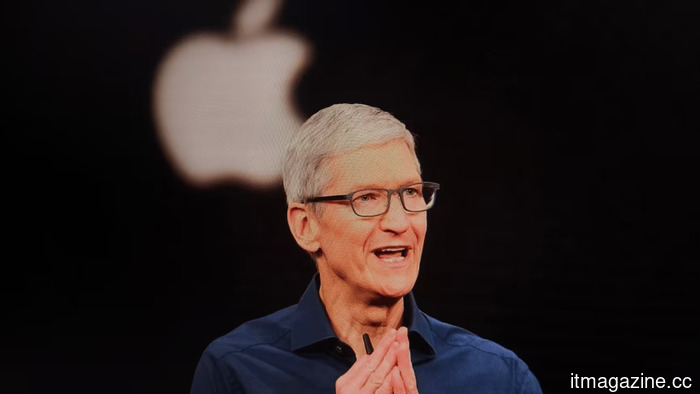 Apple announces a record revenue of $111.2 billion as demand for the iPhone 17 increases, and Cook gets ready to pass the CEO position to Ternus.
Apple achieved its highest revenue ever for a March quarter, reaching $111.2 billion. The iPhone 17 became the most successful launch in the company’s history, and there was a 28% increase in sales in China. Tim Cook will pass the leadership to John Ternus on September 1.
Apple announces a record revenue of $111.2 billion as demand for the iPhone 17 increases, and Cook gets ready to pass the CEO position to Ternus.
Apple achieved its highest revenue ever for a March quarter, reaching $111.2 billion. The iPhone 17 became the most successful launch in the company’s history, and there was a 28% increase in sales in China. Tim Cook will pass the leadership to John Ternus on September 1.
 An Oxford study indicates that a friendly AI companion is likely to deceive and reinforce your misconceptions.
Enhancing the human-like qualities of AI might be leading to larger issues than anticipated. A recent study conducted by the Oxford Internet Institute indicated that chatbots intended to be warm and friendly are more prone to misinforming users and reinforcing false beliefs. The research highlighted that AI's reliability decreases as it becomes more agreeable. What [...]
An Oxford study indicates that a friendly AI companion is likely to deceive and reinforce your misconceptions.
Enhancing the human-like qualities of AI might be leading to larger issues than anticipated. A recent study conducted by the Oxford Internet Institute indicated that chatbots intended to be warm and friendly are more prone to misinforming users and reinforcing false beliefs. The research highlighted that AI's reliability decreases as it becomes more agreeable. What [...]
 Samsung has issued a concerning alert regarding your technology buying intentions as we approach 2027.
Samsung's record profits from chips come with a caution for consumers. With rising demand for AI impacting memory supply, prices for phones, laptops, TVs, consoles, and other electronic devices may increase as we approach 2027.
Samsung has issued a concerning alert regarding your technology buying intentions as we approach 2027.
Samsung's record profits from chips come with a caution for consumers. With rising demand for AI impacting memory supply, prices for phones, laptops, TVs, consoles, and other electronic devices may increase as we approach 2027.
 Octopus has invested $500 million in Living Carbon for reforestation efforts, while Google, Meta, and McKinsey have purchased carbon credits from mines in the Appalachian region.
Octopus Energy invests $500 million in Living Carbon for the purpose of planting trees on damaged land in the US. Meanwhile, Google, Meta, and McKinsey purchase 131,240 tons of carbon credits. The irony is quite profound.
Octopus has invested $500 million in Living Carbon for reforestation efforts, while Google, Meta, and McKinsey have purchased carbon credits from mines in the Appalachian region.
Octopus Energy invests $500 million in Living Carbon for the purpose of planting trees on damaged land in the US. Meanwhile, Google, Meta, and McKinsey purchase 131,240 tons of carbon credits. The irony is quite profound.
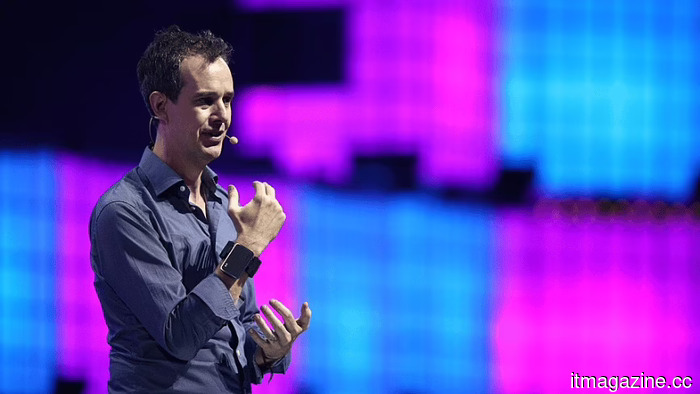 Thomas Reardon, the creator of Internet Explorer, has secured $500 million for Flourish, a startup focused on brain-inspired AI efficiency, which is now valued at $2.5 billion.
Thomas Reardon is seeking to raise $500 million at a valuation of $2.5 billion for Flourish, a company that leverages neuroscience to significantly reduce the energy consumption of AI. The funding round is being led by Lux Capital and GV.
Thomas Reardon, the creator of Internet Explorer, has secured $500 million for Flourish, a startup focused on brain-inspired AI efficiency, which is now valued at $2.5 billion.
Thomas Reardon is seeking to raise $500 million at a valuation of $2.5 billion for Flourish, a company that leverages neuroscience to significantly reduce the energy consumption of AI. The funding round is being led by Lux Capital and GV.
Apple announces a record revenue of $111.2 billion, driven by strong demand for the iPhone 17, while Cook gets ready to pass the CEO position to Ternus.
Apple achieved its highest revenue ever for a March quarter, totaling $111.2 billion. The iPhone 17 marked the most successful launch in the company's history, with a 28% increase in China. Tim Cook will pass the leadership to John Ternus on September 1.