

Octopus invests $500 million in Living Carbon for reforestation, while Google, Meta, and McKinsey purchase carbon credits from mining sites in Appalachia.
**TL;DR** Octopus Energy Generation has pledged $500 million to Living Carbon, a biotech startup focused on planting trees on degraded land to capture CO₂, with a target of removing 50 million tonnes over the next 40 years. Google, Meta, and McKinsey have also individually acquired 131,240 tonnes of carbon credits from Living Carbon's projects in Appalachia through the Symbiosis Coalition. This situation reveals a paradox: the very tech companies purchasing these credits are the same ones whose AI data centers contribute significantly to rising global electricity consumption.
Octopus Energy Generation has announced a $500 million investment in Living Carbon, a San Francisco-based biotech firm that plants trees on degraded land to help reduce atmospheric CO₂ levels. This agreement, revealed on April 30, aims to fund reforestation efforts throughout North America, targeting the removal of up to 50 million tonnes of CO₂ over the next four decades. Additionally, Octopus has invested $13 million directly in Living Carbon’s carbon venture. Meanwhile, Google, Meta, and McKinsey—members of the Symbiosis Coalition—have secured agreements to acquire 131,240 tonnes of carbon removal over a period of ten years from Living Carbon’s reforestation initiatives aimed at replanting native hardwood and pine in areas previously devastated by mining and poor agricultural practices. The headline emphasizes a $500 million investment in tree planting, while the underlying message highlights that the tech firms purchasing these carbon credits are simultaneously responsible for generating carbon emissions akin to those produced by the global airline industry, with their AI infrastructure consistently increasing these numbers.
**About the Company**
Founded in 2019 by Maddie Hall and Patrick Mellor, Living Carbon operates as a public benefit corporation concentrating on restoring unviable land. The company focuses exclusively on degraded locations such as abandoned coal mines, depleted farmland, and lands stripped bare of topsoil through prolonged industrial activities. Initially, Living Carbon's strategy included genetically modifying hybrid poplar trees to enhance photosynthesis by incorporating genes from pumpkin and green algae to lower photorespiration and redirect energy into growth. In controlled experiments, these modified poplars yielded 53% more above-ground biomass than unmodified trees, although the firm has noted that genetically engineered trees account for only about 5% of its overall plantings. The US Department of Agriculture determined that Living Carbon's trees do not need to be regulated as genetically modified organisms and can be commercially planted, a move that has attracted both funding and criticism from environmental groups worried about the ecological implications of introducing engineered species into natural ecosystems.
The company secured $21 million in a Series A funding round sponsored by Lowercarbon Capital, Temasek, Toyota, and Felicis Ventures, and has subsequently scaled its operations to plant millions of trees each year. The partnership with Octopus signifies a substantial increase in scale, as $500 million represents project financing typical of energy infrastructure investments, applied to forestry. Octopus Energy Generation, the investment arm of the British energy firm Octopus Energy, manages around £8 billion in renewable energy assets across wind, solar, and energy storage. Its involvement in nature-based carbon removal signifies that institutional investors are beginning to apply the same financial rigor to reforestation initiatives as they do to solar and offshore wind projects, which involve lengthy payback periods, reliable cash flows from credit sales, and returns linked to the corporate and regulatory demand for verified carbon removal.
**The Buyers**
The corporate purchasers of Living Carbon's carbon credits are constituents of the Symbiosis Coalition, a market commitment for nature-based carbon removal established in 2024 and comprised of Google, Meta, Microsoft, and Salesforce. The coalition has since broadened to include McKinsey, Bain, and REI, with a collective goal of acquiring up to 20 million tonnes of nature-based carbon removal credits by 2030. After evaluating 185 projects across over 40 countries, the coalition chose Living Carbon’s Appalachian reforestation as one of the funded initiatives. Google, Meta, and McKinsey have contracted for 131,240 tonnes of carbon removal over a decade to be achieved by planting native species on former mining lands in economically and ecologically distressed regions affected by the coal industry's decline.
The irony of the buyers cannot be overlooked. According to a study referenced by researchers from VU Amsterdam, Google’s AI operations are projected to soon consume as much electricity as the entire nation of Ireland. Meta has projected its capital expenditures for 2026 to be $145 billion, primarily aimed at AI data centers, which necessitate substantial power supplies from nuclear plants, space-based solar systems, and wind farms. McKinsey, which advises major corporations on strategy and operations, estimates that achieving net-zero emissions by 2050 will necessitate investment in the range of $6 trillion to $16 trillion for carbon dioxide removal. These companies are not oblivious to the issue; rather, they are simultaneously contributing to the problem while purchasing partial solutions, acquiring
Other articles
 The Xbox Ally X has introduced its own frame upscaling technology that competes with DLSS, along with several other updates.
Auto SR introduces AI-enhanced upscaling to the ROG Xbox Ally X without requiring any action from developers; it operates at the OS level for both DirectX 11 and 12 games.
The Xbox Ally X has introduced its own frame upscaling technology that competes with DLSS, along with several other updates.
Auto SR introduces AI-enhanced upscaling to the ROG Xbox Ally X without requiring any action from developers; it operates at the OS level for both DirectX 11 and 12 games.
 Octopus has invested $500 million in Living Carbon for reforestation efforts, while Google, Meta, and McKinsey have purchased carbon credits from mines in the Appalachian region.
Octopus Energy invests $500 million in Living Carbon for the purpose of planting trees on damaged land in the US. Meanwhile, Google, Meta, and McKinsey purchase 131,240 tons of carbon credits. The irony is quite profound.
Octopus has invested $500 million in Living Carbon for reforestation efforts, while Google, Meta, and McKinsey have purchased carbon credits from mines in the Appalachian region.
Octopus Energy invests $500 million in Living Carbon for the purpose of planting trees on damaged land in the US. Meanwhile, Google, Meta, and McKinsey purchase 131,240 tons of carbon credits. The irony is quite profound.
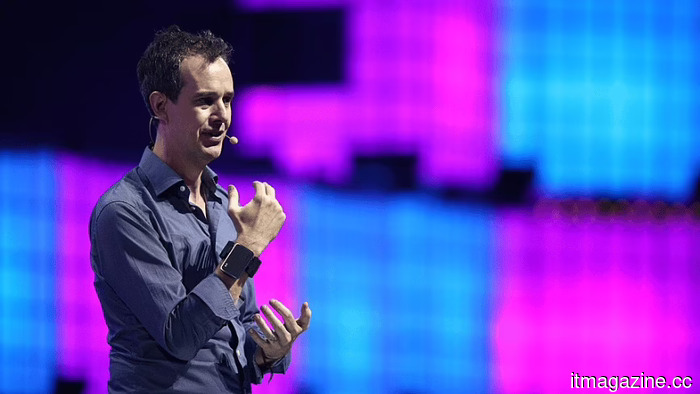 Thomas Reardon, the creator of Internet Explorer, has secured $500 million for Flourish, a startup focused on brain-inspired AI efficiency, which is now valued at $2.5 billion.
Thomas Reardon is seeking to raise $500 million at a valuation of $2.5 billion for Flourish, a company that leverages neuroscience to significantly reduce the energy consumption of AI. The funding round is being led by Lux Capital and GV.
Thomas Reardon, the creator of Internet Explorer, has secured $500 million for Flourish, a startup focused on brain-inspired AI efficiency, which is now valued at $2.5 billion.
Thomas Reardon is seeking to raise $500 million at a valuation of $2.5 billion for Flourish, a company that leverages neuroscience to significantly reduce the energy consumption of AI. The funding round is being led by Lux Capital and GV.
 An Oxford study indicates that a friendly AI companion is likely to deceive and reinforce your misconceptions.
Enhancing the human-like qualities of AI might be leading to larger issues than anticipated. A recent study conducted by the Oxford Internet Institute indicated that chatbots intended to be warm and friendly are more prone to misinforming users and reinforcing false beliefs. The research highlighted that AI's reliability decreases as it becomes more agreeable. What [...]
An Oxford study indicates that a friendly AI companion is likely to deceive and reinforce your misconceptions.
Enhancing the human-like qualities of AI might be leading to larger issues than anticipated. A recent study conducted by the Oxford Internet Institute indicated that chatbots intended to be warm and friendly are more prone to misinforming users and reinforcing false beliefs. The research highlighted that AI's reliability decreases as it becomes more agreeable. What [...]
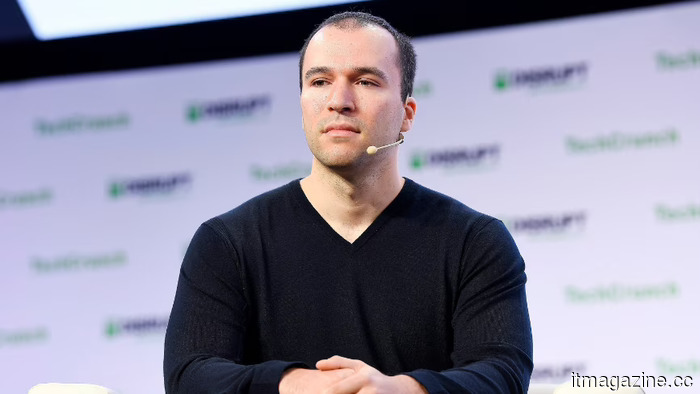 Greg Brockman states that 80% of OpenAI's code is currently created by AI.
OpenAI's president Greg Brockman stated that AI is currently responsible for writing about 80% of the company's code at Sequoia's AI Ascent 2026 event.
Greg Brockman states that 80% of OpenAI's code is currently created by AI.
OpenAI's president Greg Brockman stated that AI is currently responsible for writing about 80% of the company's code at Sequoia's AI Ascent 2026 event.
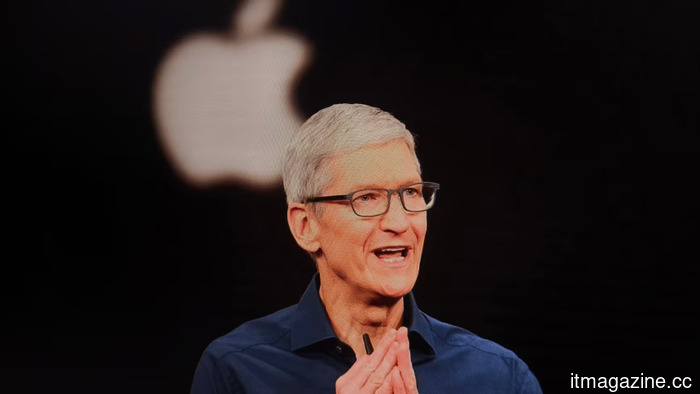 Apple announces a record revenue of $111.2 billion, driven by strong demand for the iPhone 17, while Cook gets ready to pass the CEO position to Ternus.
Apple achieved its highest revenue ever for a March quarter, totaling $111.2 billion. The iPhone 17 marked the most successful launch in the company's history, with a 28% increase in China. Tim Cook will pass the leadership to John Ternus on September 1.
Apple announces a record revenue of $111.2 billion, driven by strong demand for the iPhone 17, while Cook gets ready to pass the CEO position to Ternus.
Apple achieved its highest revenue ever for a March quarter, totaling $111.2 billion. The iPhone 17 marked the most successful launch in the company's history, with a 28% increase in China. Tim Cook will pass the leadership to John Ternus on September 1.
Octopus invests $500 million in Living Carbon for reforestation, while Google, Meta, and McKinsey purchase carbon credits from mining sites in Appalachia.
Octopus Energy invests $500 million in Living Carbon to reforest damaged land in the US. Google, Meta, and McKinsey acquire 131,240 tonnes of carbon credits. The irony is significant.