
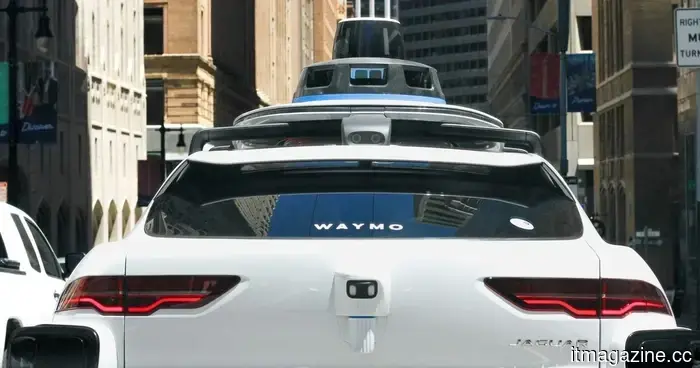
Self-driving cars were expected to liberate us from traffic congestion. However, studies indicate a different outcome.
The dream of self-driving vehicles may actually hide a potential traffic disaster.
Self-driving cars have promised a future where you can relax and breeze past heavy traffic while the vehicle takes care of everything. However, a recent study from the University of Texas at Arlington has revealed troubling news for that vision. The research indicates that widespread use of autonomous vehicles could make traffic conditions considerably worse.
Professors Stephen Mattingly and Farah Naz conducted a meta-analysis examining the impact of self-driving cars on vehicle miles traveled (VMT), revealing an average increase of 5.95% in VMT. The figure rose to nearly 7% for non-shared autonomous vehicles.
“The rise of AVs could make commuting more convenient, but it may also lead to increased drop-off and pick-up activities, more empty trips, and additional expenses.”
The reasoning is straightforward. When a car can drop you off and then drive itself home or search for passengers, road traffic increases. As Dr. Mattingly explained, “What do commuters do with their car when it’s not needed? Will it go to a parking lot, look for passengers, or head home?”
Are robot taxis already creating chaos on the roads?
In summary, the research indicates that robotaxis are already increasing the number of vehicle miles traveled, and once they become widespread, they could place immense strain on our current infrastructure. However, if recent news is any indication, robotaxis are already causing disruptions on the roads.
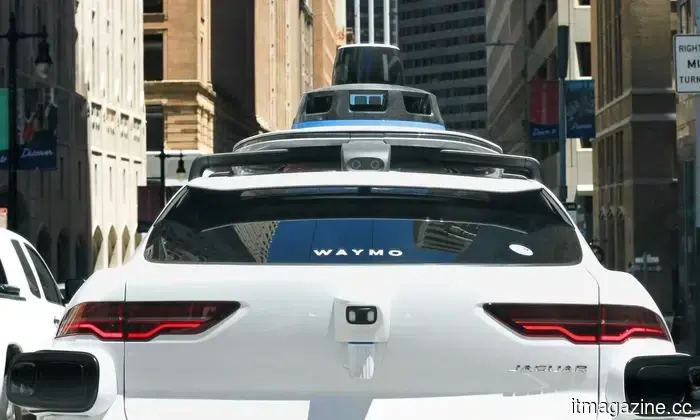
For instance, Waymo began operations in Nashville on April 7, 2026, and just five days later, people shared viral videos showing its robotaxis freezing at intersections and entering restricted areas. In December 2025, a power outage in San Francisco left numerous Waymo vehicles stuck at intersections across the city.
This issue isn't confined to the US. Just a few weeks ago, many Baidu robotaxis halted on elevated highways in Wuhan, China, leaving passengers stranded in traffic for over an hour.
NEW: Many Baidu robotaxis halted on the road in Wuhan, leading to crashes on highways and trapping passengers—some for more than an hour. One passenger reported it took her 30 minutes to reach a customer representative. Here’s a video of a crash. pic.twitter.com/fTitNMv8kj— Zeyi Yang 杨泽毅 (@ZeyiYang) April 1, 2026
These are just a few instances. Numerous similar occurrences have been reported in recent months, where robotaxis have become immobilized for various reasons, causing traffic jams.
This is occurring while robotaxis are still primarily in testing phases. If these issues continue to multiply, it’s easy to envision just how much worse traffic might get in the future.
What comes next?
Dr. Naz addressed this succinctly: “AVs are not inherently good or bad. Their effects will largely depend on how they are deployed and managed.” Without proactive policies before mass adoption, the self-driving dream risks evolving into a more expensive and modern version of a traffic jam.
To justify this cost, autonomous vehicles must clearly prove that they are safer and more reliable than human drivers, which they have yet to accomplish.
Rachit is an experienced tech journalist with over seven years of expertise in the consumer technology sector.
This stylish electric sedan is priced under $32,900 and exceeds Tesla with a range of over 770 miles.
Avatr has introduced its 06T electric sedan in China, and its impressive specifications grab immediate attention. The sleek car starts at ¥219,900, approximately $32,000, and boasts some surprisingly premium features. For that price, buyers receive a vehicle equipped with Huawei technology, an upscale interior, and an impressive range claim easily surpassing 700 miles in its range-extender version.
Why this figure is significant.
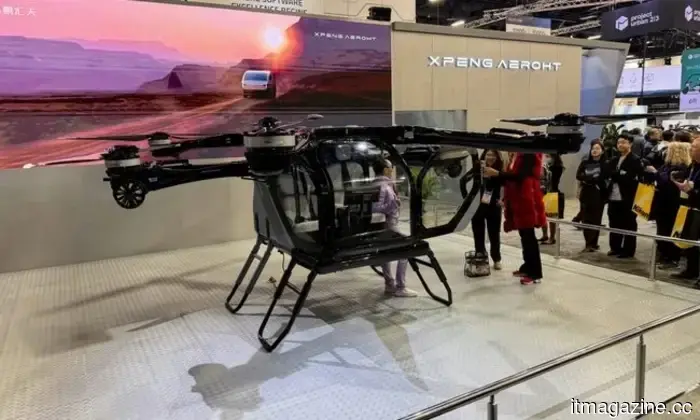
One of China’s most talked-about EV manufacturers is planning to deliver flying cars as soon as next year.
Xpeng, one of the most exciting Chinese EV companies, is literally aiming for the skies. The company is optimistic about rolling out its flying cars to customers soon. While this concept sounds like science fiction, Xpeng has already begun discussing orders, approvals, and mass production plans.
When can we expect these flying cars to take off?
Volvo's parent company has unveiled a sleek electric sedan priced at $14,300 that is unlikely to reach US consumers.
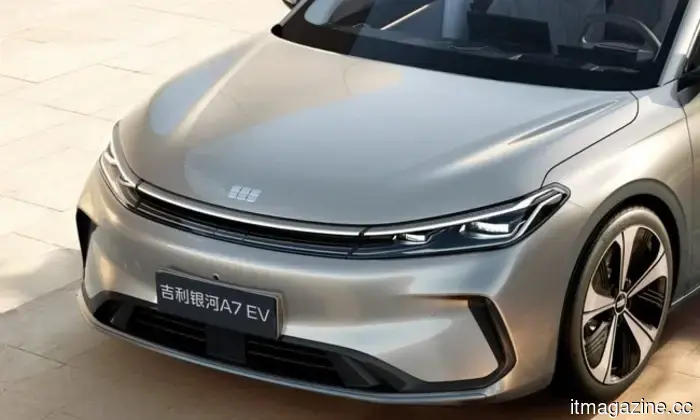
Official images reveal Geely’s new EV sedan, which boasts a claimed range of up to 550 kilometers, but this affordable model seems destined to remain outside the US market.
Volvo's parent company has introduced a new electric sedan in China that targets a well-known pain point for US car buyers. The Geely Galaxy A7 EV presents a clean, traditional design along with a claimed range of 550 kilometers (CLTC), entering the market at a price that still appears remarkably low by Western standards. However, it is expected to remain largely unavailable in US dealerships.

Other articles
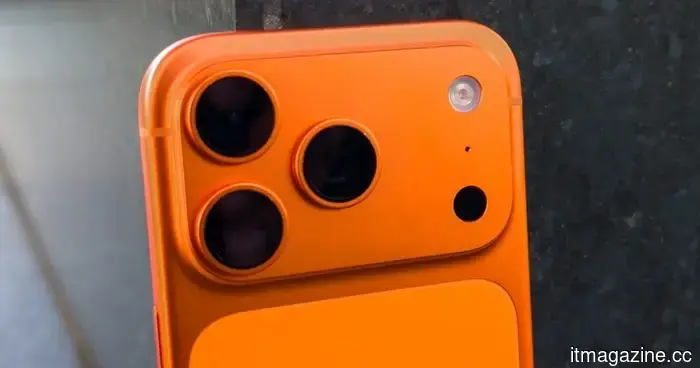 A leak regarding Apple suggests exciting camera enhancements for the iPhone 18 Pro that I’m eager to witness in action.
A credible Weibo leaker has detailed four camera enhancements that Apple is said to be working on, with variable aperture confirmed for both the iPhone 18 Pro and Pro Max this year.
A leak regarding Apple suggests exciting camera enhancements for the iPhone 18 Pro that I’m eager to witness in action.
A credible Weibo leaker has detailed four camera enhancements that Apple is said to be working on, with variable aperture confirmed for both the iPhone 18 Pro and Pro Max this year.
 GIGABYTE considers the 18'' screen to be the new thin and mobile standard.
The company introduced the GAMING A18 PRO laptop, which attempts to combine a screen size with a modest thickness of the body. Inside are modern chips, an AI assistant, and a couple of interesting cooling solutions.
GIGABYTE considers the 18'' screen to be the new thin and mobile standard.
The company introduced the GAMING A18 PRO laptop, which attempts to combine a screen size with a modest thickness of the body. Inside are modern chips, an AI assistant, and a couple of interesting cooling solutions.
 GIGABYTE considers the 18'' screen to be the new thin and mobile standard.
The company introduced the GAMING A18 PRO laptop, which attempts to combine screen size with a modest thickness of the body. Inside are modern chips, an AI assistant, and a couple of interesting cooling solutions.
GIGABYTE considers the 18'' screen to be the new thin and mobile standard.
The company introduced the GAMING A18 PRO laptop, which attempts to combine screen size with a modest thickness of the body. Inside are modern chips, an AI assistant, and a couple of interesting cooling solutions.
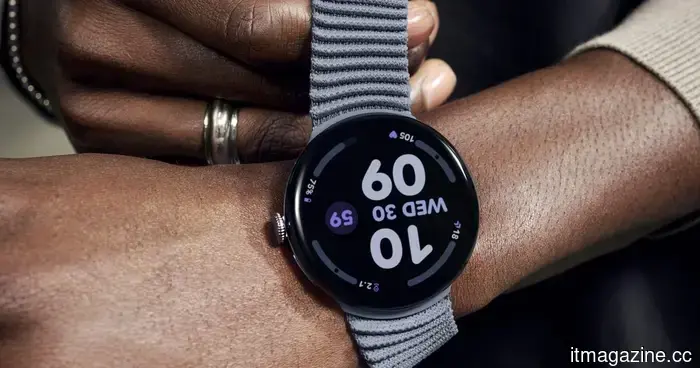 Fall Detection is a fantastic feature of smartwatches, but Google is prioritizing "account first!"
Google might soon necessitate a Google account for the Pixel Watch Fall Detection feature, bringing an end to one of the more adaptable setup options for this feature. This change will also include a grace period prior to enforcement, according to recently found app strings.
Fall Detection is a fantastic feature of smartwatches, but Google is prioritizing "account first!"
Google might soon necessitate a Google account for the Pixel Watch Fall Detection feature, bringing an end to one of the more adaptable setup options for this feature. This change will also include a grace period prior to enforcement, according to recently found app strings.
 Google Meet will soon take notes for you, even during in-person meetings.
Make a note for me: the in-person indications suggest that Google aims for Gemini to not be confined to a single application; instead, it seeks to serve as the AI layer throughout all your interactions, regardless of the platform.
Google Meet will soon take notes for you, even during in-person meetings.
Make a note for me: the in-person indications suggest that Google aims for Gemini to not be confined to a single application; instead, it seeks to serve as the AI layer throughout all your interactions, regardless of the platform.
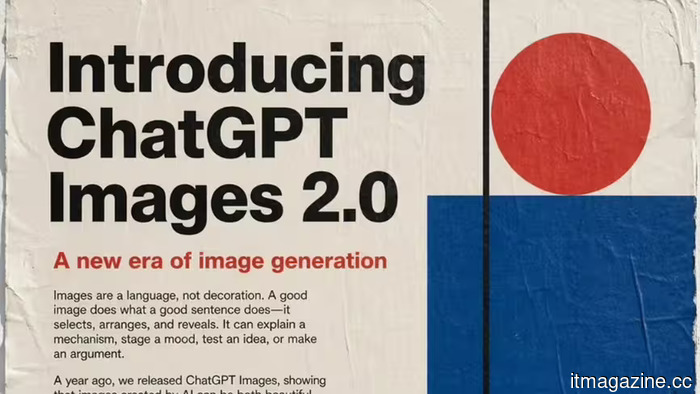 OpenAI's latest image model analyzes before creating visuals.
OpenAI's ChatGPT Images 2.0 is its inaugural image model that incorporates reasoning abilities: it organizes compositions, conducts web searches, and generates text in various scripts.
OpenAI's latest image model analyzes before creating visuals.
OpenAI's ChatGPT Images 2.0 is its inaugural image model that incorporates reasoning abilities: it organizes compositions, conducts web searches, and generates text in various scripts.
Self-driving cars were expected to liberate us from traffic congestion. However, studies indicate a different outcome.
Studies indicate that self-driving cars might actually worsen traffic conditions rather than improve them, and the initial evidence observed on the streets seems to support this claim.