
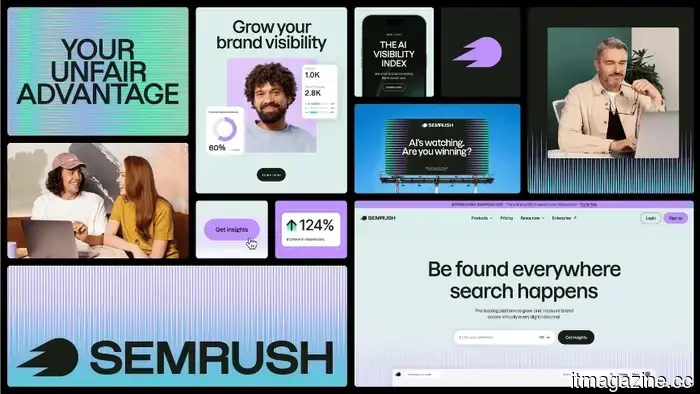
The Semrush Brand Visibility Framework is introduced at the Adobe Summit as AI search alters the rules of discovery.
Summary: Semrush unveiled its Brand Visibility Framework at the Adobe Summit, introducing “Agentic Search Optimization” as a novel approach to assessing brand presence in AI-generated responses, conventional search, and autonomous AI agents, utilizing data from 213 million LLM prompts. This framework comes at a time when organic click-through rates have fallen by 61% on queries featuring AI Overviews, with 62% of brands remaining unnoticed by generative AI. Notably, Semrush's own AI product revenue surged by 850% to $38 million in annual recurring revenue as the company anticipates finalizing its $1.9 billion acquisition by Adobe.
At the Adobe Summit held in Las Vegas, Semrush took the opportunity to introduce its Brand Visibility Framework, a strategic model aimed at evaluating how brands are found across traditional search engines, AI-generated answers, and autonomous AI agents. This framework presents “Agentic Search Optimization” as an innovative operational discipline, drawing on a dataset of over 213 million large language model prompts to illustrate how and where brands are mentioned or overlooked in environments that do not involve user interactions with links.
The timing of this launch is significant, as Semrush is currently undergoing a $1.9 billion acquisition by Adobe, a deal made public in November 2025 and projected to finalize in the first half of this year. The framework positions Semrush's capabilities as a key visibility layer within Adobe's marketing ecosystem, coinciding with a transformative period for brand representation due to AI developments.
The issue the framework addresses
The data underpinning the framework presents troubling figures for businesses reliant on organic search traffic. In February 2024, Gartner forecasted a 25% decline in traditional search engine traffic by 2026 attributed to AI chatbots and virtual agents. This forecast is gaining traction; Google’s AI Overviews are now triggered in 48% of all tracked search queries, reflecting a 58% annual increase, and in 80 to 88% of informational inquiries, depending on the sector. According to Seer Interactive, organic click-through rates have plummeted by 61% for queries with AI Overviews, while paid search click-through rates fell sharply from approximately 11% to 3% over the course of a single month last year.
Additionally, zero-click searches—where users receive answers without accessing any website—rose from 56% to 69% between May 2024 and May 2025. ChatGPT now boasts 800 million weekly active users, with Perplexity processing 780 million queries in May 2025 alone. Although the conversion rate for traffic generated through AI search is higher at 14.2% compared to 2.8% from traditional Google search, the volume from AI search is significantly lower, and brands have very little control over their visibility within AI systems.
A notable insight from the research linked to the framework reveals a significant gap between investment and visibility. Despite 94% of brands making substantial investments in traditional SEO, 62% are considered “technically invisible” to generative AI models according to Semrush. There exists only an 8% to 12% overlap between results that feature in AI-generated answers and those that perform well in traditional search. ChatGPT predominantly references pages ranked 21st or lower, indicating that the traditional principles of search engine optimization, which underpin Semrush’s business model, do not effectively lead to visibility in the emerging AI-driven ecosystem.
What the framework proposes
Semrush characterizes brand visibility as “the extent to which a brand can be discovered, authoritatively represented, and commercially actionable across both human- and machine-mediated discovery surfaces.” The framework is presented as a two-part research series; one part focuses on implementing a Brand Visibility Operating Model, while the other offers strategic guidance for chief marketing officers navigating AI search.
The central operational element is Agentic Search Optimization, which Semrush distinguishes from traditional SEO. While search engine optimization was designed for a context where a human reviews a list of links and selects one, Agentic Search Optimization is tailored for an environment where an AI agent assesses brand relevance and authority on behalf of the user and provides a recommendation without alternatives. This distinction is crucial because the operational mechanics differ significantly; AI systems do not rank pages but generate answers from training data, real-time retrieval, and internal reasoning, with different criteria determining whether a brand is included in this synthesis as opposed to traditional ranking factors for Google.
The framework expands on Semrush’s AI Visibility Index, launched in October 2025, which monitors brand mentions, the positioning of those mentions, website citations, and share of voice across platforms like ChatGPT, Google AI Mode, Perplexity, and Gemini. The index uses the 213 million LLM prompt database to act as what Semrush refers to as “keyword research for AI,” mapping the subjects, intent, and volume of queries directed at AI systems rather than search engines.
The commercial background
In fiscal year 202
Other articles
 tim-cook-resigns-as-apple-ceo-john-ternus
Tim Cook will assume the role of executive chairman on September 1, while John Ternus, the head of Apple's hardware engineering, will step in as CEO of the $4 trillion company.
tim-cook-resigns-as-apple-ceo-john-ternus
Tim Cook will assume the role of executive chairman on September 1, while John Ternus, the head of Apple's hardware engineering, will step in as CEO of the $4 trillion company.
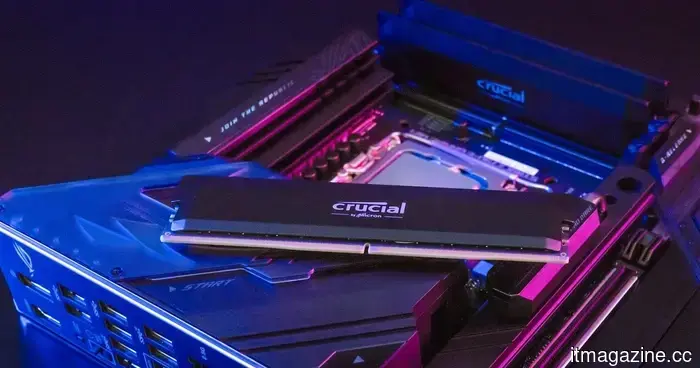 The demand for chips in AI could maintain elevated memory prices for a prolonged period.
A leading semiconductor executive has indicated that the worldwide wafer shortage might last until 2030, increasing the likelihood of sustained pressure on memory prices and the prices of the devices you purchase.
The demand for chips in AI could maintain elevated memory prices for a prolonged period.
A leading semiconductor executive has indicated that the worldwide wafer shortage might last until 2030, increasing the likelihood of sustained pressure on memory prices and the prices of the devices you purchase.
 Testing for a WhatsApp Plus subscription priced at EUR 2.49 per month has commenced, joining Instagram Plus in Meta's initiative for cross-app premium offerings.
WhatsApp is piloting a subscription model priced at EUR 2.49 per month, which includes features like chat themes, icons, and ringtones. This comes in the wake of Instagram Plus, as Meta develops paid options within its ecosystem of applications catering to 3.3 billion users.
Testing for a WhatsApp Plus subscription priced at EUR 2.49 per month has commenced, joining Instagram Plus in Meta's initiative for cross-app premium offerings.
WhatsApp is piloting a subscription model priced at EUR 2.49 per month, which includes features like chat themes, icons, and ringtones. This comes in the wake of Instagram Plus, as Meta develops paid options within its ecosystem of applications catering to 3.3 billion users.
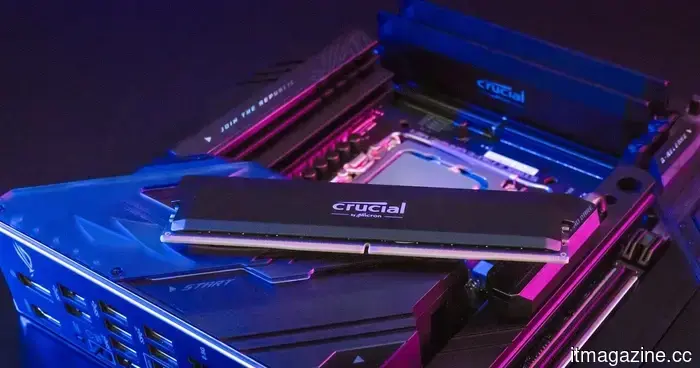 The demand for chips in AI may result in memory prices remaining excessively high for several years.
A leading semiconductor executive has indicated that the worldwide wafer shortage could continue until 2030, increasing the likelihood of ongoing pressure on memory prices and the prices of the gadgets you purchase.
The demand for chips in AI may result in memory prices remaining excessively high for several years.
A leading semiconductor executive has indicated that the worldwide wafer shortage could continue until 2030, increasing the likelihood of ongoing pressure on memory prices and the prices of the gadgets you purchase.
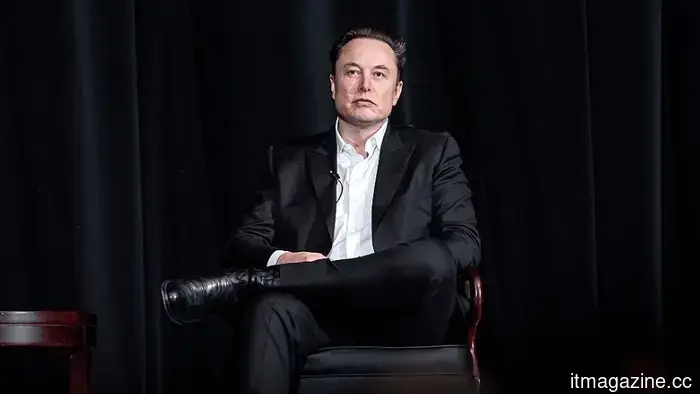 Musk disregards Paris prosecutors in the Grok investigation involving child sexual images, while the US DOJ declines to provide help.
Musk did not show up before Paris prosecutors who are looking into Grok's estimated 23,000 child sexual images, as the US DOJ declined to assist with the French investigation.
Musk disregards Paris prosecutors in the Grok investigation involving child sexual images, while the US DOJ declines to provide help.
Musk did not show up before Paris prosecutors who are looking into Grok's estimated 23,000 child sexual images, as the US DOJ declined to assist with the French investigation.
 The Elden Ring movie has officially received a release date, boasts an impressive cast, and is being filmed in IMAX.
A24 is currently filming its adaptation of Elden Ring in the UK, with Alex Garland at the helm as director. George R.R. Martin, who collaborated on the game's mythology, is also serving as a producer for the live-action film.
The Elden Ring movie has officially received a release date, boasts an impressive cast, and is being filmed in IMAX.
A24 is currently filming its adaptation of Elden Ring in the UK, with Alex Garland at the helm as director. George R.R. Martin, who collaborated on the game's mythology, is also serving as a producer for the live-action film.
The Semrush Brand Visibility Framework is introduced at the Adobe Summit as AI search alters the rules of discovery.
Semrush's latest framework presents Agentic Search Optimisation and utilizes 213 million LLM prompts to gauge brand visibility in AI search, following a 61% decline in organic CTR.