

tim-cook-resigns-as-apple-ceo-john-ternus
Summary: Tim Cook will resign as CEO of Apple on September 1 after nearly 15 years, during which Apple's market value rose from $348 billion to about $4 trillion, and its annual revenue quadrupled to $416 billion. John Ternus, Apple’s 50-year-old Senior Vice President of Hardware Engineering responsible for around 80% of the company's revenue-generating products, will assume the role of the fourth CEO, facing strategic challenges in AI, regulatory issues, and a significantly refreshed executive team following the exits of the COO, general counsel, AI chief, CFO, and head of design.
Cook is set to remain on as executive chairman, focusing on policy engagement and regulatory relationships as Apple encounters enforcement actions across multiple regions. The board of directors unanimously supported the succession plan. Arthur Levinson, who has been the non-executive chairman for 15 years, will take on the role of lead independent director following the transition.
“John Ternus has the mindset of an engineer, the spirit of an innovator, and the integrity to lead honorably,” Cook stated. “He is undoubtedly the right individual to guide Apple into the future.” Interestingly, Cook referred to reports of his departure as “a rumor” just months ago during an ABC interview, expressing that he “can’t envision life without Apple.”
The engineer who led the hardware
Ternus joined Apple in 2001, originally working on the Cinema Display. He advanced within the hardware division, overseeing the development of AirPods, iPad, and Mac, and took control of iPhone hardware in 2020 and Apple Watch in late 2022. He became a senior vice president of hardware engineering in 2021, succeeding Dan Riccio, who was appointed to lead the Vision Pro project. By late 2025, Cook discreetly reassigned Apple’s design teams, both hardware and software, to Ternus, a move that Bloomberg reported in January effectively confirmed him as the presumed CEO.
His background is noteworthy. Before joining Apple, Ternus worked on virtual reality headsets at Virtual Research Systems, a prescient detail given Apple's later investment in spatial computing. He earned his mechanical engineering degree from the University of Pennsylvania, where he was also a member of the swimming team. He has frequently appeared at Apple product events, showcasing updates to the iMac, MacBook Pro, iPad Pro, and the redesigned Mac Pro.
The succession planning was not abrupt. Bloomberg initially reported in 2024 that Ternus was the frontrunner and Apple had intensified its succession planning. By October 2025, his responsibilities had grown beyond those typically associated with a hardware executive to include product roadmap decisions, feature prioritization, and strategic planning. Fortune noted in December 2025 Apple’s “most significant executive turnover in years,” framing it as a generational shift rather than a crisis.
The exodus around him
Ternus takes over a leadership team that has undergone significant reorganization. Jeff Williams, the chief operating officer with 27 years at Apple, has retired, as have Kate Adams, the general counsel; Lisa Jackson, the vice president of environment and policy; and John Giannandrea, the head of AI. Alan Dye, who directed user interface design since 2015, left to join Meta, and Luca Maestri, who had been chief financial officer since 2014, departed at the end of 2024.
The new leadership includes Kevan Parekh, who became CFO on January 1, 2025, and Jennifer Newstead, who joined as general counsel on March 1, 2026, coming from Meta where she served as a legal advisor to the U.S. Department of State. This level of turnover is unusual for a company that has historically promoted from within and maintained its senior executives for extended periods.
What Cook built
Cook's legacy is characterized by growth. Apple's annual revenue increased from $108 billion in fiscal 2011 to over $416 billion in fiscal 2025. The services sector, which yields higher margins than devices, grew from approximately $12.9 billion to $85.2 billion in that timeframe. Apple became the first publicly listed company to reach a $1 trillion market cap in 2018, reached $1.9 trillion in 2020, and briefly exceeded $4 trillion in January 2025.
The shift to Apple Silicon, which replaced Intel processors with Apple's own chips starting in 2020, allowed for closer integration of hardware and software than any competitor, significantly enhancing the performance and battery life of every Mac. The Apple Watch established a wearables sector that now captures nearly 25% of the global market. AirPods have become synonymous with wireless audio.
Cook also transformed Apple’s supply chain from a competitive edge to an institutional strength, shortening inventory turnover from months to days and developing manufacturing partnerships, mainly in China, that competitors found difficult to replicate on a large scale.

Other articles
 Motorola has now launched the Android 17 beta for additional Razr and Edge smartphones.
Motorola is expanding access to the Android 17 beta for additional premium devices, including two Razr models and the Edge 50 Ultra in multiple regions.
Motorola has now launched the Android 17 beta for additional Razr and Edge smartphones.
Motorola is expanding access to the Android 17 beta for additional premium devices, including two Razr models and the Edge 50 Ultra in multiple regions.
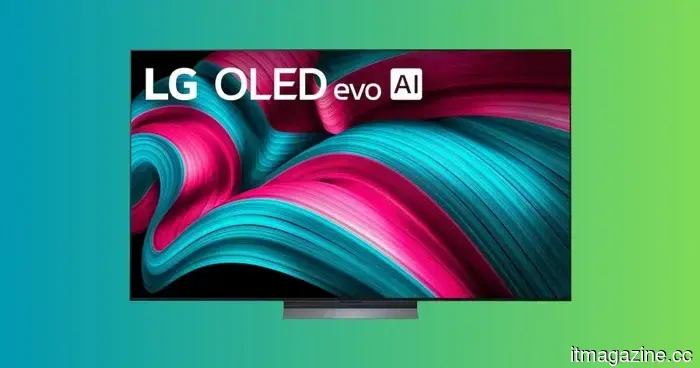 The LG 77-inch C5 OLED is priced at $1,999, and no other model at this screen size and price range matches its picture quality.
The LG C5 has set a standard for OLED TVs for good reason, and the 77-inch model is currently priced at $1,999.99, reflecting a substantial savings of $1,700 from its comparable value of $3,699.99. At this size and price point, this television transforms the appearance and ambiance of a living room, and the OLED evo panel beneath it [...]
The LG 77-inch C5 OLED is priced at $1,999, and no other model at this screen size and price range matches its picture quality.
The LG C5 has set a standard for OLED TVs for good reason, and the 77-inch model is currently priced at $1,999.99, reflecting a substantial savings of $1,700 from its comparable value of $3,699.99. At this size and price point, this television transforms the appearance and ambiance of a living room, and the OLED evo panel beneath it [...]
 Tim Cook steps down as CEO of Apple; John Ternus takes over.
Tim Cook will assume the role of executive chairman on September 1, as John Ternus, the head of Apple's hardware engineering, steps in as CEO of the $4 trillion company.
Tim Cook steps down as CEO of Apple; John Ternus takes over.
Tim Cook will assume the role of executive chairman on September 1, as John Ternus, the head of Apple's hardware engineering, steps in as CEO of the $4 trillion company.
 Testing for a WhatsApp Plus subscription priced at EUR 2.49 per month has commenced, joining Instagram Plus in Meta's initiative for cross-app premium offerings.
WhatsApp is piloting a subscription model priced at EUR 2.49 per month, which includes features like chat themes, icons, and ringtones. This comes in the wake of Instagram Plus, as Meta develops paid options within its ecosystem of applications catering to 3.3 billion users.
Testing for a WhatsApp Plus subscription priced at EUR 2.49 per month has commenced, joining Instagram Plus in Meta's initiative for cross-app premium offerings.
WhatsApp is piloting a subscription model priced at EUR 2.49 per month, which includes features like chat themes, icons, and ringtones. This comes in the wake of Instagram Plus, as Meta develops paid options within its ecosystem of applications catering to 3.3 billion users.
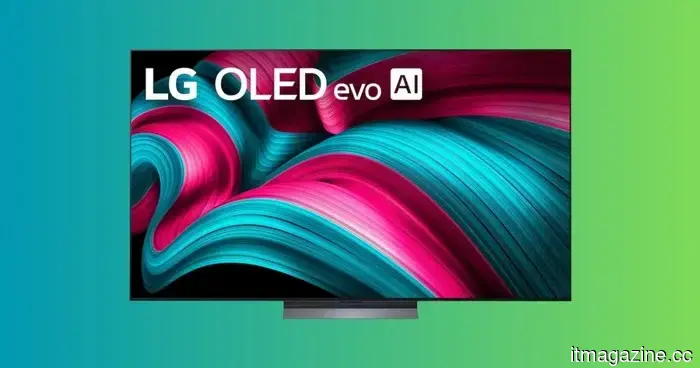 The LG 77-inch C5 OLED is now priced at $1,999, and no other option at this screen size and price offers comparable picture quality.
The LG C5 has earned its status as the OLED standard for a valid reason, and the 77-inch model is currently priced at $1,999.99, reflecting a $1,700 discount from its comparison value of $3,699.99. With that size and price, this television transforms the aesthetic and ambiance of a living room, and the OLED evo panel beneath...
The LG 77-inch C5 OLED is now priced at $1,999, and no other option at this screen size and price offers comparable picture quality.
The LG C5 has earned its status as the OLED standard for a valid reason, and the 77-inch model is currently priced at $1,999.99, reflecting a $1,700 discount from its comparison value of $3,699.99. With that size and price, this television transforms the aesthetic and ambiance of a living room, and the OLED evo panel beneath...
 Tim Cook steps down as CEO of Apple; John Ternus takes over.
On September 1, Tim Cook will assume the role of executive chairman, while John Ternus, the head of Apple’s hardware engineering, will step in as CEO of the $4 trillion company.
Tim Cook steps down as CEO of Apple; John Ternus takes over.
On September 1, Tim Cook will assume the role of executive chairman, while John Ternus, the head of Apple’s hardware engineering, will step in as CEO of the $4 trillion company.
tim-cook-resigns-as-apple-ceo-john-ternus
Tim Cook will assume the role of executive chairman on September 1, while John Ternus, the head of Apple's hardware engineering, will step in as CEO of the $4 trillion company.