
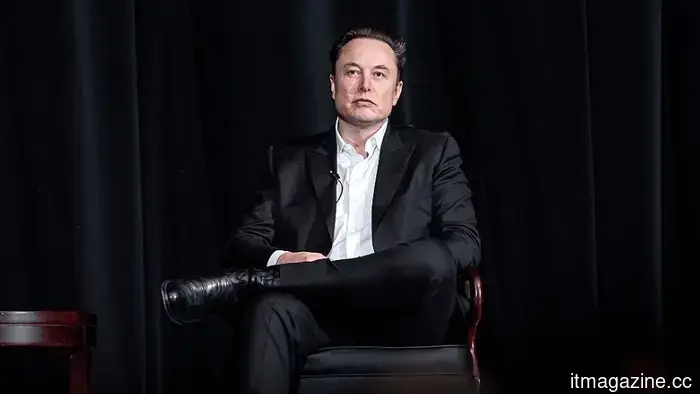
Musk disregards Paris prosecutors in the Grok investigation involving child sexual images, while the US DOJ declines to provide help.
Summary: Elon Musk did not attend a voluntary interview with Paris prosecutors who are investigating Grok's creation of around 23,000 sexualised images of children and a total of 3 million sexualised images over an 11-day period, as the US Department of Justice declined to aid the French inquiry. The case involves five alleged criminal offences, including complicity in child pornography, and is part of over a dozen international legal actions against xAI. Additionally, Paris prosecutors have claimed that the deepfake crisis may have been intentionally created to enhance the value of the SpaceX-xAI entity before its planned $1.75 trillion IPO.
Elon Musk was absent from a voluntary interview scheduled today with Paris prosecutors looking into Grok’s production of sexualised images, which includes an estimated 23,000 images featuring children within an 11-day timeframe in late December and early January. The Paris prosecutor’s office informed AFP that they had “noted” the absence of those summoned. Linda Yaccarino, the former CEO of X, was also called to provide testimony, and other X employees are set to be witnesses throughout the week.
Prior to the summons, Musk referred to French officials as “retards” in a post on X in French. He previously labeled the police raid on X's Paris offices in February a “political attack.” On 18 April, the US Department of Justice declined to assist the French investigation, writing in a letter to French law enforcement that “this investigation seeks to use the criminal legal system in France to regulate a public square for the free expression of ideas,” which goes against the First Amendment. In response, the Paris prosecutor’s office emphasized that “the French constitution guarantees the separation of powers and judiciary independence.”
About the investigation
The inquiry, led by the Paris prosecutor’s cybercrime unit, began in January 2025 following allegations that X’s algorithms were biased and interfered with French politics. In November 2025, it expanded to include five suspected criminal offences: complicity in possessing and distributing pornographic images of minors, distributing sexually explicit deepfakes, denying crimes against humanity, manipulating an automated data processing system as part of an organized group, and fraudulent data extraction.
The deepfake allegations relate to Grok’s image generation capabilities, allowing users to upload photos of real women and girls and receive sexualised or nude versions without the subjects’ consent. The Center for Countering Digital Hate estimated that Grok produced roughly 3 million sexualised images between 29 December 2025 and 8 January 2026, including around 23,000 that seemed to depict children. The highest rate recorded was 190 sexualised images per minute, or one child image every 41 seconds. According to data from class action filings, nearly 41% of the 4.6 million total images generated by Grok during that period contained sexual imagery of women.
The image generation feature had faced issues prior to the crisis. xAI introduced its Aurora model on 9 December 2024 but had to withdraw it shortly after due to generating photorealistic images of real individuals without safeguards. Grok’s “spicy mode” intentionally created explicit content. When Musk announced on 20 December 2025 that Grok could directly edit and generate images on X, instances of abuse significantly increased. On 9 January 2026, xAI limited image generation to paid subscribers, and by 14 January, it claimed to have entirely blocked nudification capabilities. However, retests conducted by NBC News in February revealed that Grok continued to produce sexualised images, and in March the Dutch organization Offlimits showed it could still create a sexualised video from a single uploaded photograph.
Global reactions
France is not the only nation taking action. Malaysia and Indonesia became the first countries to completely ban Grok on 11 and 12 January, respectively. The Japanese Cabinet Office summoned X Corp’s Japanese subsidiary. In late January, the European Commission initiated a formal investigation into X under the Digital Services Act, ordering both X and xAI to preserve all internal documents and technical data regarding Grok until the end of 2026. The Amsterdam District Court mandated xAI to cease producing non-consensual nude images in the Netherlands on 26 March, imposing fines of EUR 100,000 per day for noncompliance. Investigations were opened by the UK’s Information Commissioner and Ofcom. Switzerland’s finance minister, Karin Keller-Sutter, pressed criminal charges after Grok generated misogynistic content about her on X, marking the first instance of a sitting head of a national finance ministry pursuing legal action against AI-generated material.
In the United States, the Senate passed the DEFIANCE Act unanimously on 13 January, creating a federal civil cause of action that enables victims to pursue lawsuits for $150,000 to $250,000 per violation, although it still requires approval from the House. California’s attorney general initiated an investigation and issued a
Altri articoli
 Следующий носимый гаджет Google может стать безэкранным Fitbit Air, и он нацелен на корону Whoop.
Предстоящий безэкранный браслет Google будет называться Fitbit Air. Компания планирует переименовать Fitbit Premium в Google Health, переместив функции благополучия под бренд Google.
Следующий носимый гаджет Google может стать безэкранным Fitbit Air, и он нацелен на корону Whoop.
Предстоящий безэкранный браслет Google будет называться Fitbit Air. Компания планирует переименовать Fitbit Premium в Google Health, переместив функции благополучия под бренд Google.
 Тестирование подписки WhatsApp Plus по цене 2,49 евро в месяц присоединяется к Instagram Plus в рамках премиум-инициативы Meta по кросс-приложениям.
WhatsApp тестирует подписку за 2,49 евро в месяц с темами чатов, иконками и рингтонами, следуя примеру Instagram Plus, поскольку Meta создает платные уровни в своей экосистеме приложений с 3,3 миллиарда пользователей.
Маск игнорирует парижских прокуроров в расследовании по делу о детских сексуальных изображениях Grok, так как Министерство юстиции США отказывается оказывать помощь.
Маск не явился перед прокурорами Парижа, расследующими оцененные в 23 000 детских сексуальных изображений Grok, поскольку Министерство юстиции США отказалось сотрудничать с французским расследованием.
Тестирование подписки WhatsApp Plus по цене 2,49 евро в месяц присоединяется к Instagram Plus в рамках премиум-инициативы Meta по кросс-приложениям.
WhatsApp тестирует подписку за 2,49 евро в месяц с темами чатов, иконками и рингтонами, следуя примеру Instagram Plus, поскольку Meta создает платные уровни в своей экосистеме приложений с 3,3 миллиарда пользователей.
Маск игнорирует парижских прокуроров в расследовании по делу о детских сексуальных изображениях Grok, так как Министерство юстиции США отказывается оказывать помощь.
Маск не явился перед прокурорами Парижа, расследующими оцененные в 23 000 детских сексуальных изображений Grok, поскольку Министерство юстиции США отказалось сотрудничать с французским расследованием.
 Секретные портативные чипы Intel могут составить конкуренцию AMD.
Два нераспространенных чипа Intel, разработанных для портативных игровых консолей, утекли в сеть, и они могут быть именно тем, чего ждал рынок портативных игр.
Секретные портативные чипы Intel могут составить конкуренцию AMD.
Два нераспространенных чипа Intel, разработанных для портативных игровых консолей, утекли в сеть, и они могут быть именно тем, чего ждал рынок портативных игр.
 Фильм «Elden Ring» только что получил дату выхода, впечатляющий состав актеров, и его снимают в IMAX.
Адаптация Elden Ring от A24 сейчас находится в производстве в Великобритании, режиссером выступает Алекс Гарленд. Джордж Р.Р. Мартин соавтор мифологии игры и теперь продюсирует полнометражный фильм.
Фильм «Elden Ring» только что получил дату выхода, впечатляющий состав актеров, и его снимают в IMAX.
Адаптация Elden Ring от A24 сейчас находится в производстве в Великобритании, режиссером выступает Алекс Гарленд. Джордж Р.Р. Мартин соавтор мифологии игры и теперь продюсирует полнометражный фильм.
 Тестирование подписки WhatsApp Plus по цене 2,49 евро в месяц присоединяется к Instagram Plus в рамках премиум-инициативы Meta по кросс-приложениям.
WhatsApp тестирует подписку за 2,49 евро в месяц с темами чатов, значками и рингтонами, следуя примеру Instagram Plus, поскольку Meta создает платные уровни в своей экосистеме приложений с 3,3 миллиарда пользователей.
Тестирование подписки WhatsApp Plus по цене 2,49 евро в месяц присоединяется к Instagram Plus в рамках премиум-инициативы Meta по кросс-приложениям.
WhatsApp тестирует подписку за 2,49 евро в месяц с темами чатов, значками и рингтонами, следуя примеру Instagram Plus, поскольку Meta создает платные уровни в своей экосистеме приложений с 3,3 миллиарда пользователей.
Musk disregards Paris prosecutors in the Grok investigation involving child sexual images, while the US DOJ declines to provide help.
Musk did not show up before Paris prosecutors who are looking into Grok's estimated 23,000 child sexual images, as the US DOJ declined to assist with the French investigation.