

The demand for chips in AI may result in memory prices remaining excessively high for several years.
Memory shortages may affect your next phone, laptop, and GPU for years to come
Recent reports have indicated that memory prices may not decrease until 2027, suggesting that the memory chip shortage is not a temporary issue. This poses a problem for anyone hoping for a reduction in prices for phones, laptops, and GPUs in the near future.
According to Reuters, SK Group chairman Chey Tae-won stated that the global shortage of chip wafers is expected to persist until 2030, driven by a demand for artificial intelligence that continues to exceed supply. Chey noted that the current shortage could remain above 20%, mainly because AI systems require significant amounts of high-bandwidth memory, which results in a high consumption of wafers.
Reasons memory prices could remain elevated for several years
The rise in memory chip prices wasn't caused by a sudden production shortfall or artificial price manipulation. Chey specifically highlighted the extensive demand for high-bandwidth memory (HBM) from AI applications as a major factor in the ongoing shortage. He believes the industry will need at least four to five years to generate sufficient additional wafer capacity, explaining why the shortage may last until the end of this decade.
Memory is not simply a minor component within the supply chain; it impacts almost every consumer product, ranging from budget smartphones and mid-tier laptops to gaming handhelds, consoles, SSDs, and graphics cards.
Why this matters for your finances
Chey anticipates that SK Hynix will present a strategy aimed at stabilizing DRAM prices. Companies typically refrain from discussing price stabilization unless they are concerned about volatility, which generally indicates unpredictability and higher costs for consumers.
Given that SK Hynix controls 57% of the HBM market and 32% of the global DRAM market, the company's position is significant. As the second-largest DRAM supplier worldwide, these warnings should not be taken lightly.
Vikhyaat Vivek is a tech journalist and reviewer with seven years of experience in consumer hardware.
How to locate archived emails in Gmail and restore them to your inbox
Finding archived emails in Gmail is simpler than you might think—once you know where to look. If you're trying to tidy up your Gmail inbox without permanently deleting anything, archiving is a good option. When you archive an email, it is removed from your inbox but remains accessible. Here’s how to find any previously archived emails and how to return them to your inbox for easy access.
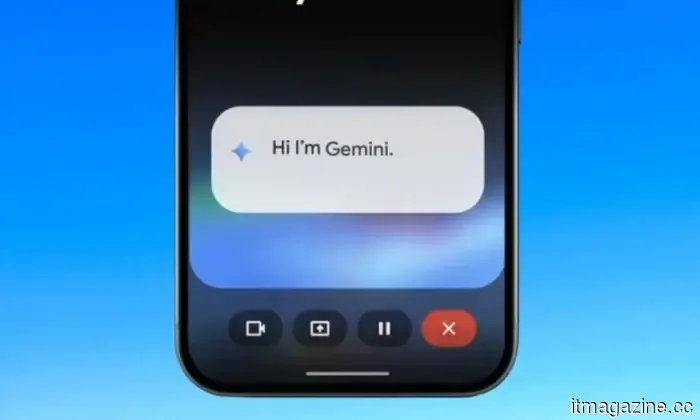
Gemini Live receives a minimalist app redesign to enhance usability
Gemini Live has just become easier and quicker to use. Google is testing a redesigned interface for its Gemini Live experience on Android, aiming to create smoother and less intrusive interactions with its AI assistant. A report from 9To5Google notes that the update shifts away from a full-screen interface to integrate Gemini Live directly into the main app view, indicating a transition toward a more practical, everyday usage model.
Controversial US agency reportedly testing Anthropic's powerful Mythos AI
The use of Mythos AI by a US agency reveals a growing divide within the government regarding AI risks. The National Security Agency is said to be utilizing Anthropic's Mythos Preview, even while high-ranking Pentagon officials push for a ban on the company due to supply chain issues. This situation illustrates how rapidly genuine security requirements can surpass government policy.
Since February, the Defense Department has been attempting to restrict Anthropic and encourage other vendors to follow suit. However, an Axios report suggests that the NSA is proceeding with one of the firm's most powerful models, indicating that cybersecurity needs are currently more pressing than the ongoing internal conflict within the government.




Other articles
 Intel's concealed handheld processors could potentially challenge AMD's position in the market.
Two unannounced Intel processors designed for handheld gaming consoles have surfaced online, and they may be precisely what the handheld gaming industry has been anticipating.
Intel's concealed handheld processors could potentially challenge AMD's position in the market.
Two unannounced Intel processors designed for handheld gaming consoles have surfaced online, and they may be precisely what the handheld gaming industry has been anticipating.
 WhatsApp Plus subscription testing at €2.49 per month joins Instagram Plus in Meta's effort to introduce premium features across its apps.
WhatsApp is trialing a subscription service priced at EUR 2.49 per month, which includes chat themes, icons, and ringtones. This comes after the introduction of Instagram Plus, as Meta expands its paid options throughout its ecosystem of 3.3 billion users.
WhatsApp Plus subscription testing at €2.49 per month joins Instagram Plus in Meta's effort to introduce premium features across its apps.
WhatsApp is trialing a subscription service priced at EUR 2.49 per month, which includes chat themes, icons, and ringtones. This comes after the introduction of Instagram Plus, as Meta expands its paid options throughout its ecosystem of 3.3 billion users.
 Tim Cook steps down as CEO of Apple; John Ternus takes over.
Tim Cook will assume the role of executive chairman on September 1, as John Ternus, the head of Apple's hardware engineering, steps in as CEO of the $4 trillion company.
Tim Cook steps down as CEO of Apple; John Ternus takes over.
Tim Cook will assume the role of executive chairman on September 1, as John Ternus, the head of Apple's hardware engineering, steps in as CEO of the $4 trillion company.
 Google forms a four-partner chip supply chain with Broadcom, MediaTek, and Marvell to compete with Nvidia in inference.
Google's custom chip initiative involves four design partners and a dual-track TPU v8 roadmap at TSMC's 2nm process, making its inference silicon a significant competitor to Nvidia.
Google forms a four-partner chip supply chain with Broadcom, MediaTek, and Marvell to compete with Nvidia in inference.
Google's custom chip initiative involves four design partners and a dual-track TPU v8 roadmap at TSMC's 2nm process, making its inference silicon a significant competitor to Nvidia.
 Tim Cook steps down as CEO of Apple; John Ternus takes over.
On September 1, Tim Cook will assume the role of executive chairman, while John Ternus, the head of Apple’s hardware engineering, will step in as CEO of the $4 trillion company.
Tim Cook steps down as CEO of Apple; John Ternus takes over.
On September 1, Tim Cook will assume the role of executive chairman, while John Ternus, the head of Apple’s hardware engineering, will step in as CEO of the $4 trillion company.
 Musk disregards Paris prosecutors in the Grok investigation involving child sexual images, while the US DOJ declines to provide help.
Musk did not show up before Paris prosecutors who are looking into Grok's estimated 23,000 child sexual images, as the US DOJ declined to assist with the French investigation.
Musk disregards Paris prosecutors in the Grok investigation involving child sexual images, while the US DOJ declines to provide help.
Musk did not show up before Paris prosecutors who are looking into Grok's estimated 23,000 child sexual images, as the US DOJ declined to assist with the French investigation.
The demand for chips in AI may result in memory prices remaining excessively high for several years.
A leading semiconductor executive has indicated that the worldwide wafer shortage could continue until 2030, increasing the likelihood of ongoing pressure on memory prices and the prices of the gadgets you purchase.