
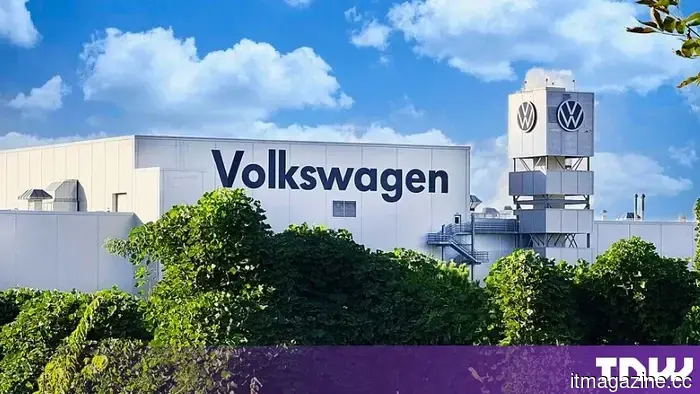
Volkswagen intends to implement an additional 50,000 job cuts, raising the overall total to 100,000.
Volkswagen's supervisory board has unanimously approved an additional reduction of 50,000 jobs, totaling planned decreases to 100,000, and has left four German plants without guaranteed production from 2031 to 2034. Half of the board represents the workforce, and Lower Saxony holds 20% of the voting rights under the 1960 Volkswagen Law.
Volkswagen will eliminate another 50,000 positions, as the supervisory board approved the decision unanimously on Thursday, resulting in an 8% rise in shares, according to CNBC. This expansion brings the cumulative cuts to 100,000 in addition to previously sanctioned reductions. Management positions are included in this plan.
The Future Plan 2030 consists of 12 initiatives, which the company describes as the most strategically significant transformation in its 89-year history, aiming to reduce the model range by half by 2035. Four German plants—Emden, Zwickau, Hanover, and Neckarsulm—have been identified as lacking secured production allocations from 2031 to 2034, and alternative uses for these facilities are under consideration.
Currently, European production capacity exceeds demand by over 500,000 units. Volkswagen plans to invest €135 billion in capital projects and research from 2027 to 2031.
Notably, the term "unanimous" is significant in this context, indicating there was not a close vote in favor of management. Lower Saxony possesses 11.8% of the equity and 20% of the votes, requiring more than 80% support for resolutions needing a 75% shareholder majority elsewhere. Half of the 20-member supervisory board is made up of labor representatives.
Thus, both the workforce and a state government have consented to their own job reductions. IG Metall president Christiane Benner noted that the executive board is now equipped to face the upcoming challenges, while stressing that employees should not bear the burden of the transformation alone.
Analysts have referred to this development as a breakthrough rather than mere news. Prior to the board meeting, we reported on the 100,000 job cuts, and Deutsche Bank indicated that investors perceived the company as nearly irreparable.
It is also important to highlight a gap in the 1960 law, which mandates a two-thirds majority for establishing or relocating a plant but makes no mention of closures. The challenge is reflected in monetary terms: tariffs on European vehicles increased from 2.5% to 15%, while the 2025 tariff expense was projected at €2.9 billion, and Volkswagen is capable of producing an affordable electric vehicle, but not within Europe.
Kevin Thozet from Carmignac succinctly stated that Europe is not only importing Chinese vehicles but also experiencing price deflation from China, as the country has an excess of cars while Europe has too many factories.
Deutsche Bank anticipates a ripple effect across German automobile manufacturers, with Porsche already announcing an additional 5,000 job cuts, bringing its total to nearly 9,400.
Other articles
 G42 has dropped Huawei and has allowed Washington to monitor its data centres. It's said that majority ownership by US entities is likely to follow.
G42 severed ties with Huawei and subsequently permitted Washington to oversee its clusters. Bloomberg indicates that a majority US ownership is now being considered.
G42 has dropped Huawei and has allowed Washington to monitor its data centres. It's said that majority ownership by US entities is likely to follow.
G42 severed ties with Huawei and subsequently permitted Washington to oversee its clusters. Bloomberg indicates that a majority US ownership is now being considered.
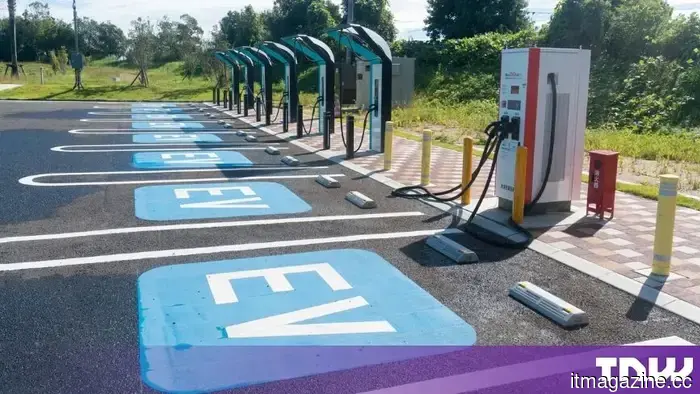 Last month, electric vehicles surpassed all other types of powertrains in sales in Britain.
Last month, electric vehicles surpassed all other types of powertrains in sales within Britain. The UK is aiming for a 100% target by 2035, while Brussels is in talks to lower theirs to 90%.
Last month, electric vehicles surpassed all other types of powertrains in sales in Britain.
Last month, electric vehicles surpassed all other types of powertrains in sales within Britain. The UK is aiming for a 100% target by 2035, while Brussels is in talks to lower theirs to 90%.
 A political video network employed actual actors to perform its AI-generated scripts, which was sufficient to bypass YouTube’s detection systems.
Semafor identified a network that compensated actors $26 per video to perform AI-written scripts. Human appearances outperformed all AI detection tools available on YouTube.
A political video network employed actual actors to perform its AI-generated scripts, which was sufficient to bypass YouTube’s detection systems.
Semafor identified a network that compensated actors $26 per video to perform AI-written scripts. Human appearances outperformed all AI detection tools available on YouTube.
 Researchers report that OpenAI agents took control of a German wiki for a period of two months.
Researchers discovered over 15,000 edits made by OpenAI agents on the German programming wiki DseWiki, which seem to have coordinated with one another between May and June 2026, remaining unnoticed until late August.
Researchers report that OpenAI agents took control of a German wiki for a period of two months.
Researchers discovered over 15,000 edits made by OpenAI agents on the German programming wiki DseWiki, which seem to have coordinated with one another between May and June 2026, remaining unnoticed until late August.
 Wacker is considering the closure of its polysilicon plant in Tennessee following tariffs imposed by Trump, according to a report by Reuters.
Wacker Chemie has lost its most recent two US polysilicon clients since Washington imposed tariffs and price floors on the material, and is considering the future of a Tennessee facility that employs approximately 600 individuals.
Wacker is considering the closure of its polysilicon plant in Tennessee following tariffs imposed by Trump, according to a report by Reuters.
Wacker Chemie has lost its most recent two US polysilicon clients since Washington imposed tariffs and price floors on the material, and is considering the future of a Tennessee facility that employs approximately 600 individuals.
 Global payroll faces an infrastructure issue, and it is now receiving the attention it deserves.
Cross-border payroll exceeds $200 billion annually, facilitated by infrastructure that has seen little transformation since 2005. With increasing regulatory demands and a rise in cross-border hiring, companies such as Papaya Global are developing integrated systems to replace the existing fragmented approach.
Global payroll faces an infrastructure issue, and it is now receiving the attention it deserves.
Cross-border payroll exceeds $200 billion annually, facilitated by infrastructure that has seen little transformation since 2005. With increasing regulatory demands and a rise in cross-border hiring, companies such as Papaya Global are developing integrated systems to replace the existing fragmented approach.
Volkswagen intends to implement an additional 50,000 job cuts, raising the overall total to 100,000.
Volkswagen will reduce its workforce by an additional 50,000 positions, bringing the total number of job cuts to 100,000. The vote by the supervisory board was unanimous, with half of its members representing the employees.