

a16z has collected $1.1 billion to invest in the physical infrastructure of AI.
Andreessen Horowitz has established a $1.1 billion fund dedicated solely to hardware. The Machine Age Fund, unveiled on Friday, focuses on the physical infrastructure that supports artificial intelligence, encompassing everything from chips to the facilities that contain them.
This fund's scope includes chips, memory, networking, and storage, and extends further. Complete systems are part of the mandate as well, broadly defined to encompass anything from data centers to robotics and home AI devices.
The launch is backed by five partners: Ben Horowitz, Martin Casado, Raghu Raghuram, David Ulevitch, and David George. Such senior involvement for a single initiative indicates how significant the firm views this investment thesis.
The rationale for the fund is grounded in physics rather than market potential. The compute density has increased 28 times between Nvidia’s H100 generation and its Rubin racks. A rack that previously required 5 to 10 kilowatts now needs between 100 and 250 kilowatts, with expectations that it will reach a megawatt per rack within three years. Individual data centers are transitioning from tens of megawatts to hundreds, with some approaching gigawatt levels, prompting builders to seek financing on a larger scale.
Every layer of this technology stack is confronting the limits of what the supply chain can deliver, and, in some areas, the constraints of physics and computer science. The bottleneck, from this perspective, has shifted from theoretical models to real-world limitations.
a16z’s deal flow has also adapted accordingly. Hardware investment has transitioned from a minor share of the firm's deals to over 20%.
For the past two decades, hardware has been a tougher proposition in venture capital due to longer timelines, higher costs, and less scalable models compared to software. When a firm’s pipeline reaches a fifth composed of hardware, that concern tends to lose its impact.
The fund's portfolio is much broader than just semiconductors. It includes companies like Unconventional AI, Nexthop, Volta, Atoms, and Mind Robotics alongside Skydio, SpaceX, Anduril, and Waymo.
This broad interpretation of systems encompasses drones, launch vehicles, defense machinery, and autonomous vehicles, setting the fund apart from typical deeptech investments.
On the demand side, the argument hinges on the intensity of token usage. Both the sheer volume of AI tasks and the computational resources required for each have surged dramatically, with the firm estimating growth in the triple digits.
While the areas of interest are narrower, they reveal key insights. Improvements in memory and interconnect, energy-efficient edge devices, and the cooling, materials, electrical, and infrastructure needs that support modern facilities are key focuses.
Memory and interconnect are where constraints have quietly taken root. A rack filled with accelerators that cannot receive data quickly enough is a costly method of producing heat, and the industry has spent two years realizing how often this has been the real limitation.
The latter category is particularly noteworthy in Europe. Real estate, power distribution, and cooling are not traditionally seen as venture categories, and site selection is already a critical constraint, with 63% of new capacity now being set up outside the five major hubs.
This fund launches in a year of unusual activity. a16z announced over $15 billion in new funds in January, including a $1.7 billion Infrastructure Fund 2 and a $1.18 billion American Dynamism Fund 2.
It remains unclear how the Machine Age Fund is related to those initiatives, and details on limited partners, investment amounts, or stage focus are not yet available. Recent investments, such as a Series A into Netris—which automates the networking hindering GPU clouds—hint at a consistent direction.
The core message, stripped of its surrounding rhetoric, is that the scarce resource has shifted. For much of the last decade, it was talent and distribution, but now a16z is betting $1.1 billion that the critical factors are transformers, substations, and thermal design.
Other articles
 SoftBank is pursuing a second $10 billion loan secured by its stake in OpenAI.
According to Bloomberg, SoftBank is looking to secure an additional $10 billion loan linked to its OpenAI investment, just weeks after completing a similar-sized loan and considering a $20 billion bond.
SoftBank is pursuing a second $10 billion loan secured by its stake in OpenAI.
According to Bloomberg, SoftBank is looking to secure an additional $10 billion loan linked to its OpenAI investment, just weeks after completing a similar-sized loan and considering a $20 billion bond.
 GTA VI might require around 80 hours to complete, so you might want to consider canceling your plans.
Rob Nelson from Rockstar mentioned that his playthrough of GTA VI lasted approximately 80 hours, implying that the forthcoming open-world blockbuster may require a significant time investment.
GTA VI might require around 80 hours to complete, so you might want to consider canceling your plans.
Rob Nelson from Rockstar mentioned that his playthrough of GTA VI lasted approximately 80 hours, implying that the forthcoming open-world blockbuster may require a significant time investment.
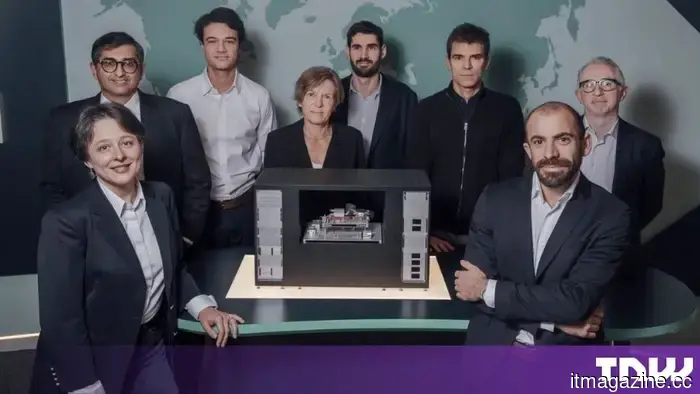 France's Pasqal is now a publicly traded company, raising $360 million and achieving a valuation roughly 100 times its revenue.
The French neutral-atom quantum firm commenced trading on Nasdaq under the ticker PSQL, collecting less capital than the $500 million projected in its filings.
France's Pasqal is now a publicly traded company, raising $360 million and achieving a valuation roughly 100 times its revenue.
The French neutral-atom quantum firm commenced trading on Nasdaq under the ticker PSQL, collecting less capital than the $500 million projected in its filings.
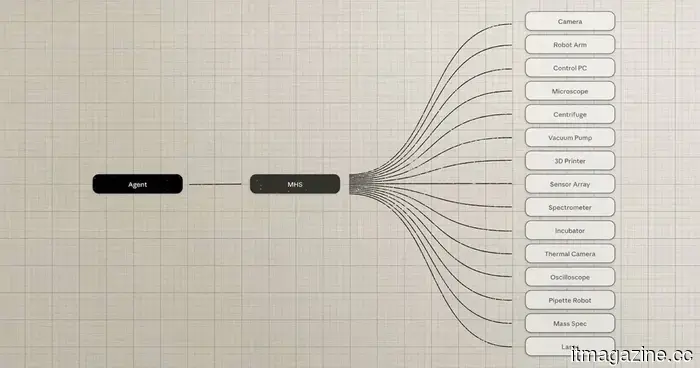 Anthropic introduces a new standard aimed at simplifying connections between AI and machines.
Integrating AI agents with physical hardware has typically required months of tailored programming. Anthropic's new Model Hardware Standard aims to reduce that time to mere minutes.
Anthropic introduces a new standard aimed at simplifying connections between AI and machines.
Integrating AI agents with physical hardware has typically required months of tailored programming. Anthropic's new Model Hardware Standard aims to reduce that time to mere minutes.
 Lambda secures $1 billion in private debt for Nvidia chip agreement.
According to Bloomberg, Lambda secured approximately $1 billion in private debt to finance Nvidia chips that Microsoft will lease. Similarly, Europe's largest neocloud is funded through the same method.
Lambda secures $1 billion in private debt for Nvidia chip agreement.
According to Bloomberg, Lambda secured approximately $1 billion in private debt to finance Nvidia chips that Microsoft will lease. Similarly, Europe's largest neocloud is funded through the same method.
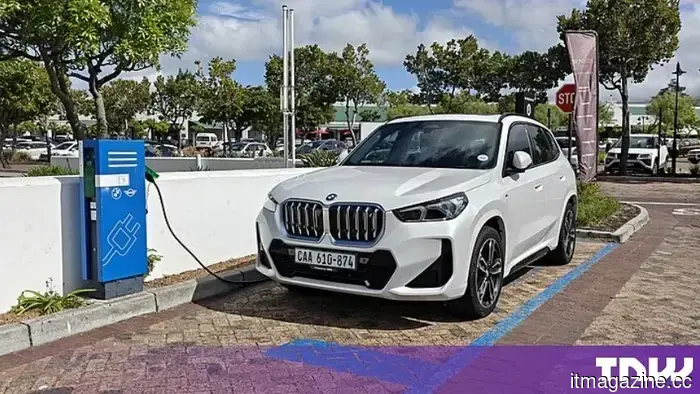 BMW has sold two million electric vehicles, with Europe accounting for seven out of ten of those sold in the last quarter.
BMW has reached the milestone of delivering its two millionth electric vehicle, an i5 produced in Dingolfing, which was delivered in Spain. In the last quarter, Europe accounted for 81,445 out of a total of 116,807 EV sales.
BMW has sold two million electric vehicles, with Europe accounting for seven out of ten of those sold in the last quarter.
BMW has reached the milestone of delivering its two millionth electric vehicle, an i5 produced in Dingolfing, which was delivered in Spain. In the last quarter, Europe accounted for 81,445 out of a total of 116,807 EV sales.
a16z has collected $1.1 billion to invest in the physical infrastructure of AI.
The Machine Age Fund will invest in chips, memory, networking, storage, data centers, robotics, and home AI devices, a16z announced today.