
Anthropic intended to acquire the chip startup MatX for $7 billion but subsequently backed out of the deal.
Anthropic progressed sufficiently in negotiations to acquire the AI chip startup MatX to peg a price at approximately $7 billion before the talks stalled. Reuters reported on Thursday that discussions have shifted from an acquisition to a potential partnership, citing sources familiar with the matter. The reasons for the abandonment of the purchase remain unclear, and Reuters was unable to ascertain what halted the negotiations, relying instead on unnamed sources rather than official filings or announcements.
Anthropic chose not to comment on the discussions when approached by Reuters, and MatX did not respond to the inquiry. TNW has not independently confirmed the report.
MatX is a relatively small company with a distinctive background. Established in 2023 by Reiner Pope, who oversaw AI software development for Google’s tensor processing units, and Mike Gunter, a lead designer for the TPU hardware, the company focuses on building processors specifically designed for large language model training, rather than general computing.
In February, the startup secured a $500 million Series B funding round, led by Jane Street and Leopold Aschenbrenner’s Situational Awareness fund, with participation from Marvell, Spark Capital, and the Collison brothers. It claims that its chip, tailored for particular workloads, can outperform Nvidia’s GPUs significantly in that area, with plans for mass production starting in 2027.
The valuation dynamics are notable. Reuters reported that MatX is now seeking a valuation around $4 billion, which suggests that the previously discussed acquisition price was about 75% higher than the current investment ask from private investors.
This valuation gap reflects the premium a buyer typically pays for control and rapid access. Anthropic has been rapidly building its silicon capabilities, and acquiring a team that has already completed design work is much quicker than forming a new one. Earlier this year, the company confirmed the establishment of an in-house chip team, actively recruiting engineers with experience in shipping silicon, while simultaneously negotiating with Samsung for custom chip manufacturing.
The financial landscape surrounding these activities has reached a scale that makes a $7 billion acquisition appear relatively modest. For instance, Broadcom is seeking over $60 billion in debt to finance chips intended for Anthropic, and AMD has invested $5 billion in the company, alongside a commitment to a two-gigawatt deployment.
The broader market is also moving quickly in this direction. Etched, which operates on similar principles, raised $500 million at a valuation of $5 billion, and a group of accelerator startups collectively secured about $1.6 billion across five funding rounds this year.
Acquirers of Anthropic’s caliber influence the valuations of such companies, which explains why the mentioned $7 billion figure gained attention despite lacking a signed agreement. It established an informal benchmark for future negotiations within the sector.
In this context, a partnership instead of an acquisition does not necessarily signal a retreat. An acquisition would have provided Anthropic with a design team but also presented an integration challenge at a time when it is attempting to deploy chips in data centers. A supply agreement, however, allows for the provision of silicon without complicating organizational structures.
Furthermore, this arrangement allows MatX to remain open to other clients, which is significant for a company whose Series B investors likely did not envision it becoming a department of a single customer. Raising a $4 billion round is more feasible as an independent supplier than as an entity tied to one potential buyer that has already opted out.
What this incident highlights is the ongoing shift in the industry. The leading labs are no longer satisfied being mere customers of Nvidia, and the quickest path to finding an alternative runs through the few teams experienced in designing accelerators.
Neither company has made any public statements since the report, and there is no indication that a partnership has been finalized. For now, the only confirmed fact is that there had been plans for a $7 billion deal, which ultimately did not materialize.
Другие статьи
 Audio-Technica's latest $99 headset prioritizes the two essential features that gamers truly require.
Audio-Technica’s latest gaming headset, the ATH-M20xSTS, priced at $99, offers a straightforward design featuring M20x headphones, a condenser boom microphone, and a wired connection.
Audio-Technica's latest $99 headset prioritizes the two essential features that gamers truly require.
Audio-Technica’s latest gaming headset, the ATH-M20xSTS, priced at $99, offers a straightforward design featuring M20x headphones, a condenser boom microphone, and a wired connection.
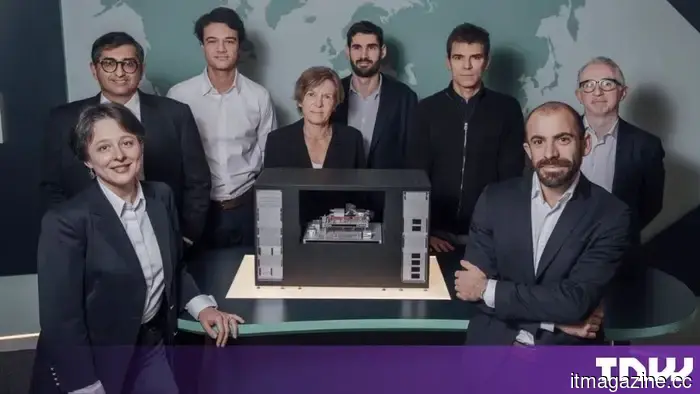 France's Pasqal has gone public, raising $360 million and achieving a valuation approximately 100 times its revenue.
The French neutral-atom quantum company has commenced trading on Nasdaq under the ticker PSQL, raising less capital than the anticipated $500 million outlined in its filings.
France's Pasqal has gone public, raising $360 million and achieving a valuation approximately 100 times its revenue.
The French neutral-atom quantum company has commenced trading on Nasdaq under the ticker PSQL, raising less capital than the anticipated $500 million outlined in its filings.
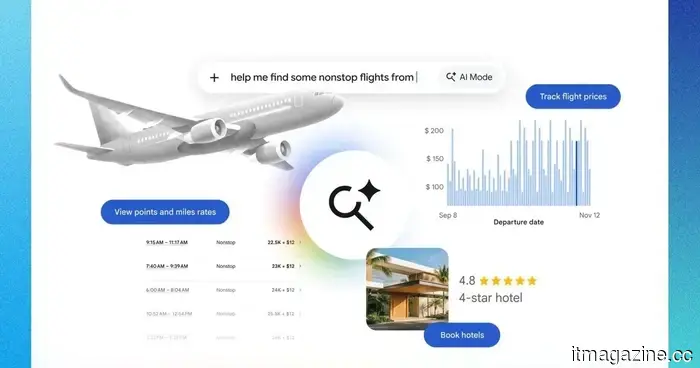 Google AI Mode can now inform you about flight price drops and assist you in booking your hotel.
Google has introduced three new travel features in AI Mode, allowing you to monitor flight prices, compare rewards points, and make hotel reservations, all within a single chat.
Google AI Mode can now inform you about flight price drops and assist you in booking your hotel.
Google has introduced three new travel features in AI Mode, allowing you to monitor flight prices, compare rewards points, and make hotel reservations, all within a single chat.
 Anthropic had intended to acquire the chip startup MatX for $7 billion but ultimately decided to abandon the deal.
According to Reuters, Anthropic was ready to acquire the AI chip startup MatX for approximately $7 billion, before the discussions shifted towards a partnership instead.
Anthropic had intended to acquire the chip startup MatX for $7 billion but ultimately decided to abandon the deal.
According to Reuters, Anthropic was ready to acquire the AI chip startup MatX for approximately $7 billion, before the discussions shifted towards a partnership instead.
 Google is taking action against Android applications that consume excessive memory due to a RAM shortage driven by AI developments.
In response to a worldwide RAM shortage driven by AI needs, Google will implement new memory limits for Android applications beginning in February 2027, along with penalties for those that do not adhere to these standards.
Google is taking action against Android applications that consume excessive memory due to a RAM shortage driven by AI developments.
In response to a worldwide RAM shortage driven by AI needs, Google will implement new memory limits for Android applications beginning in February 2027, along with penalties for those that do not adhere to these standards.
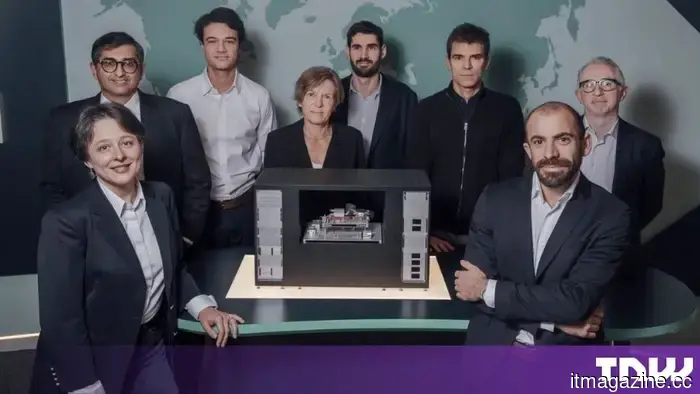 France's Pasqal is now a publicly traded company, raising $360 million and achieving a valuation roughly 100 times its revenue.
The French neutral-atom quantum firm commenced trading on Nasdaq under the ticker PSQL, collecting less capital than the $500 million projected in its filings.
France's Pasqal is now a publicly traded company, raising $360 million and achieving a valuation roughly 100 times its revenue.
The French neutral-atom quantum firm commenced trading on Nasdaq under the ticker PSQL, collecting less capital than the $500 million projected in its filings.
Anthropic intended to acquire the chip startup MatX for $7 billion but subsequently backed out of the deal.
Reuters indicates that Anthropic was set to acquire AI chip startup MatX for approximately $7 billion before the negotiations shifted to a partnership dialogue.