
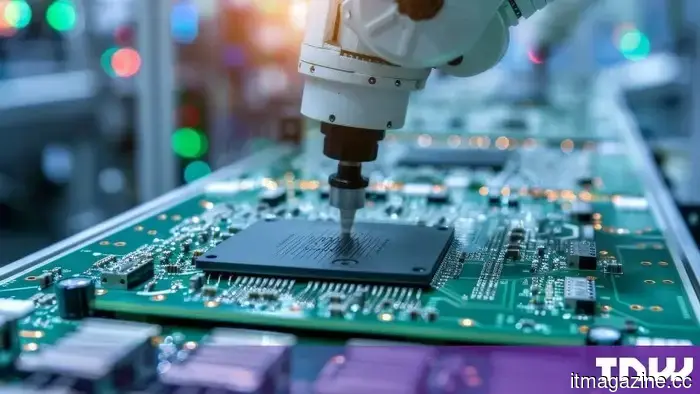
What the semiconductor tariff in the US currently encompasses and what it excludes.
The 25% tariff that the United States implemented on advanced semiconductors in January includes an exemption that prevents it from affecting the AI infrastructure, allowing certain products intended for American data centres to be excluded.
This exemption has always been temporary, and the Commerce Department report that will determine its future was expected on July 1, amidst a policy landscape that has already seen the introduction of a draft ban on Chinese equipment in data centres. However, the report has not yet been released. Until it is, operators planning American capacity are working based on assumptions rather than established regulations.
The tariff itself is more limited than the headline figure might imply. It specifically targets three tariff subcategories related to data processing machines and their components, applying only to logic integrated circuits that meet defined performance and memory bandwidth criteria. This precise targeting aims to impact AI accelerators without affecting laptops.
Seven end-use categories accompany the tariff, which include repairs, research, startups, public sector applications, consumer electronics, civil industrial uses, and data centres. The data centre exemption is the most costly and is currently under review.
The proclamation also retained the authority to extend tariffs substantially. It explicitly considers tariffs on semiconductors, semiconductor manufacturing equipment, and their related products, which could include servers, not just the chips within them.
For an operator, the distinction between these two scenarios is significant. A tariff solely on accelerators is burdensome, but one that applies to assembled servers alters the calculus of where facilities are established.
A June analysis by the Computer and Communications Industry Association calculated the economic impact of removing the carve-out. Applying the 25% tariff to data centres could cost the American economy around $90 billion annually and endanger approximately 243,000 jobs.
The calculation is straightforward, which is both its strength and its drawback. Trevor Wagener, the association's chief economist, calculates the effective tax rate by multiplying the portion of data centre spending allocated to computing equipment (78%) by the proportion of that equipment that is imported (80%), and then by the tariff rate. This results in a 15.6% effective tax on constructing a data centre in the U.S. The study subsequently applies a standard economic multiplier for indirect effects and translates the output gap into job losses, using conventional methodologies.
The figure often cited is related to capacity. Approximately 20% of projected American AI data centre capacity from 2026 to 2030, amounting to roughly $450 billion in capital expenditure, could be canceled, delayed beyond 2030, or moved overseas.
The assumption that 80% of American data centre computing resources are imported is a crucial factor in this calculation. This estimate is justifiable based on where advanced packaging and assembly occur, but it is still an approximation rather than an exact figure from customs data.
The CCIA is a trade association for the technology industry, representing firms that would be affected by the tariff. Therefore, the figure presented is more of an advocacy statement with a corresponding methodology than an unbiased evaluation.
The policy tension it aims to address is quite tangible. Tariffs are intended to encourage semiconductor manufacturing to return to the U.S., yet the fabrication plants that could achieve this goal take years to complete, while data centres are currently being constructed.
Imposing taxes on imports in the meantime raises the cost of what the administration also claims to desire—a large-scale American AI infrastructure. There is no scenario in which domestic supply will become available before the ongoing project requires the chips, and Taiwan continues to be the central hub for that supply, irrespective of any proclamations made.
A tariff offset program for businesses investing in American semiconductor manufacturing was referenced in the January proclamation, but specifics on this plan have yet to emerge.
At the same time, the competitive environment has not stalled during the review. China has outlined a $295 billion data centre initiative explicitly designed to exclude Nvidia, reminding us that the costs associated with American capacity are not being determined in a vacuum.
Other articles
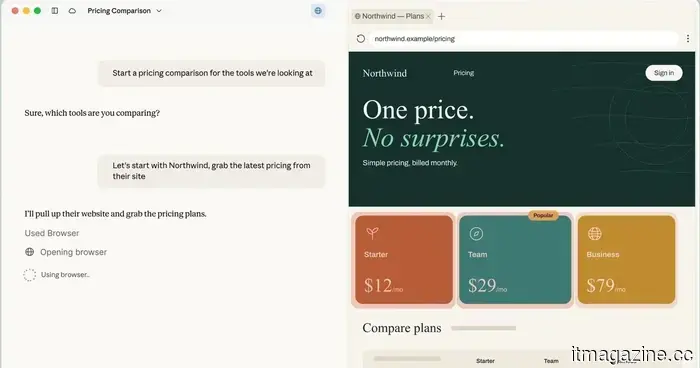 Claude Cowork has introduced its own browser that doesn’t interfere with your tabs, bookmarks, or saved passwords.
Claude Cowork now features an integrated browser that is distinct from your personal Chrome tabs, bookmarks, and passwords. This new built-in browser does not access your logins unless you explicitly decide to share them.
Claude Cowork has introduced its own browser that doesn’t interfere with your tabs, bookmarks, or saved passwords.
Claude Cowork now features an integrated browser that is distinct from your personal Chrome tabs, bookmarks, and passwords. This new built-in browser does not access your logins unless you explicitly decide to share them.
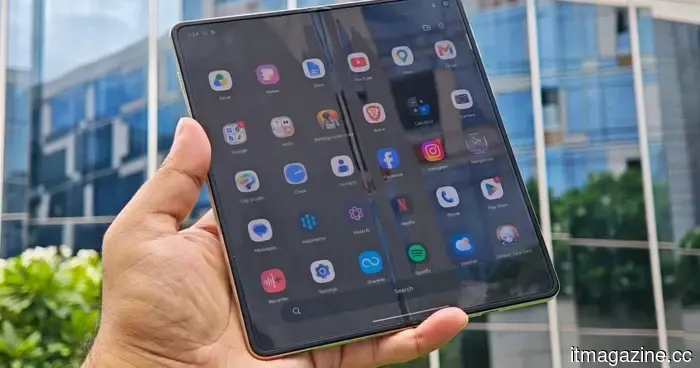 I really liked the Motorola Razr Fold, but Android 17 could significantly improve its most vulnerable aspect.
Motorola has outlined the features of its Android 17 update, which includes an updated interface, enhanced notifications, new sharing options, improved security, and compatibility with numerous devices.
I really liked the Motorola Razr Fold, but Android 17 could significantly improve its most vulnerable aspect.
Motorola has outlined the features of its Android 17 update, which includes an updated interface, enhanced notifications, new sharing options, improved security, and compatibility with numerous devices.
 Apple and Samsung are the top contenders in the market for the best-selling smartphones, with the iPhone 17 at the forefront.
In the second quarter of 2026, the iPhone 17 led global smartphone sales with a market share of 6%, while Samsung's Galaxy S26 Ultra emerged as the top-selling Android phone.
Apple and Samsung are the top contenders in the market for the best-selling smartphones, with the iPhone 17 at the forefront.
In the second quarter of 2026, the iPhone 17 led global smartphone sales with a market share of 6%, while Samsung's Galaxy S26 Ultra emerged as the top-selling Android phone.
 Cyberpunk 2077 is providing a significant enhancement to Samsung's glasses-free 3D gaming monitor.
Cyberpunk 2077 is set to receive exclusive support for Samsung’s Odyssey 3D monitor, providing the company with a significant platform to demonstrate that glasses-free 3D gaming can transcend being a mere novelty.
Cyberpunk 2077 is providing a significant enhancement to Samsung's glasses-free 3D gaming monitor.
Cyberpunk 2077 is set to receive exclusive support for Samsung’s Odyssey 3D monitor, providing the company with a significant platform to demonstrate that glasses-free 3D gaming can transcend being a mere novelty.
 Huawei intends to expand its AI pharmaceutical collaborations, primarily with drug manufacturers in China.
The president of Huawei's healthcare division mentioned that further collaborations with pharmaceutical companies are on the horizon, primarily focusing on partnerships with domestic Chinese drug manufacturers.
Huawei intends to expand its AI pharmaceutical collaborations, primarily with drug manufacturers in China.
The president of Huawei's healthcare division mentioned that further collaborations with pharmaceutical companies are on the horizon, primarily focusing on partnerships with domestic Chinese drug manufacturers.
 PlayStation Plus is set to include Sniper Elite: Resistance, along with a JRPG that deserves your attention.
PlayStation Plus will feature Sniper Elite: Resistance, Chained Echoes, MLB The Show 26, and Wobbly Life as its Monthly Games for September.
PlayStation Plus is set to include Sniper Elite: Resistance, along with a JRPG that deserves your attention.
PlayStation Plus will feature Sniper Elite: Resistance, Chained Echoes, MLB The Show 26, and Wobbly Life as its Monthly Games for September.
What the semiconductor tariff in the US currently encompasses and what it excludes.
A carve-out protects US data centers from the 25% tariffs on semiconductors. The review that might eliminate this exemption was expected on July 1, but it has yet to be released.