
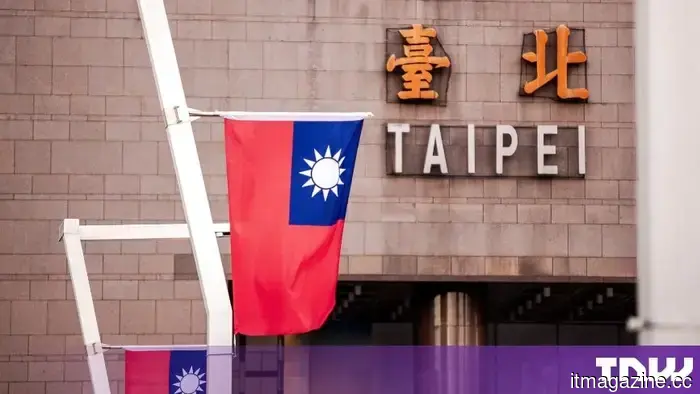
In Taiwan, nine individuals have been charged concerning the export of over 130 Nvidia B300 servers intended for China.
Taiwanese prosecutors have indicted nine individuals for the alleged illegal export of high-end AI servers to China, including an employee from Nvidia’s Taiwan branch and two from Super Micro. These charges represent the initial outcomes of a lengthy investigation that has already resulted in arrests related to server smuggling and has implicated Nvidia itself.
According to prosecutors, the alleged scheme involved the creation of false documentation indicating that 130 Nvidia B300 servers would remain in Taiwan, when the actual intent was to sell them to Chinese customers. Of these servers, 74 successfully escaped, traveling through China, Indonesia, Japan, and Hong Kong before reaching their buyers. Taiwanese customs intercepted the remaining 56, which had been labeled for Japan.
Eight of the nine individuals face charges related to breach of trust and document forgery, while the ninth is charged with separate offenses concerning an alleged embezzlement from a distributor, indicating that prosecutors believe there is an element of standard fraud in addition to the export violations.
Prosecutors characterized the arrangement as one where the individuals “colluded at various levels for enormous profit, illegally exporting high-end servers.” The defendants have not been publicly named, and no financial value has been assigned to the shipments.
The B300 belongs to a category of hardware that US export controls aim to keep out of China. Restrictions on Nvidia's advanced accelerators have mandated licenses for shipments to Chinese destinations since 2022, and the transshipment routes identified in this case have been under surveillance by enforcement agencies for years.
Japan is notably significant in this context, supporting previous suspicions that Nvidia chips were being moved to China via Japan. The 56 intercepted units were indeed declared for that destination.
Importantly, the case does not allege any technical violations. There are no claims of hacking, diverted manufacturing, or counterfeit hardware; the accusations are centered on false documentation indicating one destination while the goods were headed to another, which is typical for export control cases.
Neither Nvidia nor Super Micro has been charged as corporate entities, and both have consistently maintained that the actions involved individuals rather than company policy. Super Micro acknowledged earlier in the investigation that two staff members from Taiwan had been detained, and its Taipei office was searched as the probe expanded.
The financial incentives behind the smuggling are clear. B300 servers have been sold in China at prices approximately double those in the US, creating a profit margin significant enough to attract individuals with access to legitimate supply chains and the necessary documentation.
Nvidia has publicly downplayed the strategic value of this trade, with Jensen Huang stating that smuggled data centers are ineffective as they cannot be serviced, updated, or supported. Although this assessment may hold true for large data centers, 74 servers is a number that a determined buyer could maintain without official assistance.
Taiwan is also tightening its export controls in conjunction with Washington, adding Huawei and SMIC to its restrictions and pursuing legal action domestically rather than relying solely on US enforcement. This indictment reflects that shift.
For Taiwan, this case is as much about its own international reputation as it is about adhering to American regulations. The island is a key player in the advanced computing supply chain and has a vested interest in ensuring that goods transiting through it do not end up leaking to China, which is the most likely destination for these products.
Overall, the enforcement focus is shifting from companies to the individuals within them. Super Micro's co-founder has been separately charged with server smuggling, and a former Google engineer's conviction for stealing AI trade secrets is currently under appeal, despite espionage charges being dismissed.
The indictments are now set to go before the courts, where the defendants will have the chance to challenge the charges. Prosecutors have not indicated whether the investigation has concluded or if additional charges may be forthcoming.
Other articles
 A disclosure reveals that Trump purchased shares in SpaceX two weeks following the IPO.
A financial disclosure reveals that Trump purchased up to $50,000 worth of SpaceX stock on June 23, just two weeks following the record IPO.
A disclosure reveals that Trump purchased shares in SpaceX two weeks following the IPO.
A financial disclosure reveals that Trump purchased up to $50,000 worth of SpaceX stock on June 23, just two weeks following the record IPO.
 Sam Altman indicates that AI has yet to experience its transformative moment akin to that of the iPhone.
Sam Altman states that the industry has been overly optimistic regarding AI timelines, as the economy has much more inertia than he had anticipated.
Sam Altman indicates that AI has yet to experience its transformative moment akin to that of the iPhone.
Sam Altman states that the industry has been overly optimistic regarding AI timelines, as the economy has much more inertia than he had anticipated.
 Nine individuals have been indicted in Taiwan concerning 130 Nvidia B300 servers that were destined for China.
Prosecutors in Taiwan have indicted nine individuals, including employees from Nvidia and Super Micro, for purportedly unlawfully exporting B300 servers to China.
Nine individuals have been indicted in Taiwan concerning 130 Nvidia B300 servers that were destined for China.
Prosecutors in Taiwan have indicted nine individuals, including employees from Nvidia and Super Micro, for purportedly unlawfully exporting B300 servers to China.
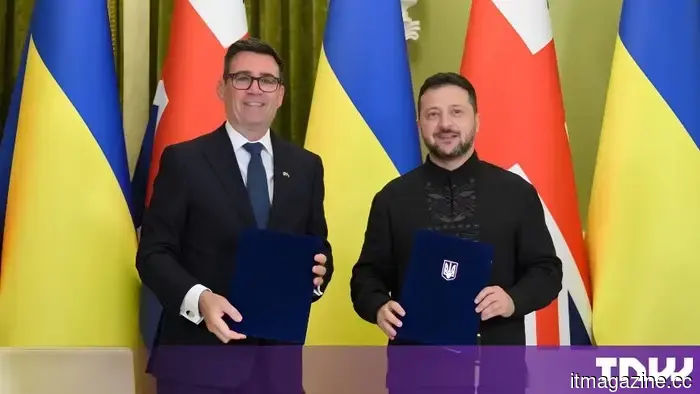 The UK and Ukraine have entered into a declaration regarding military capabilities enhanced by AI.
Volodymyr Zelenskyy and Andy Burnham signed a joint statement in Kyiv regarding a partnership on AI, which includes aspects of AI-enhanced military capabilities.
The UK and Ukraine have entered into a declaration regarding military capabilities enhanced by AI.
Volodymyr Zelenskyy and Andy Burnham signed a joint statement in Kyiv regarding a partnership on AI, which includes aspects of AI-enhanced military capabilities.
 MH Ventures and Mapleblock Capital jointly lead a $3 million investment in Oro to advance agentic finance.
Oro has secured $3 million to transform straightforward financial guidance into non-custodial, multi-step transactions. Boasting over 350,000 active users in 80 languages, the platform aims for agentic DeFi execution, especially given that wallet breaches resulted in losses of $444 million in the first half of 2026.
MH Ventures and Mapleblock Capital jointly lead a $3 million investment in Oro to advance agentic finance.
Oro has secured $3 million to transform straightforward financial guidance into non-custodial, multi-step transactions. Boasting over 350,000 active users in 80 languages, the platform aims for agentic DeFi execution, especially given that wallet breaches resulted in losses of $444 million in the first half of 2026.
 Apple has a Mac mini prepared, and it could be Tim Cook's final product.
According to Bloomberg, Apple is set to launch a new Mac mini within a few days, AirPods 5 in September, and an OLED iPad mini in October.
Apple has a Mac mini prepared, and it could be Tim Cook's final product.
According to Bloomberg, Apple is set to launch a new Mac mini within a few days, AirPods 5 in September, and an OLED iPad mini in October.
In Taiwan, nine individuals have been charged concerning the export of over 130 Nvidia B300 servers intended for China.
Prosecutors in Taiwan have accused nine individuals, including employees from Nvidia and Super Micro, of the unlawful export of B300 servers to China.