
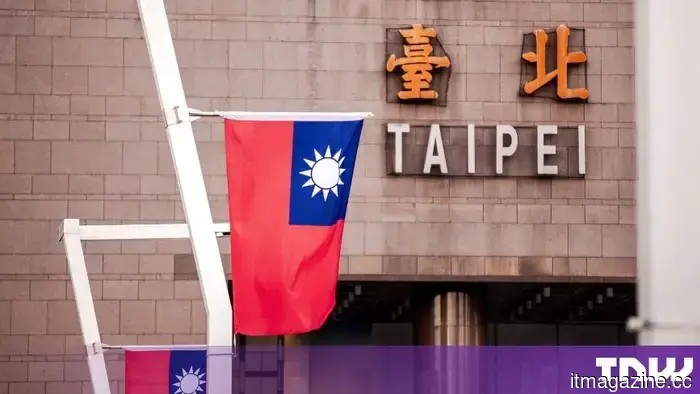
Nine individuals have been indicted in Taiwan concerning 130 Nvidia B300 servers that were destined for China.
Taiwanese prosecutors have charged nine individuals in connection with the alleged unauthorized export of high-end AI servers to China, including an employee from Nvidia's Taiwan branch and two from Super Micro. These charges mark the initial results of a long-running investigation that has already seen arrests related to server smuggling and has even delved into Nvidia itself.
Prosecutors describe the mechanism involved as documentary in nature rather than technical. The accused are alleged to have created fraudulent documents claiming that 130 Nvidia B300 servers would stay in Taiwan, while their actual intent was to transfer them to customers in China. Of these, 74 servers successfully made it out, traveling through China, Indonesia, Japan, and Hong Kong before reaching their final buyers. Taiwanese customs managed to seize the remaining 56 servers, which had been designated for Japan.
Eight of the nine individuals face charges of breach of trust and forgery, while the ninth is facing distinct accusations related to the alleged embezzlement of funds from a distributor, indicating that prosecutors see elements of typical fraud along with the export violations. Prosecutors characterized the scheme as one in which individuals "colluded at various levels for substantial profits, illegally exporting high-end servers." The names of the defendants have not been publicly disclosed, and no estimated value has been assigned to the shipments.
The B300 belongs to the category of hardware that US export controls aim to prevent from reaching China. Since 2022, regulations surrounding Nvidia's advanced accelerators have mandated licenses for shipments to China, and the transshipment routes identified in this case have been closely monitored by enforcement agencies for years.
Japan is notably mentioned in this context, corroborating previous suspicions. Taiwanese authorities had previously believed that Nvidia chips were being funneled to China via Japan, and the 56 intercepted units were reported to be headed to that country.
Importantly, the case does not allege any technical violations; there are no claims of hacking, illicit manufacturing, or counterfeit hardware—only the use of documents that misrepresented the intended destination of goods, which is typical in many export control cases.
Neither Nvidia nor Super Micro faces charges as corporations. Both companies have consistently described the situation as the actions of individuals rather than a reflection of corporate policy. Earlier in the investigation, Super Micro acknowledged that two staff members in Taiwan had been detained, and its Taipei office was searched as the inquiry expanded.
The financial incentives for the smuggling activities are clear. B300 servers have been selling in China for approximately double their US price, creating a significant profit margin that could entice those with access to legitimate supply chains and the required documentation to participate.
Nvidia has publicly downplayed the strategic significance of this trade, with Jensen Huang asserting that smuggled data centers are ultimately unviable because they cannot be maintained, updated, or supported. While this may hold true for large-scale data centers, the 74 servers involved are a quantity that a determined buyer could manage without official assistance.
Taiwan has been tightening its own regulatory framework in conjunction with the US, adding companies like Huawei and SMIC to its export control list, and pursuing legal action domestically instead of relying solely on American enforcement. This indictment reflects that shift.
For Taiwan, the case is equally about asserting its own standing alongside adhering to American regulations. As a key player in the advanced computing supply chain, it has a vested interest in proving that goods passing through its territory do not leak, especially to the country most likely to be their final destination.
The broader trend indicates a shift in enforcement focus from companies to the individuals working within them. Separately, Super Micro's co-founder has been charged with server smuggling, and a former Google engineer’s conviction for stealing AI trade secrets is currently on appeal, even as espionage charges have been dismissed.
The indictments will now proceed to court, allowing the defendants the chance to contest the allegations. Prosecutors have not clarified whether the investigation has concluded or if additional charges may be forthcoming.
Other articles
 Southeast Asia intends to develop four times the data center capacity that it currently operates.
According to Arizton, investment in data centres in Southeast Asia is projected to exceed $35.08 billion by 2031, more than doubling from previous figures, with Malaysia at the forefront of a 6GW pipeline.
Southeast Asia intends to develop four times the data center capacity that it currently operates.
According to Arizton, investment in data centres in Southeast Asia is projected to exceed $35.08 billion by 2031, more than doubling from previous figures, with Malaysia at the forefront of a 6GW pipeline.
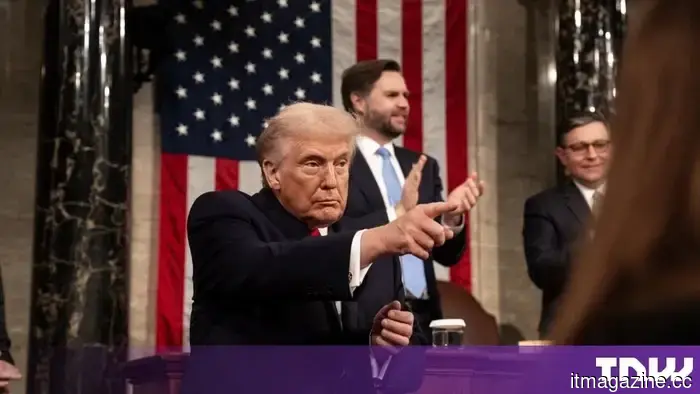 A disclosure reveals that Trump purchased shares in SpaceX two weeks following the IPO.
A financial disclosure reveals that Trump purchased up to $50,000 worth of SpaceX stock on June 23, just two weeks following the record IPO.
A disclosure reveals that Trump purchased shares in SpaceX two weeks following the IPO.
A financial disclosure reveals that Trump purchased up to $50,000 worth of SpaceX stock on June 23, just two weeks following the record IPO.
 Lambda is seeking to raise as much as $3 billion prior to its initial public offering, just a few months after securing $917 million in loans for semiconductor production.
Lambda, supported by Nvidia, is negotiating for up to $3 billion in pre-IPO financing, aiming for a valuation of $12 billion or higher, in preparation for a listing next year.
Lambda is seeking to raise as much as $3 billion prior to its initial public offering, just a few months after securing $917 million in loans for semiconductor production.
Lambda, supported by Nvidia, is negotiating for up to $3 billion in pre-IPO financing, aiming for a valuation of $12 billion or higher, in preparation for a listing next year.
 Meta recruited Luke Metz seven months after he was re-employed by OpenAI.
According to Axios, Luke Metz has joined Meta Superintelligence Labs and will report to Alexandr Wang. This marks his third lab in just eight months.
Meta recruited Luke Metz seven months after he was re-employed by OpenAI.
According to Axios, Luke Metz has joined Meta Superintelligence Labs and will report to Alexandr Wang. This marks his third lab in just eight months.
 Following a €1.2 billion funding, NEURA has acquired its second company within eleven days.
NEURA Robotics is purchasing Adlatus Robotics to integrate its Neuraverse platform into autonomous cleaning machines, according to the German company.
Following a €1.2 billion funding, NEURA has acquired its second company within eleven days.
NEURA Robotics is purchasing Adlatus Robotics to integrate its Neuraverse platform into autonomous cleaning machines, according to the German company.
 Apple has a Mac mini prepared, and it could be Tim Cook's final product.
According to Bloomberg, Apple is set to launch a new Mac mini within a few days, AirPods 5 in September, and an OLED iPad mini in October.
Apple has a Mac mini prepared, and it could be Tim Cook's final product.
According to Bloomberg, Apple is set to launch a new Mac mini within a few days, AirPods 5 in September, and an OLED iPad mini in October.
Nine individuals have been indicted in Taiwan concerning 130 Nvidia B300 servers that were destined for China.
Prosecutors in Taiwan have indicted nine individuals, including employees from Nvidia and Super Micro, for purportedly unlawfully exporting B300 servers to China.