
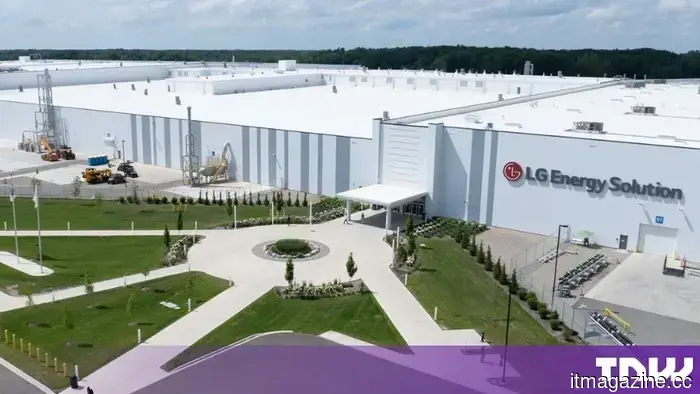
The firm that recently launched the latest battery factory in America states that solid-state vehicles are still ten years from realization.
LG Energy Solution highlights that the main challenge in solid-state batteries is the production of large cells on a large scale, and anticipates that this technology will reach smartphones approximately ten years before it is available in electric vehicles. Europe's first solid-state gigafactory began construction in France in February.
The company that recently opened the newest battery plant in America believes that solid-state cells are still not near implementation in vehicles. Robert Lee, the president of LG Energy Solution North America, stated at a media roundtable at their new factory in Lansing, “The challenge with solid-state is large-scale manufacturing.”
Lee pointed out that small formats achieve good energy density, but emphasized that “when it comes to producing very large cells, many companies are facing difficulties.” He asserted that solid-state technology for smartphones will likely arrive “probably a decade before it’s seen in EVs,” with specialized applications likely appearing before either cars or grid storage systems.
In contrast, Europe is proceeding with a different perspective. ProLogium commenced construction in February on a 12 GWh solid-state manufacturing facility in Dunkirk, and a Dutch startup received public funding to establish its own factory.
European automakers are more advanced in testing than in actual production. Mercedes tested a prototype EQS for nearly 750 miles using cells from Factorial Energy, BMW incorporated a Solid Power battery in an i7, and Stellantis is evaluating a battery pack in a Dodge Charger Daytona.
Two out of those three prototypes are semi-solid rather than fully solid. This distinction highlights the gap Lee refers to, which is reflected in the projected launch timelines within this sector.
China appears to be advancing more rapidly on paper. Companies such as BYD, CATL, and Geely are aiming for pilot production of solid-state batteries by 2027, with broader deployment anticipated by the decade's end.
In response, LG focuses on enhancing existing technologies. The company is working with General Motors to develop lithium manganese-rich batteries that require significantly less nickel and cobalt, promising over 400 miles of range by 2028 at a price comparable to less expensive lithium iron phosphate batteries.
Additionally, LG is diversifying its chemistry options. The company is preparing 46-series cylindrical cells at its Arizona facility and is conducting a sodium-ion pilot for storage, in a market where CATL was the first to commercialize sodium technology.
For Europe, the question of timing is more critical than the technology itself. The continent lost its own leading company when Northvolt failed, and the factories currently being established are owned by Taiwanese, Korean, and Chinese firms.
Lee's cautious outlook warrants careful consideration. If large-format solid-state cells are still a decade away, Europe's path back into battery manufacturing depends on incremental improvements in lithium-ion technology, which it is currently unable to produce at scale.
Другие статьи
 Betting companies have been removed from Premier League jerseys. Enterprise software has taken their place.
Premier League teams have removed betting brands from the front of their jerseys, and ClickHouse has replaced Fulham’s sponsorship. Eight clubs required new sponsors simultaneously.
 Nintendo has removed an additional 400 Switch emulator repositories from GitHub.
Nintendo has allegedly targeted over 400 Switch emulator repositories on GitHub in one day as part of its ongoing aggressive anti-piracy efforts.
 A complimentary AI model is gaining popularity among developers, yet no one is aware of the servers it operates on.
Ox Alpha appeared on OpenRouter as an anonymous stealth model featuring a million-token context and no associated cost. The unnamed provider keeps all prompts.
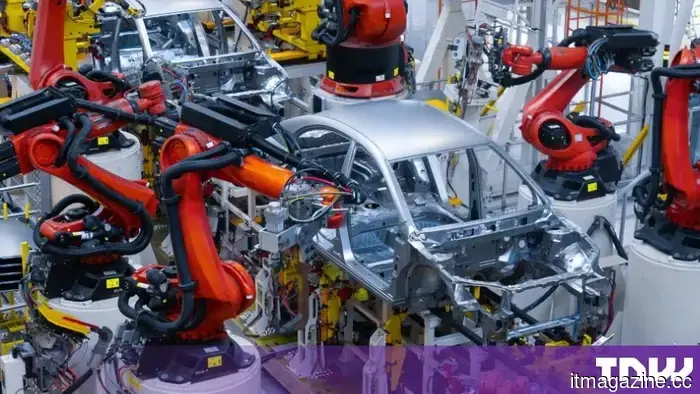 AI data centers are acquiring the capacitors that automakers require.
Chinese automakers report that there is a 20-30% shortage of circuit boards and capacitors, with prices more than tripling due to demand from AI data centers.
 Three overlooked TV series on Peacock that you should check out this weekend (August 21-23)
Seeking something to stream this weekend? Consider adding these three TV series on Peacock to your watchlist.
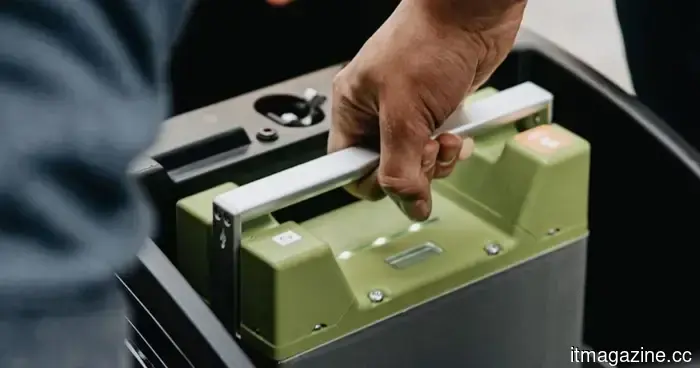 Innovative battery technology has the potential to enhance the safety of home solar batteries and extend their lifespan for many years.
A revolutionary zinc-iodine battery has the potential to extend home solar storage lifespan to decades.
The firm that recently launched the latest battery factory in America states that solid-state vehicles are still ten years from realization.
LG Energy Solution states that developing large-format solid-state cells is still challenging and anticipates that the technology will appear in smartphones well before it does in electric vehicles.