
The absent $20,000 electric vehicle: The reason small, budget-friendly electric cars fail to succeed on North American highways.
In the last 24 hours, the Chinese market witnessed the launch of three sedans priced significantly below $20,000, namely from Volkswagen, Hyundai, and MG. In comparison, hatchbacks were even cheaper. Shifting focus to another continent, if you stroll through the historic neighborhoods of Paris, Milan, or Amsterdam, you'll soon recognize that you are experiencing a “minicar safari.” The narrow, ancient streets are filled with a variety of electric micro-vehicles.
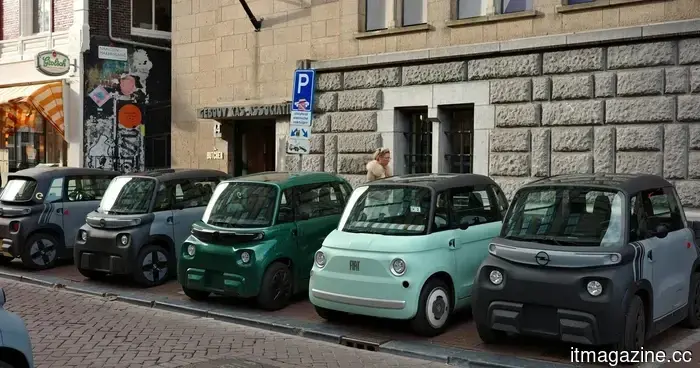
These small battery-powered vehicles, ranging from the $6,600 Citroën Ami to the nostalgic Microlino, navigate traffic swiftly and easily fit into tight parallel parking spaces that would be impractical for a standard sedan or even a full-sized SUV. There is also the G-Wiz, a small electric vehicle manufactured in India that found markets in the UK and India. While it was dubbed a “Death Trap” in market reviews, it gained popularity globally, although it never reached North America.
Moving to China, the largest car market worldwide, affordable electric vehicles are not just a niche urban trend—they are a dominant force in mainstream sales. According to data from the International Energy Agency (IEA), 70% of battery electric cars sold in China are priced lower than the average conventional internal combustion vehicle. Entry-level models like the Geely Geome Xingyuan (starting at around $9,700) and the compact BYD Seagull (starting at about $10,000) frequently lead monthly sales, overshadowing luxury models.
Geely sold nearly 500,000 units of this sub-$10K car in China last year.
Indeed, the $10,000 to $20,000 segment represents nearly half of China’s electric vehicle market. Companies such as Dongfeng, BYD, and Wuling have demonstrated that small cars are integral to the mass-market EV revolution. Consequently, these vehicles are beginning to enter the European markets as well, while the U.S. remains a notable exception.
In North America, dealership lots are devoid of these affordable sub-$20,000 options. The lowest-priced new electric vehicles in the United States and Canada are around $30,000, with the average transaction price for new EVs exceeding $30,000. The most affordable small EV available in North America is the Chevrolet Bolt, starting at approximately $29,900. One could also argue that the Slate pickup is the cheapest pre-order option currently, at $25,000 or $24,950 to be precise, but deliveries are set to commence later this year in North America.
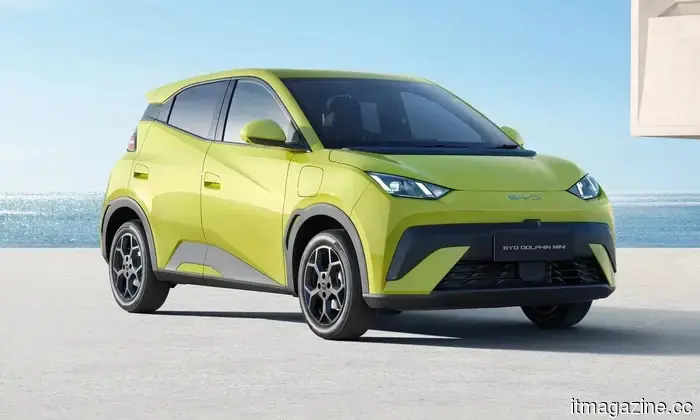
Returning to the Bolt for comparison, the BYD Dolphin Mini, which starts at over $10,000, is equipped with a LiDAR sensor and can achieve 250 miles on a single charge. Why can’t North American consumers access a straightforward, budget-friendly electric city car? The answer lies in a combination of strict regulatory classifications, a long-standing culture of inexpensive fuel, and an escalating safety competition on American roads.
The regulatory barrier
A key reason why small foreign EVs cannot be imported is the significant difference in vehicle regulation classifications between regions. In Europe, authorities have acknowledged for decades that lightweight urban vehicles need a specific regulatory framework. EU regulations created two particular categories for “quadricycles,” which are speed-limited (usually to 28 mph or 56 mph), light in weight, and adhere to simpler safety standards compared to full-sized cars. This exemption from rigorous crash-test requirements enables manufacturers to offer these vehicles at low prices. In many European cities, this category provides clean transportation options for city residents, delivery services, and operators as young as 14.
Conversely, the U.S. National Highway Traffic Safety Administration (NHTSA) enforces a stringent regulatory framework. As noted by transportation analyst David Zipper in Bloomberg CityLab, NHTSA classifies four-wheeled vehicles in a rigid binary: a vehicle must either meet comprehensive Federal Motor Vehicle Safety Standards (FMVSS) for full-sized cars or be restricted to a maximum speed of 25 mph as a Low-Speed Vehicle (LSV).
NHTSA has previously turned down proposals to create a “medium-speed vehicle” category (which would include vehicles capable of speeds up to 35 mph), effectively barring European quadricycles and budget-friendly Asian city cars from legally operating on U.S. roads. To modify an overseas micro-car or a sub-$10,000 hatchback to meet U.S. crash standards, manufacturers would need to incorporate heavy structural steel, advanced bumper systems, and complex airbag mechanisms. Such engineering changes would raise the cost significantly, pushing the retail price close to $25,000 or $30,000.
Cheap fuel and decades of “car bloat”
Even if regulatory challenges were eliminated, micro-cars would still face difficulties due to the physical layout of North American roads. As noted by Steve Greenfield of Automotive Ventures, a history of low fuel taxes has profoundly influenced American infrastructure. Gas prices in

Other articles
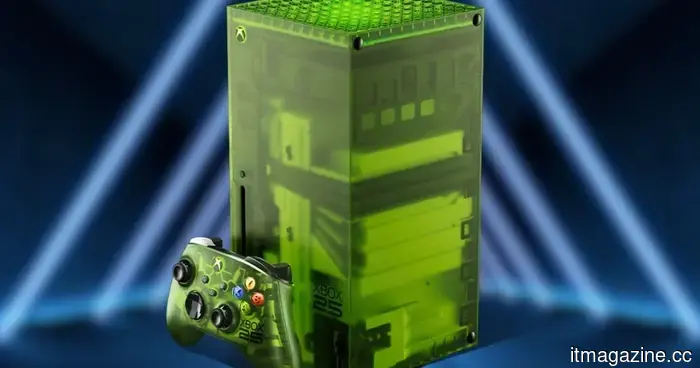 The Xbox console for its 25th anniversary from Microsoft might be priced at $100 above the 1TB Series X model.
The see-through, vintage-inspired Xbox Series X25 might be released right in time for Black Friday this November.
The Xbox console for its 25th anniversary from Microsoft might be priced at $100 above the 1TB Series X model.
The see-through, vintage-inspired Xbox Series X25 might be released right in time for Black Friday this November.
 The Reasons AI Alone Cannot Create Memorable Marketing Campaigns
Marketing plays a crucial role in the expansion of a business, yet initiating a campaign can be an expensive undertaking. Artificial intelligence (AI) tools are helping to reduce this barrier, making marketing more affordable and accessible; however, they have also complicated the process of standing out. As brands depend on AI for large-scale content creation, they must […]
The Reasons AI Alone Cannot Create Memorable Marketing Campaigns
Marketing plays a crucial role in the expansion of a business, yet initiating a campaign can be an expensive undertaking. Artificial intelligence (AI) tools are helping to reduce this barrier, making marketing more affordable and accessible; however, they have also complicated the process of standing out. As brands depend on AI for large-scale content creation, they must […]
 EXCLUSIVE: The director of It Ends discusses the six-year journey behind Neon’s existential horror film.
Director Alex Ullom of It Ends talks about the film's enigmas, its inspiration, and the six-year production process, while hinting at his upcoming, even more intense project, 4 X 4: The Event.
EXCLUSIVE: The director of It Ends discusses the six-year journey behind Neon’s existential horror film.
Director Alex Ullom of It Ends talks about the film's enigmas, its inspiration, and the six-year production process, while hinting at his upcoming, even more intense project, 4 X 4: The Event.
 Google reports that Gemma has surpassed one billion downloads.
According to Google, Gemma has achieved over a billion downloads and has 100,000 variants. A Google engineer noted that this count does not include integrations with Android and Chrome.
Google reports that Gemma has surpassed one billion downloads.
According to Google, Gemma has achieved over a billion downloads and has 100,000 variants. A Google engineer noted that this count does not include integrations with Android and Chrome.
 Meta introduced Pocket in the United States, and the app from which it originated ceased operations on the same day.
Meta's Pocket app has launched nationwide in the US. It was developed by the Gizmo team that Meta brought on board in March, and the original Gizmo app was discontinued on the same day.
Meta introduced Pocket in the United States, and the app from which it originated ceased operations on the same day.
Meta's Pocket app has launched nationwide in the US. It was developed by the Gizmo team that Meta brought on board in March, and the original Gizmo app was discontinued on the same day.
 Anthropic will provide defenders with the output generated by its most powerful model, but will not disclose the model itself.
Anthropic is integrating Mythos 5 into Claude Security and partner tools, while also providing $35 million in credits for open-source patching, just weeks ahead of the EU regulations taking effect.
Anthropic will provide defenders with the output generated by its most powerful model, but will not disclose the model itself.
Anthropic is integrating Mythos 5 into Claude Security and partner tools, while also providing $35 million in credits for open-source patching, just weeks ahead of the EU regulations taking effect.
The absent $20,000 electric vehicle: The reason small, budget-friendly electric cars fail to succeed on North American highways.
In Europe and China, inexpensive electric cars are flourishing, while in North America, regulations, road conditions, and a preference for larger vehicles have caused affordable EVs to lag behind.