
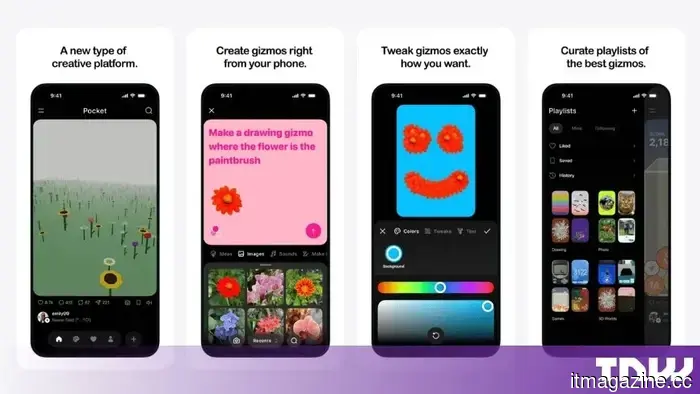
Meta introduced Pocket in the United States, and the app from which it originated ceased operations on the same day.
Meta has introduced Pocket across the United States, coinciding with the shutdown of the app it is based on. The Pocket app had been quietly tested in Brazil since July and is now accessible to everyone in the US.
Pocket allows users to enter a prompt and receive back a small interactive item referred to as a gizmo by Meta. These gizmos can be published to a scrollable feed where others can engage with, save, repost, or remix them. The company describes it on its website as “a new creative platform to make and share gizmos.” The app is free and available on both iOS and Android.
It replaces an app called Gizmo, which was developed by Atma Sciences, a company founded by former engineers from Snapchat. Instead of acquiring that company, Meta hired the team and obtained a non-exclusive license to the technology, as reported by Business Insider, which first reported on the move in March.
Business Insider, which has experienced both apps, claims Pocket and Gizmo offer “pretty much identical app experiences.” The terminology has also been consistent, as Gizmo referred to its creations as gizmos, just like Pocket does.
Atma announced on Thursday that it is shutting down, stating, “Earlier this year, our entire team joined Meta,” and has been developing a new app. Josh Siegel, who headed the project, described the closure as bittersweet, calling it “a labor of love by so many people for the last couple of years,” while expressing excitement about Pocket.
The approach to acquiring talent and licensing technology has been seen before. For instance, TNW reported that Nvidia agreed to pay Poolside $6 billion for a license and jobs for 109 employees, emphasizing that it was not an acquisition. Meta's approach was quicker and less expensive; the team joined in March, the product launched in July, and the original app ceased to exist by August. While hiring a team and licensing technology do not equate to an acquisition, the outcome appears similar.
The gizmos themselves respond to user interactions like taps, swipes, dragging, and tilting the phone. They can play sound effects and music clips, access photos from a camera roll, or utilize the camera and microphone directly. Pocket allows for comments, likes, and reposts but does not have direct messaging. Links to individual gizmos can be opened without needing the app installed, which is how Meta anticipates they will spread. Creators also have the option to modify a prompt afterward, tweak visuals, and add music instead of starting over.
Meta informed Business Insider that there are currently no plans to connect Pocket with Instagram or its other apps, which is unusual since the company typically integrates new products with its existing audience.
Pocket is built on Muse Spark, the model developed by Meta Superintelligence Labs. TNW reported in June that Meta had postponed the Muse Spark API that outside developers were promised. The model was launched in April, the interface was delayed, and there was no scheduled release date until it was announced for this month. The stance then was that a model without an API was merely a demo, yet Meta has now released its own consumer app based on it before providing external developers with stable access.
Meta is rapidly releasing new apps. Pocket follows several recent standalone launches, including Instagram Instants, Forum for Groups, Seller for Marketplace, an AI bedtime story experiment, a Creator Studio app, and this week, a Meta AI app for Mac. It also runs Vibes, an earlier AI-generated video experiment within its Meta AI app. Zuckerberg mentioned in July that AI-assisted development is a catalyst for this acceleration, stating, “I expect it to become a lot easier to ship new apps,” which leads to more ideas being explored and scaled using their recommendation systems.
Pocket is entering a market where vibe-coded apps and games are increasingly populating app stores, which is part of its strategy. A gizmo does not require a download. The financial potential in this area is substantial, with Emergent achieving a $1.5 billion valuation in July and Lovable generating $500 million in revenue with 146 employees. These tools are designed for practical use, while Pocket creates more interactive, meme-like experiences. The underlying belief is that the latter will have a broader appeal, as it exists for enjoyment alone.
Investors have shown interest in similar ventures within the social realm, with Business Insider citing Sekai and Wabi as startups exploring this same segment.
However, certain details remain undisclosed. Meta has not disclosed how many users engaged with Pocket in Brazil during its July testing, nor has it shared insights from that phase or the rationale for the US launch next. There are no reported figures regarding the number of gizmos created, users, or other metrics of engagement. The app currently lacks advertisements, and Meta has not clarified if they will be introduced. Additionally, the terms surrounding the Atma deal are not public, and neither Meta nor Atma has disclosed the cost of the non-exclusive license
Other articles
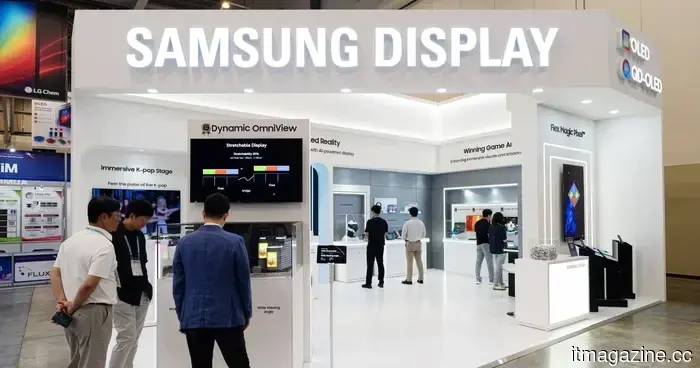 Samsung's latest 16-inch OLED display aims to transform your laptop into a gaming monitor experience.
Samsung Display introduced a 16-inch OLED laptop panel that achieves a 300Hz refresh rate, marking the highest rate ever recorded on a self-emissive laptop display.
Samsung's latest 16-inch OLED display aims to transform your laptop into a gaming monitor experience.
Samsung Display introduced a 16-inch OLED laptop panel that achieves a 300Hz refresh rate, marking the highest rate ever recorded on a self-emissive laptop display.
 YouTube Premium is facing another increase in prices, which may affect your finances shortly.
Subscribers of YouTube Premium in multiple countries are noticing new price hikes, with Singapore already announcing increased rates and indications that additional markets may soon follow suit.
YouTube Premium is facing another increase in prices, which may affect your finances shortly.
Subscribers of YouTube Premium in multiple countries are noticing new price hikes, with Singapore already announcing increased rates and indications that additional markets may soon follow suit.
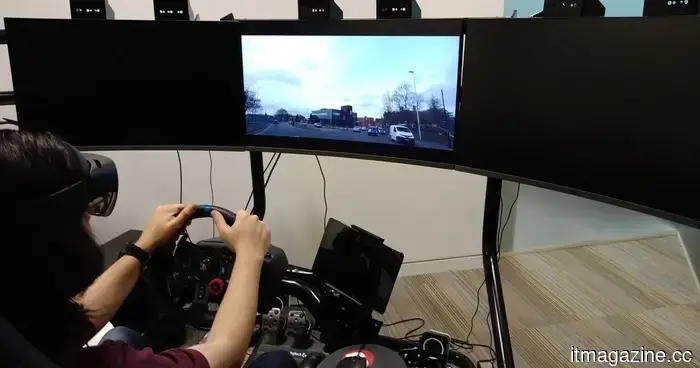 Research indicates that animated alerts can assist distracted drivers in identifying hazards more effectively.
A recent study indicates that a small animated figure that indicates danger could assist distracted drivers in identifying hazards they may overlook.
Research indicates that animated alerts can assist distracted drivers in identifying hazards more effectively.
A recent study indicates that a small animated figure that indicates danger could assist distracted drivers in identifying hazards they may overlook.
 Your upcoming trip to the cinema might be subject to a ban on Meta smart glasses.
Meta's smart glasses are facing yet another hurdle, and this could impact your upcoming movie night.
Your upcoming trip to the cinema might be subject to a ban on Meta smart glasses.
Meta's smart glasses are facing yet another hurdle, and this could impact your upcoming movie night.
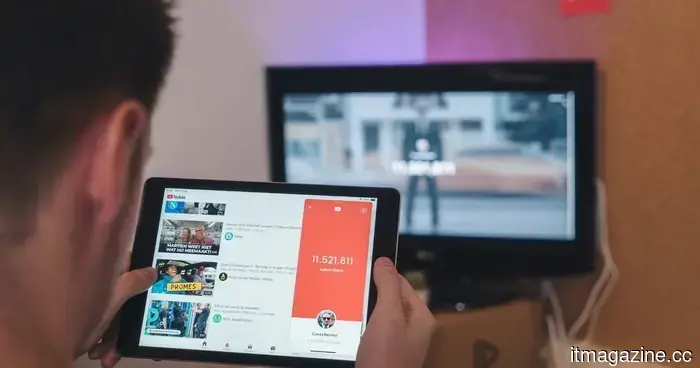 YouTube Premium is set for another increase in its prices, and it may affect your finances shortly.
YouTube Premium users in various countries are experiencing new price hikes, with Singapore already announcing increased rates and indications that additional markets may also see similar changes.
YouTube Premium is set for another increase in its prices, and it may affect your finances shortly.
YouTube Premium users in various countries are experiencing new price hikes, with Singapore already announcing increased rates and indications that additional markets may also see similar changes.
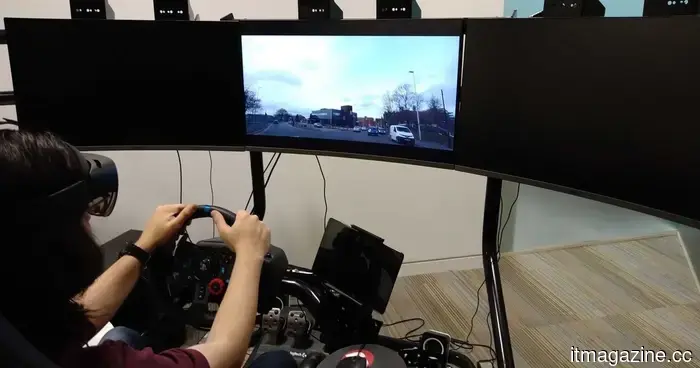 Research indicates that animated alerts can assist distracted drivers in identifying hazards more consistently.
A recent study indicates that a small animated figure that gestures towards dangers may assist distracted drivers in identifying hazards they may not notice otherwise.
Research indicates that animated alerts can assist distracted drivers in identifying hazards more consistently.
A recent study indicates that a small animated figure that gestures towards dangers may assist distracted drivers in identifying hazards they may not notice otherwise.
Meta introduced Pocket in the United States, and the app from which it originated ceased operations on the same day.
Meta's Pocket app has launched nationwide in the US. It was developed by the Gizmo team that Meta brought on board in March, and the original Gizmo app was discontinued on the same day.