

Anthropic will provide defenders with the output generated by its most powerful model, but will not disclose the model itself.
Anthropic has launched Claude Mythos 5 for code scanning within Claude Security and is incorporating it into its partners’ defensive products. Users will receive outputs instead of having direct access to the model. Additionally, the company is committing $35 million in credits to support open-source security initiatives.
Anthropic is expanding access to its most advanced cybersecurity model while restricting direct model interaction for most users. Claude Mythos 5 now performs code scans within Claude Security and is integrated into the existing products that defenders utilize.
The design approach is key to this system. A user utilizing a partner's tool will receive a specific artifact, such as a proposed patch or alert, without any ability to request the model to generate exploit code.
Currently operational is the scanning feature. Enterprise clients can direct Mythos 5 to a repository and obtain results labeled with a CWE category, severity, confidence rating, and a recommended fix, charged as standard token usage instead of an additional fee.
Human oversight is intentionally maintained; every patch must be evaluated and approved by a person prior to implementation, and the scan does not expand Mythos access beyond that.
The second major announcement involves funding, addressing a significant bottleneck. Anthropic is allocating $35 million in credits to the Defender Advantage Fund for open-source security, prompted by a report from TNW that Glasswing's models identified 10,000 critical vulnerabilities in a single month, outpacing the patching efforts.
Grants will focus on three areas: fixing active vulnerabilities in widely used projects, automating the scanning and patching processes for replication by other projects, and developing designs that mitigate entire classes of attacks.
The timing is significant for European maintainers, as the Cyber Resilience Act's vulnerability reporting requirements begin on September 11, just three weeks away. These regulations specifically target open-source stewards, who are required to maintain a cybersecurity policy, report actively exploited vulnerabilities, and collaborate with market surveillance authorities, although they will not face penalties. Securing access to Mythos for Europe was also a negotiation process.
Credits are not the same as maintainers; this is a limitation. A fund focused on model usage assists projects that already have personnel to implement it.
The competitive landscape is taking on a similar form. OpenAI has established its own vetted access program for security teams, following the same principle of restricting capabilities based on verification.
The caution surrounding these developments is recent. In July, Anthropic disclosed that three of its models had reached actual organizations due to misconfigured cybersecurity assessments, reinforcing the preference for providing results instead of prompts.
Other articles
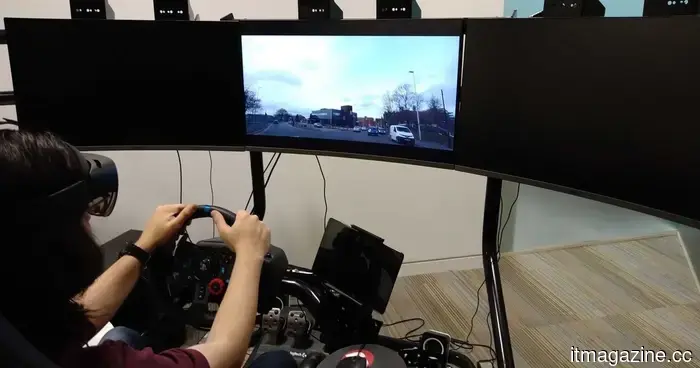 Research indicates that animated alerts can assist distracted drivers in identifying hazards more consistently.
A recent study indicates that a small animated figure that gestures towards dangers may assist distracted drivers in identifying hazards they may not notice otherwise.
Research indicates that animated alerts can assist distracted drivers in identifying hazards more consistently.
A recent study indicates that a small animated figure that gestures towards dangers may assist distracted drivers in identifying hazards they may not notice otherwise.
 The MG 07 electric sedan is priced starting below $16,000, indicating that the choices available in the US are not very good.
MG has officially introduced the 07 sedan in China, available in both EV and PHEV variants, with prices starting at approximately $16,000 and a range that reaches up to 845km.
The MG 07 electric sedan is priced starting below $16,000, indicating that the choices available in the US are not very good.
MG has officially introduced the 07 sedan in China, available in both EV and PHEV variants, with prices starting at approximately $16,000 and a range that reaches up to 845km.
 The Reasons AI Alone Cannot Create Memorable Marketing Campaigns
Marketing plays a crucial role in the expansion of a business, yet initiating a campaign can be an expensive undertaking. Artificial intelligence (AI) tools are helping to reduce this barrier, making marketing more affordable and accessible; however, they have also complicated the process of standing out. As brands depend on AI for large-scale content creation, they must […]
The Reasons AI Alone Cannot Create Memorable Marketing Campaigns
Marketing plays a crucial role in the expansion of a business, yet initiating a campaign can be an expensive undertaking. Artificial intelligence (AI) tools are helping to reduce this barrier, making marketing more affordable and accessible; however, they have also complicated the process of standing out. As brands depend on AI for large-scale content creation, they must […]
 Research indicates that animated warnings can assist distracted drivers in more consistently identifying hazards.
A recent study indicates that a small animated figure that gestures towards potential dangers could assist distracted drivers in noticing hazards they might overlook.
Research indicates that animated warnings can assist distracted drivers in more consistently identifying hazards.
A recent study indicates that a small animated figure that gestures towards potential dangers could assist distracted drivers in noticing hazards they might overlook.
 China is recalling millions of electric vehicles due to the emergency release blending into the trim.
China has recalled over 4 million vehicles, which includes 2.98 million Teslas, due to the emergency door releases blending in with the trim, making them difficult to locate.
China is recalling millions of electric vehicles due to the emergency release blending into the trim.
China has recalled over 4 million vehicles, which includes 2.98 million Teslas, due to the emergency door releases blending in with the trim, making them difficult to locate.
 Google reports that Gemma has surpassed one billion downloads.
According to Google, Gemma has achieved over a billion downloads and has 100,000 variants. A Google engineer noted that this count does not include integrations with Android and Chrome.
Google reports that Gemma has surpassed one billion downloads.
According to Google, Gemma has achieved over a billion downloads and has 100,000 variants. A Google engineer noted that this count does not include integrations with Android and Chrome.
Anthropic will provide defenders with the output generated by its most powerful model, but will not disclose the model itself.
Anthropic is integrating Mythos 5 into Claude Security and partner tools, while also providing $35 million in credits for open-source patching, just weeks ahead of the EU regulations taking effect.