

Chinese AI and chip companies are distributing shares to retain their engineers.
Chinese chip firms are implementing extensive equity programs to retain engineers, with Cambricon providing equity to 85.3% of its staff and AMEC to over 97%. Meanwhile, Europe's semiconductor industry faces a talent shortfall estimated at 65,000 workers.
The equity distribution by Chinese companies resembles a defensive strategy more than a bonus system. Cambricon has issued around 600,000 shares to 124 key employees, averaging 5.57 million yuan each, or about $828,000. The extent of this program is notable; Cambricon has awarded 5 million shares to 944 employees, representing 85.3% of its workforce, under a plan that extends to 2028.
This trend is not unique to Cambricon. Zhongji InnoLight, which produces optical transceivers for AI data centers, has assigned 2.48 million shares to 99 essential staff with average yields exceeding 26 million yuan. Similarly, the chip equipment manufacturer AMEC has a restricted stock plan encompassing over 97% of its personnel.
Compensation is also trending upwards in the same direction. Reports indicate that ByteDance and Tencent have offered salary increases as high as 150% along with bonuses around 35% to attract AI talent.
The driving force behind this trend is both domestic and geopolitical. Chinese companies are competing for talent while export restrictions have elevated domestic chip design to a national priority, intensifying demand for a limited number of engineers.
However, these equity awards come with conditions. Cambricon has linked its incentive program to a revenue target of approximately $14.8 billion, which shifts the focus of retention from a mere gift to a performance-based reward.
In contrast, Europe's issues are framed differently. The European Chips Skills Academy reports a semiconductor talent gap of 65,000 workers in a region that boasts a higher headcount of AI talent compared to the United States.
Europe’s challenge lies more in the means rather than the talent pool. Many relevant employers are established companies, research institutions, or university spinoffs, and the variation in employee share schemes across member states makes equity a more difficult tool to utilize.
As a response, Europe has mostly turned to training initiatives. Skills academies, apprenticeships, and Chips Act programs aim to boost supply on a timeline measured in terms of graduate cohorts rather than quarterly results.
In the U.S., the solution is straightforward—financial compensation. Reports from TNW indicate that Anthropic offers the highest salaries in AI research, raising concerns from its CEO about talent being attracted solely for monetary reasons.
Consequently, three regions are addressing the same talent shortage in distinct ways: China is providing ownership, America is offering cash, and Europe is focusing on educational programs, which is the only approach that cannot yield immediate results.
Other articles
 A complimentary AI model is gaining popularity among developers, yet no one is aware of the servers it operates on.
Ox Alpha appeared on OpenRouter as an anonymous stealth model featuring a million-token context and no associated cost. The unnamed provider keeps all prompts.
A complimentary AI model is gaining popularity among developers, yet no one is aware of the servers it operates on.
Ox Alpha appeared on OpenRouter as an anonymous stealth model featuring a million-token context and no associated cost. The unnamed provider keeps all prompts.
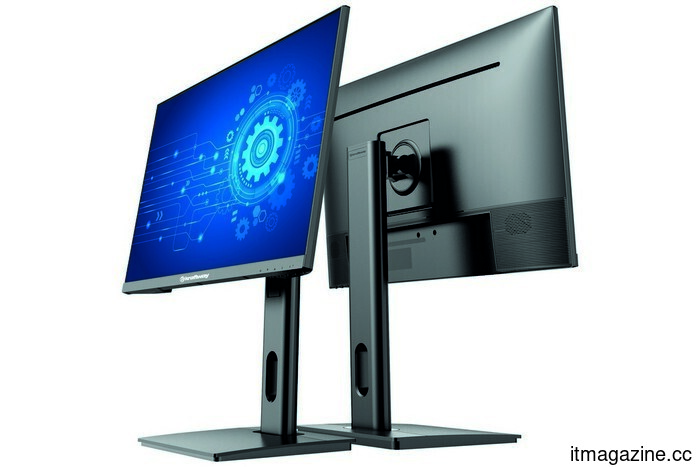 Kraftway is enhancing the KraftView series — reliable Russian monitors for the corporate sector.
Kraftway is launching an updated line of monitors for the office segment. The Kraftway KraftView model range covers all types of devices — from standard to professional wide-format solutions. At the first stage, the manufacturer is introducing monitors that belong to the mass segment of office equipment and are intended for equipping standard workspaces.
Kraftway is enhancing the KraftView series — reliable Russian monitors for the corporate sector.
Kraftway is launching an updated line of monitors for the office segment. The Kraftway KraftView model range covers all types of devices — from standard to professional wide-format solutions. At the first stage, the manufacturer is introducing monitors that belong to the mass segment of office equipment and are intended for equipping standard workspaces.
 Apollo discovers that AI is affecting individual paychecks instead of overall payrolls.
Apollo reports that wages in jobs with high exposure to AI increased at a rate of 6.7% more slowly after 2023, with no noticeable impact on employment levels, while the lowest earners bore the brunt of this change.
Apollo discovers that AI is affecting individual paychecks instead of overall payrolls.
Apollo reports that wages in jobs with high exposure to AI increased at a rate of 6.7% more slowly after 2023, with no noticeable impact on employment levels, while the lowest earners bore the brunt of this change.
 Betting companies are no longer featured on Premier League jerseys. They've been replaced by enterprise software brands.
Premier League teams have removed betting companies from the front of their shirts, and ClickHouse has filled Fulham's position. At the same time, eight clubs required new sponsorships.
Betting companies are no longer featured on Premier League jerseys. They've been replaced by enterprise software brands.
Premier League teams have removed betting companies from the front of their shirts, and ClickHouse has filled Fulham's position. At the same time, eight clubs required new sponsorships.
 Hyundai's new Ioniq V is priced over $10,000 lower than the least expensive EV in the US.
Hyundai has officially launched the Ioniq V, its first electric vehicle exclusive to China, with a starting price of less than $18,000. It features a 27-inch display and dual AI chatbots.
Hyundai's new Ioniq V is priced over $10,000 lower than the least expensive EV in the US.
Hyundai has officially launched the Ioniq V, its first electric vehicle exclusive to China, with a starting price of less than $18,000. It features a 27-inch display and dual AI chatbots.
 Researchers discovered 768 leaked AWS keys that are still operational, and the containment policy allows for many possibilities.
Researchers discovered 768 leaked AWS keys that still provided complete account access, which included 526 root keys, and 88% of the tested credentials remained valid for authentication.
Researchers discovered 768 leaked AWS keys that are still operational, and the containment policy allows for many possibilities.
Researchers discovered 768 leaked AWS keys that still provided complete account access, which included 526 root keys, and 88% of the tested credentials remained valid for authentication.
Chinese AI and chip companies are distributing shares to retain their engineers.
Cambricon has allotted shares to 85% of its employees, while AMEC has done so for over 97%, as Chinese semiconductor companies leverage equity to retain their engineers.