
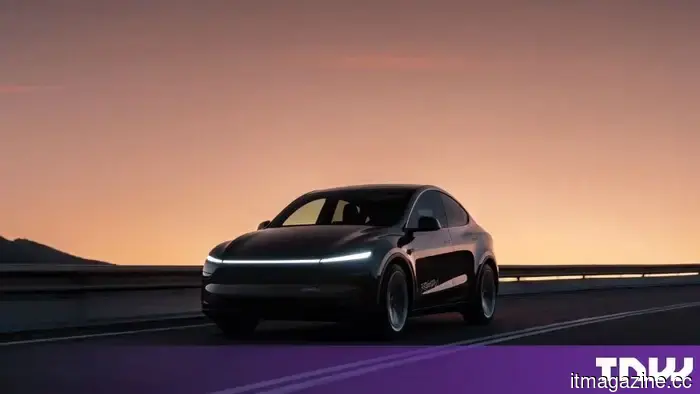
Data indicates that Tesla's robotaxis in Austin are now completely autonomous.
Tesla's robotaxi service in Austin seems to have transitioned to full autonomy. In the last two weeks, every one of the 170 rides recorded by an independent monitoring initiative was conducted without a human safety monitor present, across 54 different vehicles. Just two days prior, a passenger captured footage of one of these cars driving directly through a line of plastic bollards.
About the monitoring data
The rides were documented by a crowdsourced project named Robotaxi Tracker. Its creator, Ethan McKanna, informed The Verge that all 170 rides monitored over the past fortnight operated without supervision. “Austin has seemingly halted supervised rides for a couple of weeks now,” he mentioned. Plates that were previously categorized as supervised are now being used for unsupervised rides, he noted.
It's important to disclose that McKanna interned with Tesla’s Robotaxi team this past summer, as reported by The Verge. While this doesn't invalidate his data, it is crucial for readers considering an independent assessment of Tesla vehicles to understand who compiled the information.
The tracking method is important as well. The tracker primarily relies on app users who automatically log their own rides, along with other crowdsourced and publicly available information. It records what observers happen to capture, rather than providing a comprehensive overview of the fleet.
Data improvement is a factor
The scale of the change appears significant, but it's partially a result of improved data collection. Just last week, Robotaxi Tracker indicated there were only 28 active unsupervised vehicles operating in six markets across Texas and Florida. Now, McKanna has identified almost twice that number in Austin alone.
He explained that some metrics on the site were lagging, prompting him to revise the data sources and discover more vehicles operating unsupervised than the tracker previously indicated. He is currently updating the site with these new figures.
Thus, two developments occurred simultaneously: Tesla expanded its unsupervised operations, and the tool measuring them improved its capabilities for tracking. The Verge notes that the shift in Austin appears genuine, supported by user posts on Reddit and X, and the tracker is one of the few resources available since Tesla does not disclose fleet data and often does not respond to media inquiries.
This expansion is not limited to Austin; approximately 30 driverless Teslas have been active in Dallas and Houston over the past week, according to McKanna. Earlier in the summer, the unsupervised fleet seemed to be stalling or even decreasing.
Understanding "unsupervised"
The term "unsupervised" carries significant weight here. A safety monitor within the vehicle is a person capable of taking control if necessary. A remote operator can oversee the operation from a distance and may advise or authorize specific maneuvers via a data link. Eliminating the first does not necessarily exclude the second.
No one outside Tesla knows whether a remote operator was involved in the bollard video. The company does not disclose how often remote staff intervene or how many cars a single operator may oversee. A ride with an empty driver's seat is classified as unsupervised from an external observer's perspective, regardless of what happens on the other end of the communication link.
The bollards have been in place since 2024
Electrek reported the incident on August 18. A passenger in Austin recorded their car struggling with a curb extension marked by plastic posts. The vehicle moved forward, reversed, moved forward again, and then drove through the posts without stopping.
An audible thud can be heard in the video, alongside the passenger exclaiming, “it hit 'em, it hit 'em.” There was no safety monitor in the driver's seat, and it is unclear if a remote operator authorized the action.
Users on Reddit subsequently utilized a building visible in the video to pinpoint the exact location on Google Maps. Street View confirms the posts have been positioned there since at least February 2024.
This detail suggests that mapping rather than sensors is at fault, as noted by TechRadar. Tesla has opted not to use the proprietary high-definition maps that Waymo employs and eliminated lidar for cost reasons. Consequently, the vehicle must identify fixed obstacles in real-time using its onboard computing, which it failed to do in this instance.
Tesla's communication to investors
At Tesla's second-quarter earnings call, Ashok Elluswamy, vice president of AI, defended the program, stating that the company has accumulated over 380,000 robotaxi miles with “zero notable incidents.” He described the safety record as impeccable, although it remains unspecified what constitutes a notable incident.
In contrast, TechRadar highlights a significant discrepancy: Waymo has logged approximately 220 million unsupervised ride-hailing miles, whereas Tesla's 380,000 accounts for only about one-fifth of one percent of that total.
Reports suggest that the Austin fleet has also decreased, dropping from roughly 25 vehicles in spring to about 17 now, operating within a geofence significantly smaller than Waymo’s. Tesla does not publish fleet numbers, so
Altri articoli
Los robotaxis de Tesla en Austin ahora son completamente autónomos, muestran los datos de seguimiento.
Todos los 170 viajes de robotaxi de Tesla registrados en Austin durante dos semanas se realizaron sin supervisión. Dos días antes, un pasajero filmó uno conduciendo a través de bolardos.
 Las ganancias de Alibaba cayeron un 75% mientras el gasto trimestral en IA alcanzó los 10 mil millones de dólares.
El gasto en IA de Alibaba alcanzó los $9.98 mil millones en el trimestre de junio, las ganancias cayeron un 75%, y la unidad de nube por la que paga generó una ganancia segmentaria del 133%.
Las ganancias de Alibaba cayeron un 75% mientras el gasto trimestral en IA alcanzó los 10 mil millones de dólares.
El gasto en IA de Alibaba alcanzó los $9.98 mil millones en el trimestre de junio, las ganancias cayeron un 75%, y la unidad de nube por la que paga generó una ganancia segmentaria del 133%.
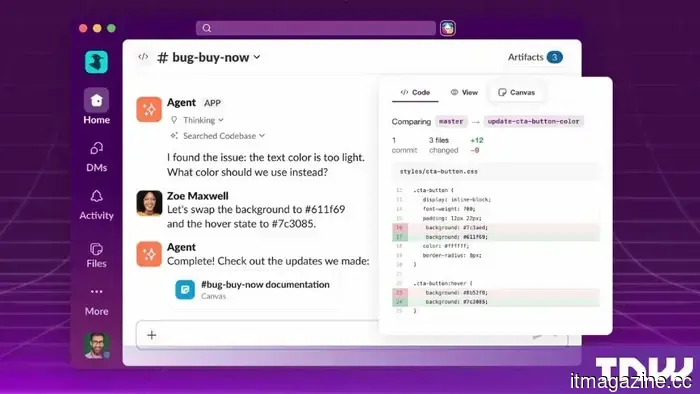 Slack lanza Slack Code, donde equipos y agentes de IA construyen juntos.
Slack Code permite a los equipos y agentes de IA escribir, revisar y enviar código en un solo canal. Claude, ChatGPT, Devin y Copilot son socios fundadores.
Slack lanza Slack Code, donde equipos y agentes de IA construyen juntos.
Slack Code permite a los equipos y agentes de IA escribir, revisar y enviar código en un solo canal. Claude, ChatGPT, Devin y Copilot son socios fundadores.
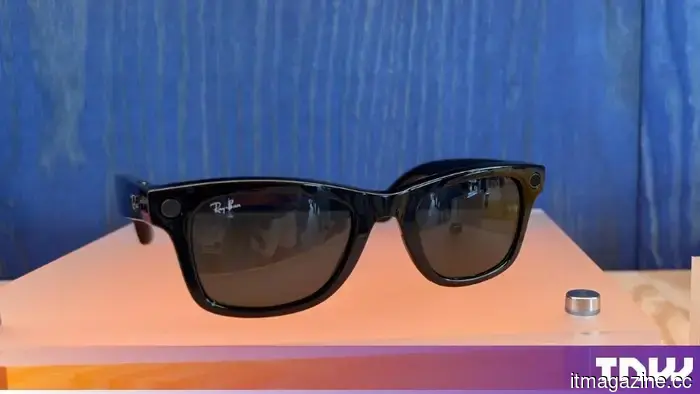 Cines, escuelas y ICE están prohibiendo las gafas inteligentes de Meta.
Los cines, las escuelas de EE. UU. y ICE están restringiendo las gafas inteligentes de Meta, por razones que no tienen nada en común. La regla del cine data de 2014.
Cines, escuelas y ICE están prohibiendo las gafas inteligentes de Meta.
Los cines, las escuelas de EE. UU. y ICE están restringiendo las gafas inteligentes de Meta, por razones que no tienen nada en común. La regla del cine data de 2014.
 Octopus Charge pone 210,000 cargadores en EE. UU. en una sola aplicación, sin Tesla, Ionna o Electrify America.
Octopus Energy ha lanzado Octopus Charge en América del Norte con 210,000 cargadores. Su versión europea tiene 1.5 millones, y la razón es la regulación.
Octopus Charge pone 210,000 cargadores en EE. UU. en una sola aplicación, sin Tesla, Ionna o Electrify America.
Octopus Energy ha lanzado Octopus Charge en América del Norte con 210,000 cargadores. Su versión europea tiene 1.5 millones, y la razón es la regulación.
 Octopus Charge pone 210,000 cargadores en EE. UU. en una sola aplicación, sin Tesla, Ionna o Electrify America.
Octopus Energy ha lanzado Octopus Charge en América del Norte con 210,000 cargadores. Su versión europea tiene 1.5 millones, y la razón es la regulación.
Octopus Charge pone 210,000 cargadores en EE. UU. en una sola aplicación, sin Tesla, Ionna o Electrify America.
Octopus Energy ha lanzado Octopus Charge en América del Norte con 210,000 cargadores. Su versión europea tiene 1.5 millones, y la razón es la regulación.
Data indicates that Tesla's robotaxis in Austin are now completely autonomous.
All 170 Tesla robotaxi rides monitored in Austin over a two-week period operated without supervision. Just two days prior, a passenger recorded one navigating past bollards.