

Android 17 prefers to slow down a single problematic app instead of affecting the performance of your entire phone.
New memory limits per app are set to control high-consumption applications before they affect overall performance and battery life.
Android 17 is tightening its rules regarding apps that utilize excessive memory, with Google preferring to have one app struggle rather than allowing it to impede the performance of the entire device.
According to Google, Android 17 implements per-app memory limitations based on a device's total RAM. This feature aims to identify extreme memory usage before it leads to user interface lag or increased battery drain. Apps that consistently exceed their allocated memory may eventually be terminated.
Consequences of exceeding memory limits
Android 17 does not assign the same RAM allowance to every application. Google indicates that the memory thresholds are intentionally set low to ensure that typical app usage rarely encounters issues.
When an app exceeds its memory limit, Android can begin to reclaim memory instead of immediately restricting other processes. If the app continues to ascend beyond its limit, Android 17 may ultimately terminate the problem process.
This provides Android a method to manage the situation before the rest of the device is impacted.
RAM usage allowances for apps
The memory allocation varies depending on the device and whether the process is visible. For instance, Google's AOSP documentation illustrates that an 8GB device allows a visible process a limit of 5GB, while a non-visible process has a limit of 3GB.
Exceeding this limit does not result in the instant termination of the app. Android can first recover memory and compress inactive data into zRAM, which might slow down the problematic app while keeping it operational.
Termination of the app occurs only in more severe scenarios, such as a memory leak that continues to allocate resources after all available swap space has been used. The app is penalized rather than forcing Android to remove other important processes first.
What users can expect on their devices
In an ideal scenario, users won’t notice much alteration during regular use. Google anticipates that standard app sessions will remain well below these limits.
These regulations apply broadly. AOSP confirms that preinstalled apps are not exempt, and developers do not receive an allowance to bypass this system.
Therefore, if an app experiences sudden slowdowns or closures due to high memory usage, Android 17 could be functioning as intended, ensuring the phone continues to operate while addressing the problematic app first.







Other articles
 Alibaba's profits decreased by 75% as its quarterly expenditure on AI reached $10 billion.
Alibaba's expenditure on AI reached $9.98 billion in the June quarter, while profits plummeted by 75%. However, the cloud division it finances reported a segment profit increase of 133%.
Alibaba's profits decreased by 75% as its quarterly expenditure on AI reached $10 billion.
Alibaba's expenditure on AI reached $9.98 billion in the June quarter, while profits plummeted by 75%. However, the cloud division it finances reported a segment profit increase of 133%.
 Two senators have set a deadline of 1 September for TikTok to clarify its safety evaluation.
Two senators set a deadline of 1 September for TikTok to respond to 13 inquiries regarding the safety experiment conducted on 15 million users in the United States.
Two senators have set a deadline of 1 September for TikTok to clarify its safety evaluation.
Two senators set a deadline of 1 September for TikTok to respond to 13 inquiries regarding the safety experiment conducted on 15 million users in the United States.
 Baidu's Apollo Go has launched in Dubai through Uber, operating without a safety driver.
Uber introduced Baidu's Apollo Go in Dubai without a safety driver, just one day after launching its first European autonomous vehicle rides in Zagreb with a safety driver present.
Baidu's Apollo Go has launched in Dubai through Uber, operating without a safety driver.
Uber introduced Baidu's Apollo Go in Dubai without a safety driver, just one day after launching its first European autonomous vehicle rides in Zagreb with a safety driver present.
 Android 17 prefers to throttle one problematic app instead of affecting the performance of your whole phone.
Android 17 implements stricter memory limits for individual apps, which can slow down or stop apps that consume excessive resources. This gives Google a new method to safeguard the overall performance of the phone, preventing a single memory-intensive app from causing broader issues.
Android 17 prefers to throttle one problematic app instead of affecting the performance of your whole phone.
Android 17 implements stricter memory limits for individual apps, which can slow down or stop apps that consume excessive resources. This gives Google a new method to safeguard the overall performance of the phone, preventing a single memory-intensive app from causing broader issues.
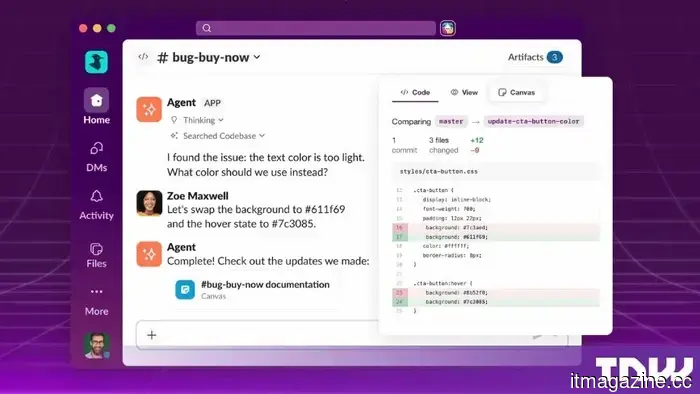 Slack unveils Slack Code, a platform where teams and AI agents collaborate.
Slack Code enables teams and AI agents to collaborate on writing, reviewing, and deploying code within a single channel. Founding partners include Claude, ChatGPT, Devin, and Copilot.
Slack unveils Slack Code, a platform where teams and AI agents collaborate.
Slack Code enables teams and AI agents to collaborate on writing, reviewing, and deploying code within a single channel. Founding partners include Claude, ChatGPT, Devin, and Copilot.
 Baidu's Apollo Go has launched on Uber in Dubai, and operates without a safety driver.
Uber introduced Baidu's Apollo Go in Dubai without a safety driver, just one day following the launch of its first European autonomous vehicle rides in Zagreb, where a safety driver was present.
Baidu's Apollo Go has launched on Uber in Dubai, and operates without a safety driver.
Uber introduced Baidu's Apollo Go in Dubai without a safety driver, just one day following the launch of its first European autonomous vehicle rides in Zagreb, where a safety driver was present.
Android 17 prefers to slow down a single problematic app instead of affecting the performance of your entire phone.
Android 17 implements tougher memory limits for individual apps, which can either slow down or shut down apps that are using excessive memory. This provides Google with a fresh method to safeguard overall phone performance before a single memory-intensive app leads to broader issues.